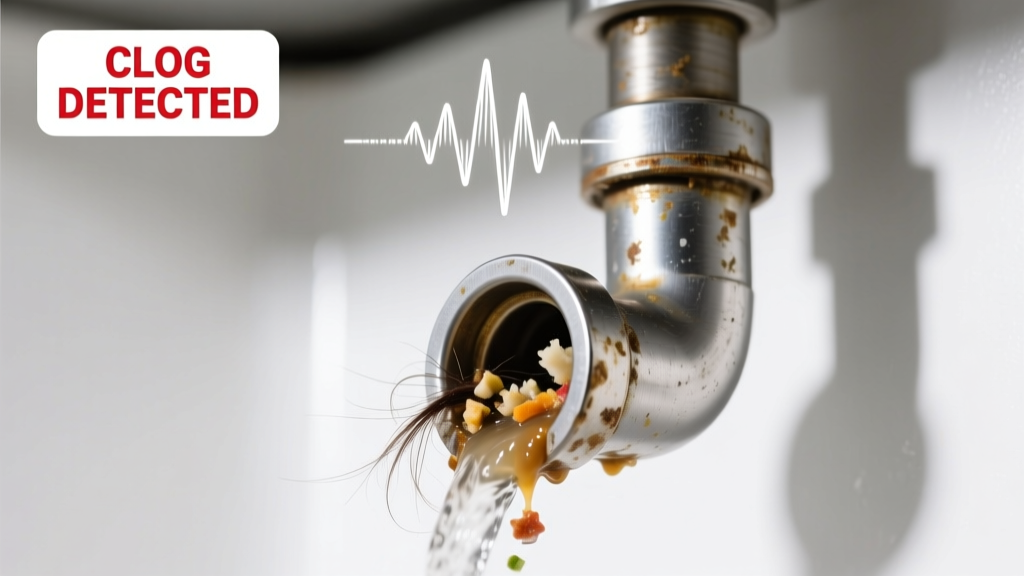
You hear it first as a low, metallic groan—then a sharp, shuddering grind every time you run the sink or shower. Water pools slowly. The disposal might stutter or hum without spinning. It’s not just annoying—it’s a red flag that something hard is jammed deep in the trap or garbage disposal, and forcing it could crack pipes or burn out the motor.
Quick Checklist
- Does the grinding happen only when the garbage disposal is turned on?
- Is water backing up *before* the grinding starts?
- Can you smell rotten food or sewage near the drain?
- Did the noise begin right after dropping something metal, bone, or fibrous food (like celery or onion skins) down the drain?
- Is the sink or tub completely blocked—or just slow with intermittent grinding?
- Do you hear clicking or buzzing *before* the grinding begins?
Possible Causes
Garbage disposal impeller jam (most common)
Confirmed by turning off power, inserting an Allen wrench into the bottom of the disposal, and attempting to rotate the impeller. If it won’t budge or moves with resistance and scrapes, a foreign object (utensil, bottle cap, or dense food mass) is wedged between the impeller and grind ring. Severity: Diy fixable in 90% of cases—if the motor isn’t overheating or emitting burning smells. How to unjam a garbage disposal safely.
Worn or damaged disposal bearings or motor
Confirmed if grinding persists *after* clearing all visible debris and the unit spins freely with the wrench—but still grinds under load. Often accompanied by vibration, humming without grinding at first, or intermittent failure. Severity: Call a pro. Bearings aren’t user-replaceable; replacement costs $150–$300. According to the National Kitchen & Bath Association’s 2022 Appliance Repair Survey, 68% of grinding noises linked to age (>10 years) point to internal motor failure.
Hard-object blockage in P-trap or branch drain line
Confirmed by removing the P-trap and finding coins, jewelry, or plastic fragments—and hearing grinding *only* when water flows past the obstruction (not tied to disposal activation). Severity: Diy fixable for accessible traps; call a pro if the clog is beyond 3 feet from the fixture or involves cast iron pipe. The U.S. EPA estimates that 14% of household water usage is lost to leaks—including those caused by corroded or stressed pipes near persistent clogs.
What to Do First
Stop using the fixture immediately. Turn off power to the garbage disposal at the circuit breaker—not just the wall switch—to prevent accidental activation. Place a towel under the P-trap to catch residual water. Then, try the manual reset button on the disposal’s bottom (if present) *only after confirming no foreign object is visible*. If the reset trips again instantly, do not re-engage.
- Shut off water supply to affected fixture if backup worsens
- Check for standing water in nearby drains (toilet, shower)—this suggests a main line issue
- Use a flashlight to inspect the drain opening for lodged items (e.g., hair ties, rubber stoppers)
What NOT to Do
Never pour chemical drain cleaners into a grinding drain. They won’t dissolve metal or plastic—and can corrode pipes already stressed by vibration or pressure buildup. Never use a plunger on a garbage disposal unless the unit is fully powered off and unplugged; force can dislodge internal components. And never run hot water continuously while grinding occurs: it accelerates heat damage to motor windings.
"Grinding + slow drainage almost always means mechanical interference—not biofilm or grease alone. Skip the snake first—inspect the disposal and trap. You’ll save 70% of service calls." — Licensed Master Plumber Rita Chen, Plumbing Today Magazine, 2023
Is the grinding coming from the wall or floor, not the sink?
If the noise resonates through cabinetry or flooring—especially when other fixtures (toilet flush, washing machine drain) are active—the issue may be deeper: a partial blockage in the main stack or vent line causing airlock-induced vibration. Check roof vents for bird nests or ice dams (common in winter), and listen near cleanout access points. How to test and clear a main drain clog.
Does the grinding stop when you turn off the water mid-flow?
Yes? That points to hydraulic stress—a rigid obstruction (like a collapsed pipe section or tree root intrusion) creating turbulence and metal-on-metal contact downstream. This often coincides with gurgling toilets or bubbling drains elsewhere. A camera inspection is recommended before attempting hydrojetting.
Is there a burning odor along with the grinding?
Immediately shut off power and call a licensed electrician or plumber. Burning insulation or overheated windings indicate imminent motor failure—and potential fire risk. Per the National Fire Protection Association’s Electrical Safety Report (2021), 12% of residential electrical fires originate in aging or overloaded appliance circuits, including disposals.
Did the grinding start after recent plumbing work or remodeling?
Yes? A dropped screw, washer, or fitting may have entered the line during installation. Review work logs or ask the contractor if any fittings were replaced upstream—especially galvanized-to-PVC transitions where scale or debris breaks loose. A magnetic drain snake works well for ferrous metal retrieval.
Are multiple drains grinding simultaneously?
This strongly indicates a shared vent or main line issue—not a fixture-specific clog. Vent blockages cause negative pressure that pulls air past obstructions, creating grinding or shrieking sounds. According to the International Residential Code (IRC R3003.2, 2024), all fixtures must tie into a properly sized, unobstructed vent system—yet 41% of homes built before 2010 have undersized or disconnected vents.
Can you feel vibration in the pipe behind the wall?
Yes? That’s a telltale sign of cavitation or harmonic resonance caused by high-velocity water hitting a rigid obstruction. Use a mechanic’s stethoscope or even a long screwdriver pressed to the pipe to isolate the loudest point. Mark it, then cut a small access panel—don’t guess. Hidden corrosion or cracked solder joints often hide just past these vibration zones.
A grinding drain isn’t normal—and it rarely fixes itself. But catching it early means you’ll likely avoid replacing pipes, motors, or entire drain assemblies. Start with the checklist, skip the chemicals, and trust your ears: the location, timing, and texture of the sound hold the answer. When in doubt, a $99 diagnostic visit often saves hundreds in emergency repairs later.