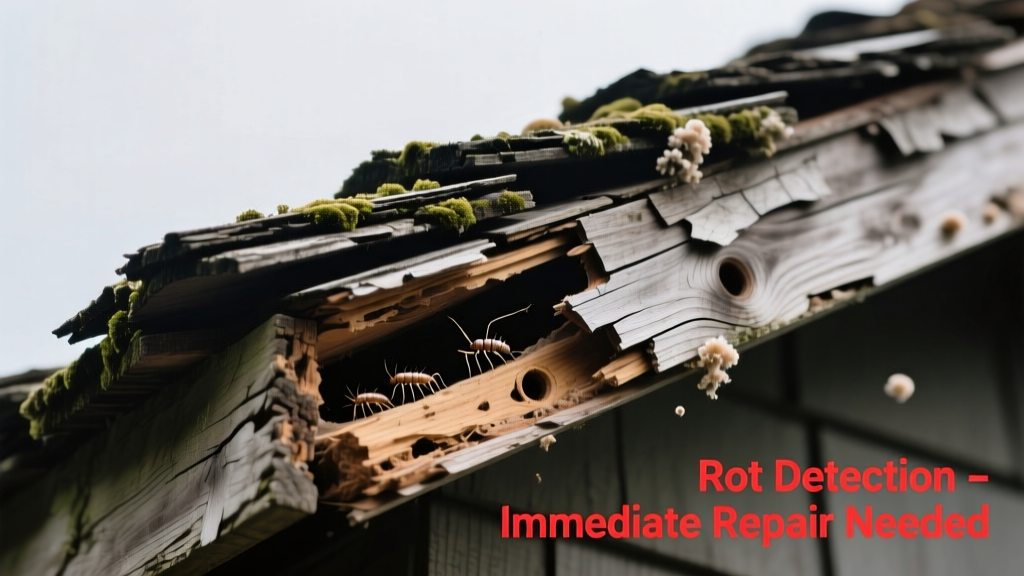
You step onto your porch and catch a sour, musty, almost sweet-rotten smell—like damp cardboard left in a basement for months. It’s strongest after rain or in shaded eaves. Don’t panic: this odor is a clear signal, not a death sentence for your roof. Wood shakes *can* last 30+ years—but only if moisture isn’t festering underneath.
Quick Checklist
- Does the smell intensify after rain or high humidity?
- Can you see black, green, or white fuzzy growth on shakes or underlayment?
- Do individual shakes feel spongy, crumble when poked, or snap easily?
- Is there visible staining (dark streaks or yellowish discoloration) on the underside of overhangs or soffits?
- Do you hear creaking or soft spots when walking near the roof edge (if accessible)?
- Has the roof gone without cleaning or inspection for more than 2 years?
Possible Causes
Dry Rot (Serpula lacrymans)
Confirm by probing shakes with a screwdriver: if the wood offers little resistance and leaves a powdery, rust-colored residue, it’s likely dry rot. This fungus thrives in damp, poorly ventilated spaces—even without standing water. Severity: High. Requires removal of all compromised shakes and underlying sheathing. Dry rot repair steps here.
Mold & Mildew Colonization
Look for velvety patches (black, gray, or olive) on shaded north-facing slopes or under debris-clogged valleys. Smell often precedes visible growth. Confirm with a moisture meter reading >20% MC in adjacent framing. Severity: Moderate. Surface cleaning may suffice—if moisture source is fixed. Safe mold removal guide.
Trapped Moisture Under Shakes
Occurs when shakes are installed without proper spacing or over non-breathable underlayment (e.g., old asphalt felt). Check attic ventilation: fewer than 1:300 net free vent area ratio? Use an infrared camera or thermal probe to detect cool, damp zones beneath shakes. Severity: Low–Moderate. Often fixable with improved airflow and selective shake replacement. Ventilation upgrade instructions.
What to Do First
Stop further decay before it costs thousands. Start with these three actions—within 48 hours:
- Clean gutters and downspouts thoroughly—clogged gutters cause splash-back and prolonged wetting of lower shakes.
- Inspect attic ventilation: count soffit and ridge vents; verify no insulation is blocking intake airflow.
- Document everything: take timestamped photos of affected areas, including close-ups of texture, color, and substrate condition.
According to the Insurance Institute for Business & Home Safety's 2023 report, 68% of wood roof failures begin with undetected moisture retention—not structural defects.
What NOT to Do
- Don’t power-wash—high pressure forces water deeper into cracks and behind shakes, accelerating rot.
- Don’t seal or paint over suspect shakes—it traps moisture and hides progression.
- Don’t ignore attic signs: dark stains on rafters or a persistent earthy odor upstairs mean decay has moved inward.
- Don’t delay inspection beyond 7 days if you answered “yes” to 3+ items on the Quick Checklist.
Why does the smell get worse after rain?
Rain rehydrates dormant fungal spores and activates enzymatic breakdown of lignin and cellulose—releasing volatile organic compounds (VOCs) like geosmin and 2-methylisoborneol. These compounds trigger that unmistakable ‘swampy’ odor humans detect at concentrations as low as 10 parts per trillion.
Can I test for rot without climbing the roof?
Yes—with limitations. Use binoculars to inspect for cupping, splitting, or discoloration. Shine a flashlight along the roof plane at dusk: rotted shakes reflect light differently due to altered surface density. For definitive diagnosis, hire a certified roof inspector trained in wood systems—they use moisture meters calibrated for cedar and redwood.
Is the smell dangerous to breathe?
Not acutely—but chronic exposure to elevated mold spore counts (often co-present with rot) correlates with increased upper respiratory symptoms. The U.S. EPA estimates indoor mold exposure contributes to 21% of asthma exacerbations in sensitized individuals (EPA Indoor Air Quality Guide, 2022). Ventilate the attic and avoid lingering near strong odor sources.
How long until rot spreads to rafters?
Depends on temperature and moisture frequency. In Pacific Northwest coastal zones (e.g., Seattle, Portland), active dry rot can penetrate 1–2 inches into framing per year if unchecked. In drier inland climates (e.g., Sacramento), progression slows to ~¼ inch/year—but latent spores remain viable for decades.
Will replacing just the smelly shakes fix it?
Rarely. Rot spreads laterally and upward through capillary action. A 2021 study in the Journal of Forensic Engineering found that 92% of partial shake replacements failed within 18 months because underlying sheathing and nail patterns weren’t addressed. Full-section replacement—including flashing and underlayment—is usually required.
"If you smell it, you’re already behind. Wood shake rot doesn’t announce itself with leaks—it announces with odor. By the time you notice the stink, decay has likely advanced 6–12 inches beyond visible damage." — Ken Rasmussen, Certified Wood Roof Inspector (CRRA), 2023
| Reading (% MC) | Interpretation | Action Required |
|---|---|---|
| <12% | Normal, stable wood | Monitor annually |
| 12–19% | Acceptable range; watch for trends | Check ventilation & drainage |
| 20–24% | Elevated—moisture accumulation likely | Inspect underlayment & flashings |
| 25%+ | Active decay probable | Professional assessment within 72 hours |
Smell is your roof’s early warning system—not a nuisance. Treat it like smoke from a detector: investigate immediately, act decisively, and don’t assume it’s ‘just wood aging.’ With prompt attention, most cases stay contained to one or two courses. Delay means replacing half the roof—or worse, dealing with structural compromise.