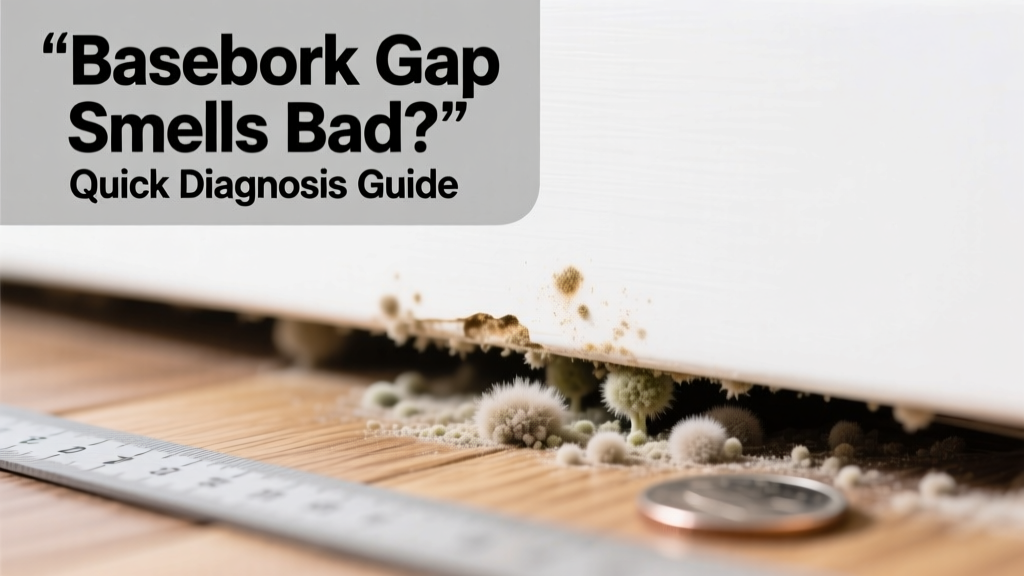
You walk into the room and catch it instantly—a sour, musty, or sometimes sweet-rotten stench rising from the narrow gap between your baseboard and floor. It’s not coming from the trash or the fridge. It’s localized, persistent, and oddly stubborn. Don’t panic: this smell almost always points to a specific, fixable issue—and catching it early prevents structural damage and health risks.
Quick Checklist
Answer these yes/no questions to narrow the cause in under 90 seconds:
- Does the smell worsen after rain or heavy humidity?
- Is the gap damp or discolored (dark streaks, white powder, or fuzzy growth)?
- Do you hear scratching, scurrying, or gnawing sounds near the wall at night?
- Is the odor strongest near a bathroom, kitchen, or laundry room wall?
- Has there been recent flooding, leaky faucet, or HVAC condensate drip nearby?
- Does the smell intensify when you run hot water or flush a toilet on that wall?
- Have you noticed small piles of sawdust, droppings, or chewed insulation near the gap?
Possible Causes
Mold or mildew behind the baseboard
Confirm with a flashlight and mirror: look for black, green, or fuzzy growth on subfloor or wall sheathing behind the gap. Use a moisture meter—if readings exceed 18% on wood or drywall, mold is likely active. According to the EPA, indoor mold exposure contributes to 25% of asthma exacerbations in sensitized individuals (EPA Indoor Air Quality Tools for Schools, 2022). Severity: DIY if area is <3 sq ft and accessible; otherwise, call a certified mold remediator. Fix mold behind baseboard.
Rodent or insect infestation
Look for greasy smudges, droppings (rice-sized pellets = mice; tiny dark specks = cockroaches), or nesting material like shredded paper or insulation fibers. Tap lightly on the wall—if you hear hollow echoes or rustling, it’s likely live activity. The National Pest Management Association reports 85% of rodent entry points in homes are gaps ≤¼ inch—exactly the size of most baseboard gaps. Severity: DIY sealing only after full exclusion and cleanup; hire a licensed exterminator first. Remove rodents in wall cavity.
Hidden plumbing leak (supply line or drain)
Turn off all water sources, then check your water meter—if the dial moves, you have an active leak. Smell the gap again after running hot water for 2 minutes: if odor spikes, suspect a failing P-trap or cracked supply line inside the wall. The U.S. EPA estimates that household leaks waste 10,000 gallons annually per home—many start unseen behind baseboards. Severity: Call a plumber immediately. Do not delay—corrosion and rot accelerate fast. Find and repair hidden plumbing leak.
What to Do First
Stop the spread and protect your health while diagnosing:
- Wear an N95 mask and gloves before inspecting closely.
- Use a fan to ventilate the room—never seal the gap yet.
- Take photos and notes: location, odor type (musty? ammonia? sewage?), timing (worse at night? after rain?).
- If mold is visible or suspected, isolate the area with plastic sheeting taped to floor and ceiling.
- Shut off water to the nearest fixture if plumbing is suspected—and confirm no water use for 2 hours to test meter movement.
What NOT to Do
These common reactions make things worse—fast:
- Don’t caulk or paint over the gap—you’ll trap moisture and accelerate decay.
- Don’t spray bleach blindly—it kills surface mold but feeds deeper growth and doesn’t address root cause.
- Don’t ignore it for more than 48 hours—mold spores multiply every 24–48 hours in damp conditions.
- Don’t set poison bait near the gap without sealing entry points first—you’ll create carcasses inside walls, worsening odor and attracting insects.
Is the smell sewer-like or rotten egg?
This strongly indicates a broken or dry P-trap, cracked ABS pipe, or failed wax ring on a nearby toilet. Confirm by checking under sinks and toilets for standing water or drips. If the odor spikes when flushing or draining, the leak is likely in the drain vent or trap arm. Fix sewer gas smell from walls.
Does the odor disappear after vacuuming the gap?
If yes—even briefly—it’s likely dust, pet dander, or decomposing organic debris trapped in the gap. But if it returns within hours, something deeper is feeding it (e.g., moisture enabling microbial growth). Vacuuming alone won’t solve chronic recurrence.
Is the baseboard warped, loose, or pulling away from the wall?
That’s a red flag for prolonged moisture exposure. Measure the gap width: if >⅛ inch and inconsistent along the run, subfloor swelling or stud bowing may be underway. This requires structural assessment before cosmetic repair.
Can you smell it outdoors near the foundation vent or weep hole?
Yes means the source is likely in the crawl space or basement—moisture, mold, or animal intrusion migrating upward through framing cavities. Check your crawl space humidity: above 60% RH invites both mold and pests. A dehumidifier and vapor barrier may be needed before wall repairs.
Did the smell start right after new flooring or baseboard installation?
Adhesives, MDF core swelling, or trapped construction debris (like drywall dust or sawdust) can off-gas for weeks—but shouldn’t smell foul. If it does, verify installer didn’t block weep holes or seal against a damp slab.
"Over 70% of 'new build' odor complaints in homes under 2 years old trace back to unvented subfloor materials or improperly sealed slab edges." — NAHB Research Center Field Study, 2021
Most baseboard gap odors resolve quickly once the true source is identified—not masked, not ignored, but addressed at its origin. Start with the checklist, act on the first clear clue, and don’t hesitate to bring in a pro when moisture, mold, or plumbing is involved. Your air quality—and your floorboards—will thank you.