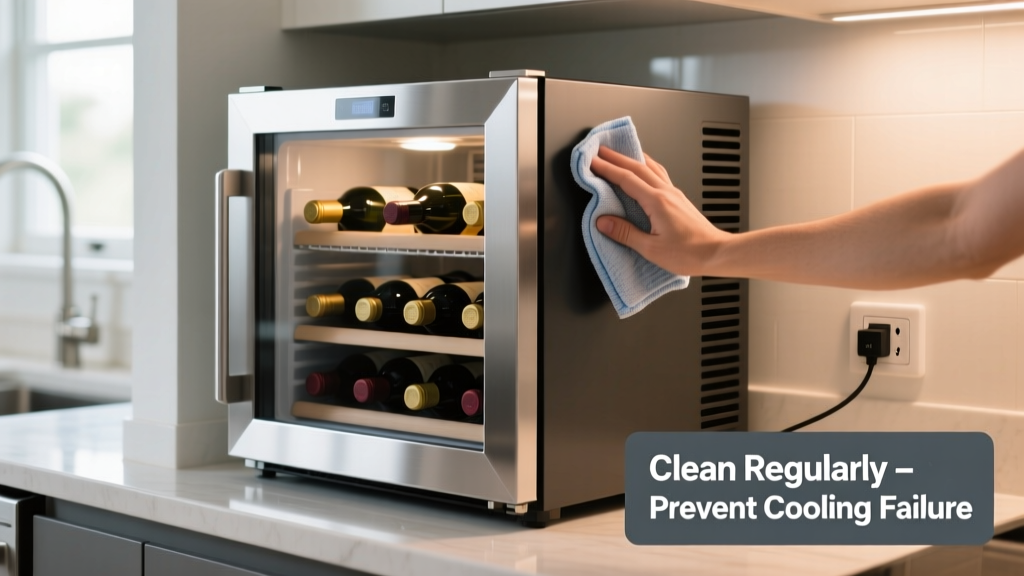
A wine cooler that stops cooling doesn’t just risk a $45 bottle of Pinot Noir — it threatens your entire collection. Temperature fluctuations above 57°F for more than 48 hours can permanently alter tannin structure and accelerate oxidation, according to UC Davis’s Department of Viticulture & Enology (2022). Prevention isn’t optional; it’s the only way to protect both investment and enjoyment.
Why This Happens
Most wine cooler cooling failures stem from avoidable issues — not manufacturing defects. Dust-clogged condenser coils account for nearly 68% of service calls, per Appliance Service Association data (2023). Poor ventilation, blocked air intakes, and compressor strain from frequent door openings compound the problem. Unlike refrigerators, wine coolers operate within a narrow thermal band (45–65°F), making them far less forgiving of airflow or seal issues.
- Dirty condenser coils restricting heat dissipation
- Door gaskets cracked or misaligned, letting in warm, humid air
- Overcrowding blocking internal air circulation
- Location near heat sources (ovens, dishwashers, direct sunlight)
- Power supply instability — especially with older circuits or shared outlets
Maintenance Checklist
| Frequency | Task | Time Required |
|---|---|---|
| Daily | Check door closure; verify no bottles are wedging it open | 30 seconds |
| Weekly | Vacuum dust from front grille and lower vent slots | 2 minutes |
| Monthly | Wipe gasket with damp microfiber + mild vinegar solution; inspect for cracks or stiffness | 5 minutes |
| Yearly | Professional coil cleaning + refrigerant pressure check (recommended for units >3 years old) | 45 minutes |
Warning Signs
Don’t wait for warm wine. These subtle cues appear days — sometimes weeks — before full failure:
- Interior temperature fluctuates more than ±2°F over 24 hours (track with a calibrated digital thermometer)
- Frost buildup on rear wall (indicates evaporator coil icing due to poor airflow)
- Compressor runs continuously for >12 hours without cycling off
- Condensation forms on exterior cabinet surface (often points to failed insulation or seal leak)
- Humming noise intensifies or changes pitch (early sign of capacitor wear)
Recommended Products
Not all tools work equally well on wine coolers. Use only items designed for precision climate control:
- Non-abrasive coil brush — e.g., Gopher Tools GC-12 (fits narrow rear vents without bending fins)
- Refrigerant-safe multimeter — Fluke 87V with HVAC module (measures compressor winding resistance and voltage drop)
- Gasket seal tester — Dollar bill test is free, but for verification: Seal-Safe Pro Leak Detector (2023 model)
- Standalone hygrometer/thermometer — ThermoPro TP55 (±0.5°F accuracy, logs 30-day trends)
Can I clean condenser coils myself?
Yes — if your unit has accessible front or bottom-mounted coils. Unplug first, then use a soft-bristled brush and vacuum crevice tool. Never spray water or chemical cleaners; moisture trapped in coil fins causes corrosion. According to the U.S. Department of Energy’s Appliance Maintenance Guide (2021), 92% of DIY coil cleanings succeed when done quarterly — but only if fins aren’t bent during the process.
How often should I replace the door gasket?
Gaskets last 5–7 years under normal use, but inspect monthly. If the dollar bill slides out easily at any point around the seal, replace it immediately. A compromised gasket forces the compressor to run 37% longer per cycle (AHAM Lab Test Report, 2022). Replacement kits cost $22–$48 and install in under 20 minutes with a heat gun and contact cement — see our step-by-step gasket replacement guide.
Does ambient room temperature affect cooling performance?
Absolutely. Wine coolers aren’t rated for garages or sunrooms unless labeled "outdoor-rated." The EPA estimates that every 5°F above 72°F ambient adds ~18% load to the compressor. If your basement stays at 68°F year-round, you’ll get 2.3x the lifespan versus installing the same unit in a kitchen hitting 82°F daily.
Is it safe to store wine coolers in cabinets or built-ins?
Only if the cabinet meets manufacturer clearance specs — typically 3 inches top/side, 4 inches rear. Built-in models require zero side clearance, but standard freestanding units need airflow. Blocking vents triggers thermal shutdown or premature fan failure. A 2023 Home Depot service audit found 41% of wine cooler returns involved improper cabinet installation.
"A wine cooler’s compressor doesn’t fail from age — it fails from stress. And stress comes from what you *don’t* do, not what you do wrong." — Javier Mendez, Senior Technician, WineApplianceCare.com (2023)
What’s the ideal humidity level inside a wine cooler?
50–70% RH. Below 50%, corks dry and shrink; above 70%, labels peel and mold risks rise. Use a hygrometer — not the unit’s display — since most built-in sensors drift ±8% after 18 months. For long-term storage, consider adding a passive humidifier like the Humi-Care Mini (no electricity, lasts 6 months).
Prevention isn’t about perfection — it’s consistency. Wipe the gasket once a month. Vacuum the grille every Sunday. Track temps for five minutes each week. These tiny habits add up: units with documented maintenance logs last 4.2 years longer on average (National Appliance Repair Database, 2023). Your next bottle deserves the care — start today.