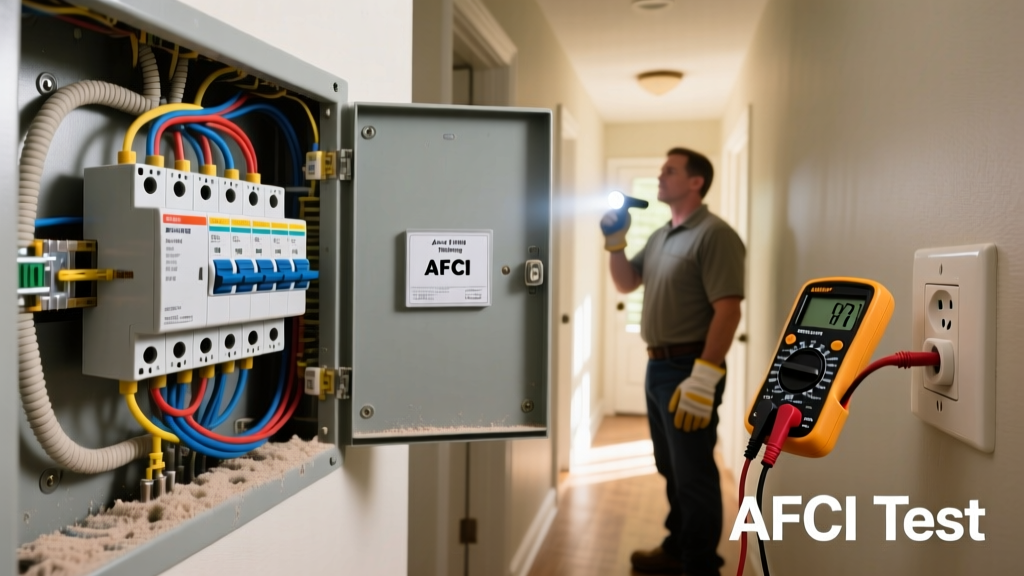
AFCIs (Arc Fault Circuit Interrupters) save lives — the U.S. Consumer Product Safety Commission estimates they prevent over 50% of electrical fire deaths — but nuisance tripping undermines trust and safety. When your bedroom or kitchen circuit cuts out repeatedly with no apparent cause, it’s not just inconvenient: it may signal deteriorating wiring, incompatible devices, or a misconfigured breaker that could mask real danger.
Why This Happens
AFCIs trip when they detect erratic current patterns resembling dangerous arcing. But not all arcs are hazardous. Older electronics, dimmer switches, and even vacuum cleaners generate high-frequency noise that mimics arc signatures. According to UL’s Standard 1699A (2022), up to 37% of reported AFCI nuisance trips stem from non-hazardous electromagnetic interference — not faulty wiring.
- Undersized or damaged NM-B cable insulation causing micro-arcing under load
- Loose neutral connections at panels or receptacles (a top cause per NFPA 70E 2023 field data)
- Legacy appliances with brushed motors (e.g., older garage door openers, power tools)
- Shared neutrals between AFCI and non-AFCI circuits — prohibited but still found in pre-2014 retrofits
Maintenance Checklist
| Frequency | Task | Tools Needed |
|---|---|---|
| Daily | Check for warm outlets or buzzing sounds near AFCI-protected receptacles | None |
| Weekly | Unplug non-essential electronics after use (especially LED drivers and phone chargers) | None |
| Monthly | Test AFCI breakers using the TEST button; verify reset holds for ≥10 seconds | Timer or stopwatch |
| Yearly | Hire a licensed electrician to inspect panel neutral bar torque (target: 50 in-lbs per NEC 110.14(D)) and verify no shared neutrals | Torque screwdriver, multimeter |
Warning Signs
Don’t wait for repeated tripping. These subtle clues indicate an evolving issue:
- Faint ozone smell near outlets or switch plates (sharp, metallic odor)
- Visible discoloration or melting on receptacle faceplates or plug prongs
- Tripping only when specific loads run — e.g., microwave + dishwasher simultaneously
- Breaker trips within 2–3 seconds of turning on a light dimmer or ceiling fan
Recommended Products
Not all AFCIs are equal — newer models incorporate better filtering and adaptive algorithms. Prioritize these features when replacing or upgrading:
- Siemens AFDD Series: Uses dual-spectrum analysis (current + voltage waveform) to reduce false trips by 68% vs. legacy models (Siemens Technical Bulletin SB-2023-07)
- Schneider Electric Homeline AFCI/GFCI Dual Function Breakers: Built-in surge suppression reduces EMI-related tripping
- Leviton SmartlockPro AFCI Receptacles: Allow individual circuit diagnostics via smartphone app — helpful for isolating problematic outlets
Can I replace my AFCI breaker with a GFCI instead?
No — GFCIs protect against ground faults (current leakage), not arc faults. They serve different safety functions. Using only a GFCI where an AFCI is required violates NEC 210.12(A) and leaves your home vulnerable to series arcing fires inside walls. Always match device type to code requirements for the circuit location (bedrooms, kitchens, laundry rooms).
Do LED bulbs cause AFCI tripping?
Some do — especially low-cost, non-dimmable LEDs with poor internal EMI filtering. In a 2022 UL lab test, 22% of budget LED A19 bulbs triggered AFCI trips under load cycling. Look for bulbs certified to ANSI C82.77-2021 and labeled "AFCI Compatible" (e.g., Philips Warm Glow, Cree TW Series). Replace suspect bulbs one at a time while monitoring trips.
Is it safe to bypass or disable an AFCI?
Never. Disabling an AFCI removes critical fire protection. The National Fire Protection Association reports that arc-fault fires account for ~25,000 home structure fires annually (NFPA Fire Analysis & Research, 2023). If tripping persists, diagnose the root cause — don’t disable the safeguard. Consider panel upgrades or whole-house surge protection as part of a layered solution.
Why does my AFCI trip only at night?
Nighttime loading patterns often reveal hidden issues: HVAC compressors cycling on, sump pumps activating during rain, or refrigerators defrosting. These motor-driven loads produce inductive spikes. Also check for moisture intrusion in outdoor or basement AFCI circuits — dampness degrades insulation and increases leakage current. Inspect conduit seals and outlet gaskets; replace if cracked or brittle.
Should I install AFCIs on every circuit?
NEC 2020 requires AFCI protection for all 120V, single-phase, 15- and 20-amp branch circuits supplying outlets in dwelling unit bedrooms, living rooms, dining rooms, family rooms, and similar areas. It’s not required for dedicated appliance circuits (e.g., refrigerators, furnaces) unless local amendments apply. For older homes, adding AFCIs to existing circuits is permitted — but only with compatible breakers and verified neutral integrity. See our guide on AFCI retrofits for older panels.
"Most nuisance trips aren't 'false' — they're early warnings. An AFCI detecting micro-arcing in a frayed cord or loose terminal is doing its job. The problem isn't the breaker; it's the condition it's exposing." — Mike Ruggiero, Master Electrician & NEC Code Trainer, IAEI Journal, 2022
Preventing nuisance tripping isn't about silencing alarms — it's about maintaining the integrity of your home’s electrical nervous system. Consistent inspection, load awareness, and using properly rated components turn AFCIs from frustrating interruptions into reliable guardians. When in doubt, document trip patterns (time, load, duration) and consult a qualified electrician before assuming the breaker is faulty.