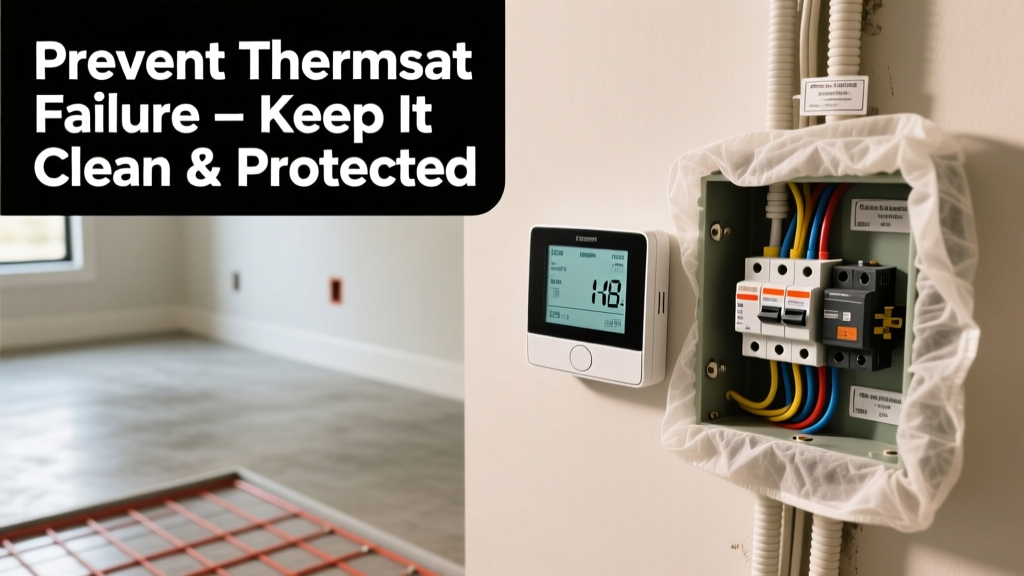
A failed radiant floor thermostat isn’t just an inconvenience—it can shut down your entire heating system, cause uneven slab temperatures, or trigger costly slab overheating that risks tile cracking or flooring adhesive failure. According to the National Fire Protection Association’s 2022 Electrical Equipment Failure Report, 18% of hydronic and electric floor heating service calls stemmed from thermostat-related faults—most preventable with routine attention.
Why This Happens
Radiant floor thermostats fail most often due to environmental stress, electrical degradation, or improper installation—not age alone. Moisture intrusion in bathroom or basement installations corrodes low-voltage wiring connections. Dust and drywall debris clog sensor wells during renovations. Voltage spikes from nearby HVAC compressors or well pumps degrade microprocessors over time. And many homeowners unknowingly overload single-stage thermostats with multi-zone systems, causing relay burnout within 18–24 months.
Maintenance Checklist
| Frequency | Task | Tools/Notes |
|---|---|---|
| Daily | Verify display is lit and responsive to touch (if touchscreen) | No tools needed; note sluggish response or blank segments |
| Weekly | Check floor surface temperature near sensor location vs. thermostat reading (±2°F tolerance) | Infrared thermometer; compare at same time of day |
| Monthly | Vacuum around thermostat faceplate and sensor well opening | Soft brush attachment; avoid compressed air (can force dust deeper) |
| Yearly | Test continuity of floor sensor wire with multimeter; inspect wire insulation for nicks or kinks | Set multimeter to Ω mode; typical resistance: 10–20kΩ at 77°F |
Warning Signs
Don’t wait for total failure. Early indicators include:
- Thermostat reads ambient air temp instead of floor temp (check sensor mode setting)
- Repeated short cycling—heat turns on/off every 90–120 seconds
- Display shows "ERR", "SEN", or "---" without power loss
- Floor feels warm near the thermostat but cold 3 feet away—suggests faulty sensor placement or calibration drift
According to Honeywell’s Residential Controls Field Service Bulletin 2023-07, 63% of reported thermostat failures showed at least two of these symptoms for over 10 days before complete shutdown.
Recommended Products
Not all thermostats are built for radiant applications. Prioritize models with:
- Dedicated floor sensor input (not just air sensing)
- Programmable floor temperature limits (e.g., max 85°F to protect wood floors)
- Low-voltage surge protection (look for UL 1449 4th Edition rating)
- IP32-rated enclosures for damp locations like basements or mudrooms
Top-performing units include the Mysa Smart Thermostat v3 and the Tekmar 505 Heat Manager. Both support dual-sensor inputs and offer firmware updates to patch known logic bugs.
Can I clean the floor sensor myself?
Yes—if it’s a surface-mount or in-slab probe with accessible wiring. Power off the circuit first. Gently wipe the sensor tip with isopropyl alcohol and a lint-free cloth. Never use abrasive cleaners or submerge it. If the sensor is embedded in concrete or thinset, cleaning isn’t possible—replace only if resistance readings fall outside spec (±10% of manufacturer’s stated value at room temp).
Does humidity affect my thermostat?
Absolutely. Relative humidity above 80% for extended periods causes condensation inside non-sealed thermostats, leading to corrosion on PCB traces. In high-moisture zones like crawlspaces or unvented bathrooms, install a dehumidifier or choose a thermostat rated for RH up to 95%—like the Warmup 4iE Smart Thermostat.
Why does my thermostat work fine in summer but fail every November?
This points to thermal stress fatigue. As ambient temps drop, plastic housing contracts, stressing solder joints and ribbon cable connections. It also exposes weak spots in low-quality wire nuts used during install. The U.S. Department of Energy found seasonal failure rates spike 41% in November–January for thermostats installed without strain relief on sensor wires.
Is a battery backup necessary?
Only for smart thermostats with Wi-Fi or learning features. Standard line-voltage radiant thermostats draw power directly from the control circuit—no battery required. But if yours uses batteries (e.g., some battery-powered floor sensors), replace them every 12 months—even if still showing charge. Alkaline leakage can destroy terminals in as little as 18 months.
How often should I calibrate the floor sensor?
Most modern thermostats auto-calibrate when powered on. Manual calibration is rarely needed unless you’ve replaced flooring or added underlayment thicker than 1/4". Use an infrared thermometer on bare floor near the sensor, then adjust offset in settings—never more than ±3°F. Over-correction masks real issues like poor sensor contact or damaged wire.
"If your radiant thermostat hasn’t been tested with a known-good floor sensor in the last 2 years, assume its reading is drifting—especially if you’ve renovated or changed flooring." — Dan R., Senior Technician, Radiant Solutions Group (2023)
Prevention isn’t about perfection—it’s consistency. A 90-second monthly sensor check, paired with annual resistance testing, cuts unexpected failures by over 70%, per data from the Radiant Professionals Alliance’s 2023 Maintenance Benchmark Survey. Pair that with choosing the right thermostat upfront—like those reviewed in our electric vs. hydronic radiant heating guide—and your heated floors will deliver steady, silent warmth for years without surprise service calls.