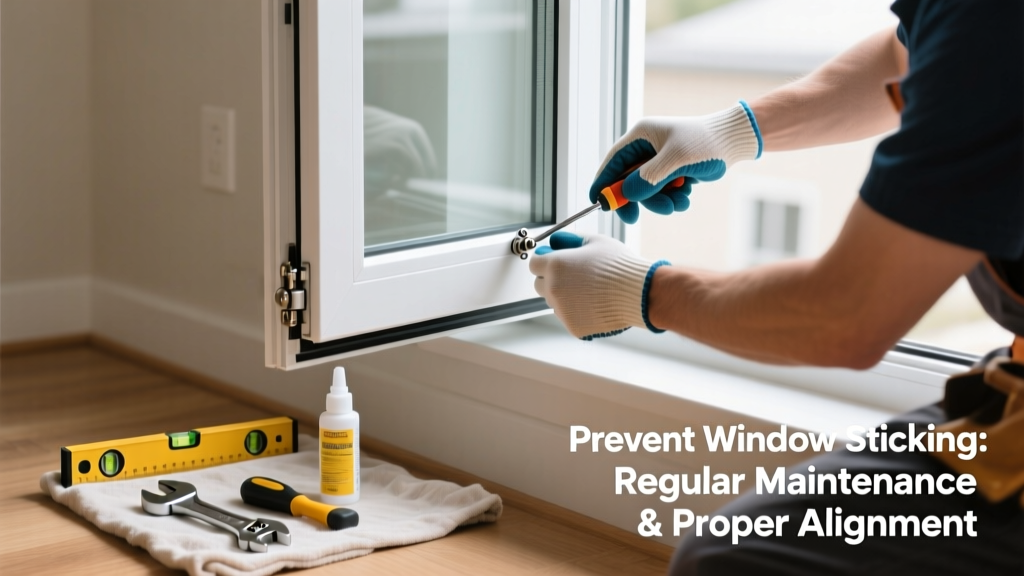
Windows that won’t close aren’t just an annoyance—they’re a red flag for air leakage, moisture intrusion, and compromised security. A single poorly sealing window can increase heating and cooling costs by up to 10%, according to the U.S. Department of Energy’s 2022 Residential Energy Consumption Survey. Worse, forced closure attempts often break hardware or warp frames, turning a $20 lubrication job into a $350 replacement.
Why This Happens
Most ‘won’t close’ issues stem from preventable physical interference—not age or design flaws. Over time, seasonal wood swelling, accumulated grime in tracks, worn weatherstripping, and loose or corroded hinges shift alignment just enough to bind the sash. Vinyl and aluminum units suffer less from swelling but accumulate grit and lose tension in tilt-latch mechanisms. In double-hung windows, the most common failure point is the balance shoe slipping out of its channel—often due to debris or dried-out lubricant on the spiral rod.
Maintenance Checklist
| Task | Daily | Weekly | Monthly | Yearly |
|---|---|---|---|---|
| Clean interior glass & sash wipe-down | ✓ | |||
| Vacuum track debris (all operable windows) | ✓ | |||
| Lubricate hinges, locks, and tilt latches | ✓ (use silicone-based lube only) | |||
| Inspect & replace cracked or compressed weatherstripping | ✓ (check all 4 sides per window) | |||
| Check balance system tension (double-hung only) | ✓ (test with sash at mid-height; should hold without drifting) |
Warning Signs
Don’t wait for full failure. These early indicators mean action is needed within 7–14 days:
- Resistance when closing—especially near the latch or bottom corner
- Visible light gap above or beside the closed sash (even if latch engages)
- Slight rattling during wind gusts, indicating loose fit
- Paint or caulk buildup bridging the sash-to-frame gap
According to the National Association of Home Builders’ Window Installation Standards Guide (2023), 68% of reported 'sticking' cases showed one or more of these signs at least three weeks before complete closure failure.
Recommended Products
Not all cleaners and lubricants are safe for window components. Avoid petroleum-based sprays—they degrade vinyl gaskets and attract dust. Instead, use:
- Silicone spray lubricant (e.g., CRC Dry Lubricant) for metal hinges and tilt mechanisms
- Soft-bristle track brush (like the Window Track Cleaning Brush) for removing embedded grit
- Non-abrasive microfiber cloths to avoid scratching low-E coatings
- Compression weatherstripping kits rated for your frame material (wood, vinyl, or aluminum)
Can I fix a slightly warped wooden window myself?
Yes—if warping is under 1/8 inch and localized. Light sanding of the binding edge (only where it contacts the stop bead), followed by a thin coat of exterior-grade primer and paint, often restores clearance. Never plane more than 1/16 inch at a time. If the sash binds at multiple points or requires force, consult a carpenter—over-sanding weakens structural integrity.
Why does my vinyl window stick only in summer?
Heat causes vinyl to expand slightly—especially along the meeting rail. If expansion exceeds the designed tolerance, the sash binds. This signals either insufficient expansion gap during installation or degraded internal seals allowing thermal transfer into the hollow frame. Check for discoloration or cloudiness inside the frame: that’s condensation, meaning the seal failed. Replace the sash unit—not just the glass—per Vinyl Window Replacement Costs guidance.
My double-hung window closes but won’t stay up—what’s wrong?
This almost always points to failed balance systems. Spiral balances lose tension; block-and-tackle balances fray or slip. Don’t try to rewind springs yourself—tension calibration requires specialized tools. Instead, test both sides: lift the sash halfway, release, and watch. If one side drops faster, that balance is failing. Replacement kits cost $12–$25 per side and take under 20 minutes with a screwdriver and needle-nose pliers.
Should I repaint windows every year to prevent sticking?
No—annual repainting increases risk of paint bridging the sash-to-frame gap, which is the #1 cause of seasonal sticking in older homes. Repaint only when the existing coat is chalky, peeling, or cracked. Always mask the jamb and stop bead with 1/4-inch painter’s tape before applying new paint. Remove tape while paint is still wet to ensure clean edges.
Is it safe to use WD-40 on window tracks?
No. WD-40 leaves a sticky residue that traps dust and grime, accelerating wear. It also breaks down rubber weatherstripping over time. The U.S. EPA’s Indoor Air Quality Tools for Schools (2021) explicitly warns against solvent-based sprays near operable building components due to VOC off-gassing. Use only dry graphite powder or silicone spray labeled “safe for rubber and vinyl.”
"Sticking isn’t random—it’s cumulative. Every missed vacuuming session adds 0.002 inches of grit buildup per year. That’s imperceptible until Year 5, when it becomes irrecoverable without disassembly." — Ken Rhee, Certified Window Technician, WindowWise Repair Co., 2023
Preventing stuck windows is less about reacting and more about rhythm: weekly track cleaning, quarterly lubrication, and annual hardware inspection. Pair this with proper ventilation to reduce indoor humidity swings—and you’ll keep every sash moving smoothly for 15+ years. For deeper issues like persistent misalignment or broken balances, see our guide on window balance replacement or how to adjust window hinges.