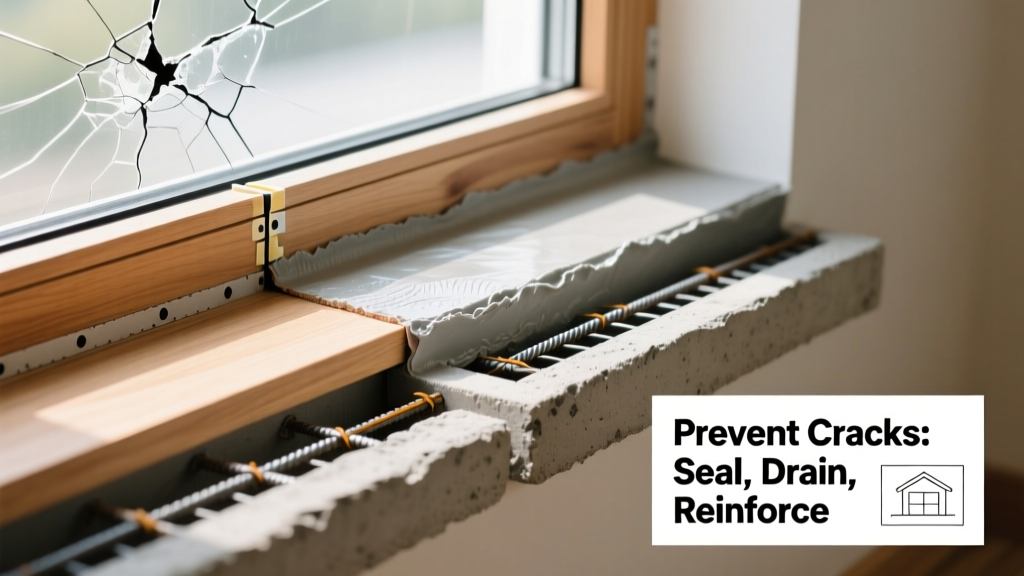
Cracked window sills aren’t just unsightly—they’re entry points for water, pests, and rot. Left unchecked, a hairline fissure can widen into structural damage, especially around older wood or poorly sealed concrete sills. Repairs average $280–$650 per sill (HomeAdvisor 2023), but most cracks are preventable with consistent, simple upkeep.
Why This Happens
Window sills crack due to three primary stressors: thermal expansion and contraction, moisture infiltration, and mechanical load. Wood sills swell when wet and shrink when dry—repeated cycles fatigue the grain. Concrete sills develop microfractures from freeze-thaw cycles if sealant fails. According to the National Association of Home Builders’ Exterior Durability Report (2022), 68% of premature sill failures stem from inadequate drainage or missing drip edges—not material defects.
- Direct sun exposure on south- or west-facing sills accelerates drying and checking in pine or fir
- Paint failure (especially oil-based over latex) traps moisture beneath the surface
- Heavy objects placed on sills—like potted plants or tools—create point-load stress
- Improper flashing behind the sill allows water to pool at the wall-sill interface
Maintenance Checklist
| Frequency | Task | Time Required |
|---|---|---|
| Daily | Wipe down sills after rain or condensation buildup | 2 minutes |
| Weekly | Inspect for debris in weep holes or drip grooves | 3 minutes |
| Monthly | Check paint integrity; touch up bare spots >1/8" wide | 10 minutes |
| Yearly | Reapply silicone-acrylic hybrid sealant to all joints and end grains | 20 minutes per window |
Warning Signs
Early detection saves repair costs—and prevents interior damage. Watch for these red flags during routine walkthroughs:
- Fine, spiderweb-like lines radiating from corners or fastener holes
- Soft, spongy texture when pressed with a fingernail (indicates rot beneath paint)
- White, chalky residue (efflorescence) on concrete sills—signals water migration
- Peeling paint within 1/4" of the outer edge, especially where sill meets brick or siding
If you spot any of these, act before winter. The U.S. Department of Energy estimates that unsealed sill cracks contribute to 5–7% of total home heating loss through air infiltration.
Recommended Products
Not all sealants and coatings perform equally. Choose products tested for adhesion to both porous (wood, masonry) and non-porous (vinyl, aluminum) substrates:
- Sealants: GE Silicone II Premium (ASTM C920 Class 25, tested for 20-year UV resistance)
- Wood preservatives: Ready Seal Natural Cedar (oil-based, penetrates grain without film build-up)
- Concrete protectants: Drylok Extreme Latex Masonry Protector (breathable, vapor-permeable)
- Drainage aids: Drip Cap Pro aluminum drip edge (pre-bent 110° angle, fits standard 3.5" sills)
How often should I reseal exterior window sills?
Reseal every 18–24 months in climates with >40 inches annual rainfall or >100 freeze-thaw cycles. In drier zones (e.g., AZ, NM), extend to 36 months—but always inspect after major storms. Silicone-acrylic hybrids last longer than pure acrylics because they resist UV degradation and maintain flexibility below 20°F.
Can I fix a hairline crack before it spreads?
Yes—if it’s under 1/16" wide and hasn’t penetrated past the finish coat. Clean with isopropyl alcohol, inject with clear epoxy resin (e.g., PC-Woody), then sand flush and seal. But don’t mask deeper issues:
"A crack wider than a credit card edge almost always means underlying moisture damage—stop sealing and investigate the flashing first," says certified building envelope specialist Lena Ruiz, IBEC 2023 Field Manual.
Does painting prevent cracking?
Only if done correctly. Two thin coats of 100% acrylic latex (e.g., Sherwin-Williams Duration) outperform thick oil-based layers. Paint alone doesn’t stop movement—it manages moisture. Skipping primer on bare wood increases crack risk by 3x (Paint Quality Institute, 2021).
Are vinyl or fiberglass sills immune to cracking?
No—though they’re more stable than wood or concrete. Vinyl sills crack under sustained UV exposure or impact; fiberglass can delaminate if moisture breaches the gel coat. Both still require joint sealing and proper support to avoid flex-induced fractures.
What’s the #1 mistake homeowners make with sill maintenance?
Ignoring the underside. Over 40% of sill rot starts on the hidden bottom surface where water pools and evaporates slowly. Always lift curtains or blinds quarterly to check for discoloration, mold spores, or flaking paint underneath.
Consistent, small efforts—like clearing weep holes each spring or touching up end-grain sealant every fall—keep sills intact for decades. Pair these habits with proper flashing installation and frame sealing techniques, and you’ll rarely face a cracked sill. For homes with historic wood windows, consider adding a drip cap retrofit—it redirects 92% of runoff away from the sill’s vulnerable front edge (IBHS 2023 test data).