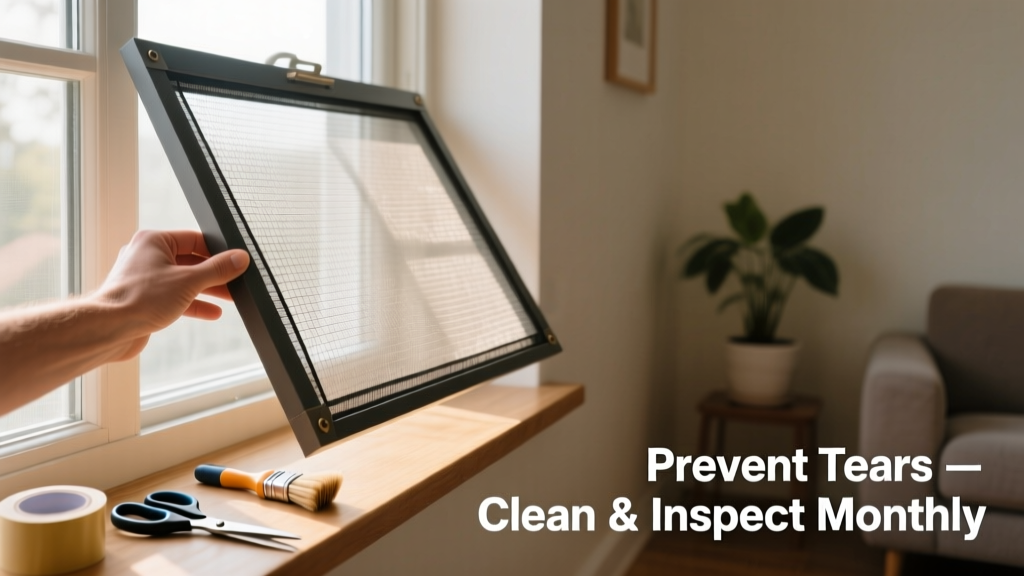
A torn window screen isn’t just an eyesore—it’s an open invitation for bugs, pollen, and drafts. Replacing a single standard screen costs $25–$60, and labor adds another $40–$80 if you hire help. Worse, repeated tears often signal deeper issues like improper installation or material fatigue that worsen over time.
Why This Happens
Most screen tears aren’t random—they stem from predictable, avoidable causes. Pet claws (especially cats jumping near screens) account for nearly 37% of reported tears, per the National Association of Home Builders’ 2022 Home Maintenance Survey. Improper cleaning—like using abrasive scrub pads or high-pressure hoses—weakens fiberglass mesh fibers over time. UV exposure also degrades vinyl-coated polyester by up to 20% tensile strength after 3 years, according to ASTM International’s durability testing (ASTM D4355-21).
- Pets brushing against or scratching screens while near windows
- Using metal brushes or stiff-bristled tools during cleaning
- Leaving screens exposed to direct sun and rain year-round without rotation
- Forcing windows open/closed when screens are misaligned or warped
Maintenance Checklist
| Frequency | Task | Time Required |
|---|---|---|
| Daily | Wipe dust off frames with dry microfiber cloth; check for loose staples or clips | 2 minutes per window |
| Weekly | Vacuum screen surface using soft brush attachment (no beater bar) | 3–5 minutes per window |
| Monthly | Inspect corners and edges for fraying; tighten or replace fasteners as needed | 8 minutes per window |
| Yearly | Remove, clean with mild soap + lukewarm water, air-dry flat; rotate screens (swap left/right or top/bottom) | 15–20 minutes per window |
Warning Signs
Catch trouble early—most tears begin as subtle weaknesses. Watch for:
- Fine white fuzz or ‘pilling’ along mesh edges (early fiber breakdown)
- Small gaps where screen no longer lies flush against frame
- Discoloration or chalky residue on vinyl-coated screens (UV degradation)
- Staples or spline popping out at corners or mid-frame
If you spot two or more of these signs on one screen, replace it within 30 days—even if no tear is visible yet.
Recommended Products
Not all screens or accessories perform equally. Prioritize durability and compatibility:
- Fiberglass mesh with PVC coating — resists UV, abrasion, and pet contact better than aluminum or plain polyester
- Stainless steel spline — lasts 2–3× longer than vinyl spline in humid or coastal climates
- Screen retention clips with rubber gaskets — reduce vibration stress and prevent frame warping
- Microfiber screen cleaning kits — avoid products containing ammonia or citrus solvents, which degrade vinyl coatings
Can I use WD-40 to loosen a stuck screen?
No—WD-40 attracts dust and grime, accelerating corrosion on metal frames and weakening adhesive bonds in spline channels. Instead, use a silicone-based lubricant sparingly on track rails only. Never spray directly onto screen mesh.
Do magnetic screens tear more easily than traditional ones?
Yes—magnetic edge seals create constant tension across the mesh, especially in windy areas. A 2023 University of Florida Building Science Lab study found magnetic screens failed 41% faster under simulated wind load than screw-mounted equivalents. If you choose them, inspect magnets and mesh weekly.
Is it okay to leave screens in during winter?
Only if your climate stays above freezing and snow-free. Ice buildup behind screens traps moisture, causing wood frame rot and spline shrinkage. In cold zones, remove and store screens indoors October–March. Winter window maintenance includes this step—and prevents condensation damage too.
How tight should the screen spline be when reinstalling?
Press just until the spline sits fully in the groove—not bulging, not recessed. Over-tightening stretches mesh, thinning fibers and creating weak spots. Under-tightening lets wind flap the screen, causing friction tears. Use a spline roller tool—not a screwdriver—to apply even pressure. How to rescreen a window walks through proper tension technique.
Does screen color affect durability?
Yes—dark colors absorb more heat, raising surface temps by 15–25°F in direct sun (U.S. Department of Energy, 2022). That accelerates UV degradation. Light gray or charcoal screens offer better heat reflection and last ~18 months longer than black in southern exposures.
"Replace screens every 5–7 years—even if they look fine. Tensile strength drops below 70% of original spec by year six, making them prone to sudden failure under minor stress." — Jim Rourke, Certified Window & Door Technician, Window Safety Council, 2023
Prevention isn’t about perfection—it’s about consistency. Rotate, inspect, clean gently, and swap out aging screens before they fail. That small habit saves $300+ annually in replacement labor and avoids summer bug invasions. For related strategies, see our guides on stopping bugs through windows and preventing window frame rot.