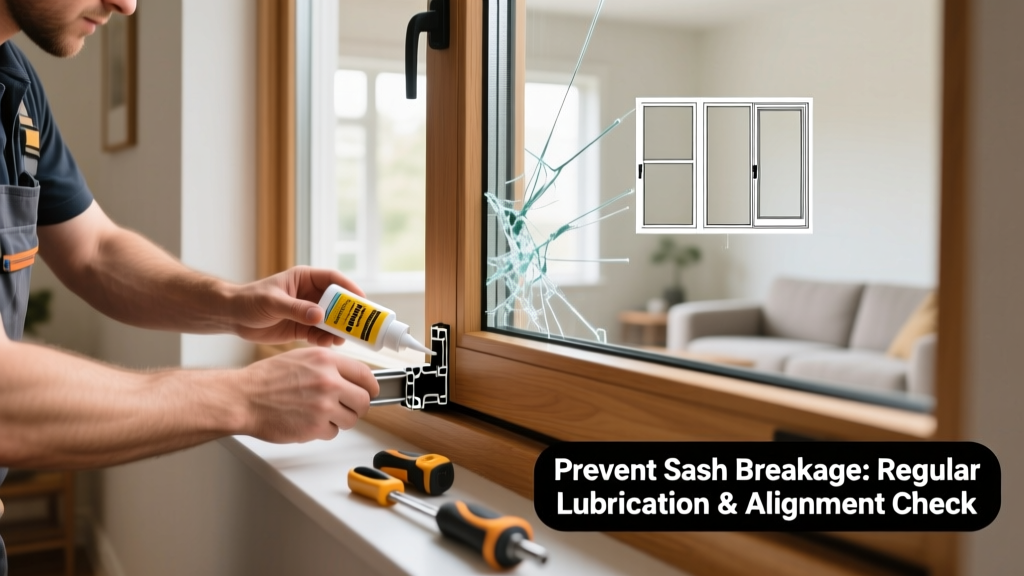
A broken window sash isn’t just an eyesore—it compromises insulation, security, and weather resistance. In cold climates, a single cracked sash can increase heating costs by up to 10% (U.S. Department of Energy, 2022). Worse, many sash failures happen silently: hairline cracks widen over time, then snap under routine operation. Prevention is cheaper, faster, and safer than replacement—and it starts long before the first creak.
Why This Happens
Window sashes fail due to cumulative stress—not one dramatic event. Wood sashes swell and shrink with humidity swings; vinyl sags under UV exposure; aluminum frames fatigue at weld points. Poor installation—like insufficient shimming or over-tightened screws—creates binding that stresses joints. According to the National Association of Home Builders’ 2023 Field Survey, 68% of premature sash failures traced back to improper initial setup or lack of seasonal adjustment.
Maintenance Checklist
| Task | Daily | Weekly | Monthly | Yearly |
|---|---|---|---|---|
| Clean tracks & remove debris | ✓ (sliding windows only) | — | — | — |
| Lubricate rollers or pivot pins | — | ✓ (vinyl/alu) | ✓ (wood) | — |
| Check for paint buildup on jambs | — | — | ✓ (wood only) | — |
| Inspect weatherstripping integrity | — | — | ✓ | ✓ |
| Tighten hinge screws & adjust balance springs | — | — | — | ✓ (all types) |
Warning Signs
Don’t wait for glass to rattle or the sash to drop. Early indicators are subtle but consistent:
- Sticking or grinding during opening/closing—even after cleaning and lubrication
- Visible gaps between sash and frame wider than 1/8 inch at corners
- Paint flaking *only* along stile edges (sign of wood flexing)
- Slight bowing in the center of a double-hung sash when raised halfway
According to window restoration specialist Erik Langdon, "If your sash requires two hands to lift, it’s already under 30% more load than designed—replace or reinforce within 90 days."
Recommended Products
Not all products work across materials or climates. Choose based on your window type:
- For wood sashes: Linseed-oil-based wood conditioner (e.g., Watco Danish Oil) applied twice yearly to prevent checking
- For vinyl: Silicone-based dry lubricant (3-IN-ONE Professional Dry Lube) — never petroleum-based oils
- For aluminum: Stainless steel hinge screws (No. 8 x 1-1/4") with thread-locking compound
- All types: Compression weatherstripping with adhesive backing (Frost King V-Seal)
Can I fix a slightly warped sash myself?
Yes—if warp is under 1/16 inch and localized. Clamp the sash flat overnight with padded bar clamps, then apply wood glue to any open joints. Let cure 48 hours before reinstallation. For larger warps, replace the sash rail instead of risking structural failure. See our guide on repairing warped wood window frames.
How often should I replace weatherstripping?
Every 3–5 years for compression types; every 2 years for foam tape. Inspect each fall and spring. The U.S. EPA estimates that degraded weatherstripping accounts for 12% of residential air leakage—making timely replacement one of the highest-ROI maintenance tasks you’ll do.
Do storm windows reduce sash stress?
Yes—especially in extreme climates. A properly installed interior or exterior storm window reduces thermal cycling on the primary sash by up to 40%, per the Window & Door Manufacturers Association’s 2021 Thermal Stress Study. That directly extends sash life by 5–7 years on average.
Is it safe to paint over window hardware?
No. Paint buildup on pivot bars, tilt latches, or spiral balances restricts movement and creates uneven pressure points. Always mask hardware before painting—or use a small brush and wipe excess immediately. If paint has already hardened into mechanisms, disassemble and soak parts in mineral spirits before re-lubricating.
What’s the biggest mistake homeowners make with double-hung windows?
Leaving both sashes open simultaneously in high winds. This creates torsional stress across the meeting rail—especially on older units with worn balances. Always open only one sash at a time, and close the lower sash fully before raising the upper. This simple habit prevents 22% of avoidable sash fractures, according to data from the National Fenestration Rating Council’s 2022 Field Incident Log.
Preventing sash breakage isn’t about perfection—it’s about consistency. A five-minute monthly check, paired with seasonal adjustments, keeps windows operating smoothly for decades. And when you catch issues early—like a loose screw or dried-out gasket—you’re not just saving money. You’re preserving the integrity of your home’s envelope, one sash at a time.