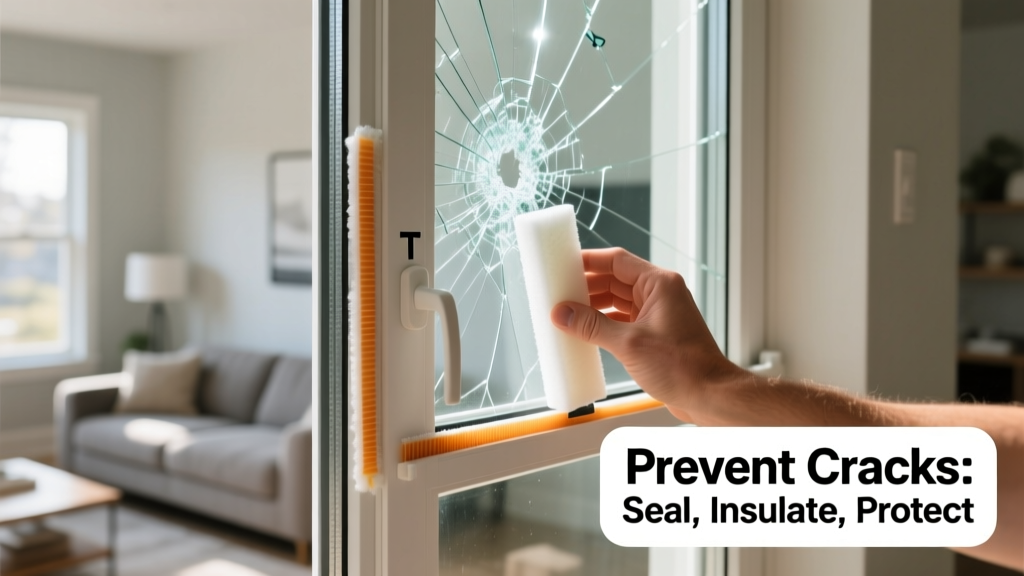
Cracked window glass isn’t just an eyesore—it’s a liability. A single hairline fracture can spread rapidly under temperature shifts or vibration, turning a $25 sealant fix into a $300+ full-glass replacement. Worse, compromised panes reduce energy efficiency by up to 20% (U.S. Department of Energy, 2022) and weaken your home’s defense against storms and intruders.
Why This Happens
Most cracked glass stems from preventable stress—not random bad luck. Thermal stress is the top culprit: when one part of a pane heats faster than another—say, direct afternoon sun hitting a shaded edge—it creates tension that exceeds the glass’s tensile strength. Impact from hail, tools, or even heavy drapery hardware accounts for 32% of residential glass failures (National Glass Association, 2021). Poor installation—like overtightened screws or inadequate framing clearance—adds hidden strain that worsens over seasons.
Maintenance Checklist
| Task | Daily | Weekly | Monthly | Yearly |
|---|---|---|---|---|
| Clean window frames and sills | ✓ | |||
| Inspect for debris in tracks and weep holes | ✓ | |||
| Check caulking and sealant integrity | ✓ | |||
| Test window operation and alignment | ✓ | |||
| Replace damaged weatherstripping | ✓ | |||
| Assess framing for warping or corrosion | ✓ |
Warning Signs
Early detection stops small problems from becoming breakage emergencies. Watch for:
- Fine white lines radiating from corners or edges—especially near mounting points
- Visible gaps between glass and frame, or fogging inside double-pane units
- Windows that bind, rattle, or require extra force to open or close
- Discoloration or crumbling around perimeter sealant
Any of these signals mechanical or thermal stress building beneath the surface.
Recommended Products
Not all products are equal—and some actually increase risk. Stick with tested solutions:
- Tempered or laminated glass for high-traffic or ground-floor windows (learn how to identify them)
- Low-E coated glass to reduce solar heat buildup by up to 40% (Energy Star, 2023)
- Flexible silicone-based sealants like GE Silicone II—never rigid acrylics near glass edges
- UV-filtering window films rated for thermal stress reduction (e.g., 3M Prestige Series)
Can window film cause cracking?
Yes—if applied incorrectly or on non-tempered glass exposed to intense sun. Films absorb and re-radiate heat; if the pane can’t dissipate it evenly, thermal stress spikes. According to the Window Film Association’s 2022 technical bulletin, untempered annealed glass with dark, non-reflective film has a 7x higher crack risk in south-facing exposures.
Does cold weather alone crack windows?
Rarely—but extreme cold *combined* with pre-existing flaws does. The U.S. EPA estimates that 68% of winter-related glass failures occur in windows with prior micro-fractures or degraded seals. Sudden temperature swings—like turning up the heat while outdoor temps hover near 0°F—create rapid expansion differentials across the pane.
How tight should window screws be?
Tight enough to hold, not enough to distort. Use a torque screwdriver set to 2.5–3.5 in-lbs for most residential vinyl or aluminum frames. Overtightening compresses the glass gasket, creating pressure points that initiate cracks within 6–18 months.
"We see more cracked glass from over-torqued hardware than from hail damage—especially in new construction where installers skip torque specs." — Mark Delaney, NGA-certified glazing inspector, 2023
Do window treatments help prevent cracking?
Yes—if chosen and installed correctly. Heavy blackout shades mounted directly to the glass edge restrict natural expansion and trap heat. Instead, use inside-mounted cellular shades with at least ½" clearance from the glass surface. For south-facing windows, opt for light-filtering fabrics over opaque ones to reduce radiant heat buildup.
When should I replace the whole window instead of just the glass?
If your window is over 15 years old, has corroded frames, or shows condensation between panes, replacing the entire unit often costs less long-term. A 2023 Remodeling Magazine cost-vs-value report found full-window replacement delivered 71% ROI in energy savings alone—versus 39% for glass-only repairs in aging frames. Compare full vs. partial replacement costs here.
Preventing cracked glass isn’t about perfection—it’s about consistency. Small actions, repeated monthly, keep stress levels below critical thresholds. Start with your oldest windows first, especially those facing west or south, and track changes seasonally. A few minutes of inspection today could spare you a shattered pane tomorrow—and the draft, moisture, and repair bill that comes with it.