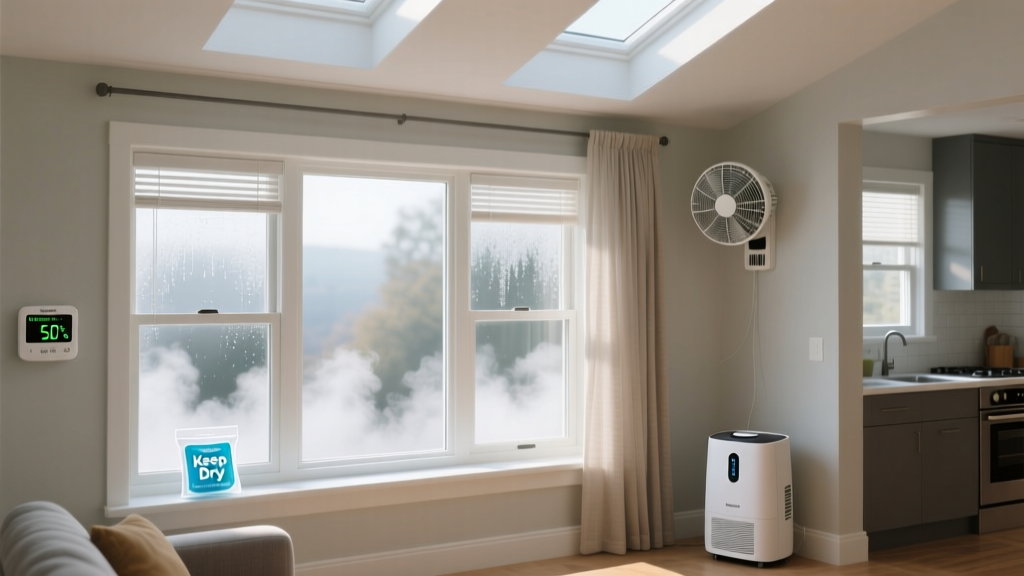
Interior window condensation isn’t just a foggy nuisance—it’s a red flag signaling excess moisture that can warp wood sills, rot framing, and feed hidden mold colonies behind drywall. Left unchecked, persistent condensation contributes to 20% of residential moisture-related insurance claims, according to the Insurance Institute for Business & Home Safety’s 2023 report on residential moisture damage.
Why This Happens
Condensation forms when warm, humid indoor air contacts cold glass—typically during winter when exterior temperatures drop below the dew point. But it’s rarely just about the weather. Three primary drivers interact: indoor relative humidity above 45%, insufficient air circulation near windows, and thermal bridging through single-pane or poorly sealed double-glazed units. Older homes with original aluminum-framed windows are especially vulnerable—the metal conducts cold so efficiently that surface temperatures often fall 15–20°F below room air, easily dropping below dew point even at moderate humidity levels.
Maintenance Checklist
| Task | Daily | Weekly | Monthly | Yearly |
|---|---|---|---|---|
| Run bathroom/kitchen exhaust fans during and 20 min after use | ✓ | |||
| Wipe window sills and frames with dry microfiber cloth | ✓ | |||
| Check and clean HVAC air filters | ✓ | |||
| Test window seals with candle or incense stick (draft detection) | ✓ | |||
| Inspect and recaulk perimeter sealant where frame meets wall | ✓ | |||
| Calibrate hygrometer and adjust whole-house dehumidifier setpoint | ✓ |
Warning Signs
Don’t wait for puddles. Early indicators include:
- Frost patterns forming only on lower panes (suggests poor bottom-seal insulation)
- Black specks along window edges (early mold spores, often Cladosporium)
- Peeling paint or bubbling wallpaper within 6 inches of the frame
- A musty odor localized near windows—even without visible moisture
According to the U.S. EPA, indoor relative humidity above 60% for more than 48 hours creates ideal conditions for mold growth on organic substrates like wood and drywall paper—so consistent readings over that threshold warrant immediate action.
Recommended Products
Not all solutions work equally well—and some, like chemical anti-fog sprays, only mask symptoms. Prioritize products that address root causes:
- Smart hygrometers with alerts (e.g., ThermoPro TP50) — syncs with HVAC to auto-adjust based on real-time RH data
- Low-E storm windows — add R-2.5 insulation value without replacing originals; payback in energy savings averages 3.2 years (DOE, 2022)
- Heat-recovery ventilators (HRVs) — exchange stale, moist air for fresh, tempered air while retaining 70–90% of heat
- Desiccant-based window inserts (e.g., Indow Window Inserts with silica gel channels) — absorb localized moisture at the glass surface
Can opening windows help reduce condensation?
Yes—but only under specific conditions. Opening windows briefly during mild, dry days (outdoor RH < 40%) helps purge moisture. However, doing so during subfreezing, humid outdoor air (especially in coastal or lake-effect zones) introduces more water vapor and cools surfaces further. A better strategy is timed ventilation using exhaust fans paired with door undercut gaps (minimum ¾” clearance) to encourage cross-airflow without drafts.
Do thermal curtains actually prevent condensation?
They help—but only if installed correctly. Standard thermal drapes reduce condensation by creating an insulating air gap, but they must extend at least 2 inches beyond the window frame on all sides and touch the sill or floor to be effective. A 2021 study by the Canadian Centre for Housing Technology found improperly hung thermal curtains reduced surface condensation by just 12%, while fully sealed installations cut it by 63%.
Is condensation between double-pane windows fixable?
No—this indicates seal failure and trapped moisture inside the unit. The IGU (insulated glass unit) must be replaced. Attempting DIY defogging or drilling holes voids warranties and risks glass breakage. Replacement cost averages $220–$450 per window, but delaying invites moisture migration into spacer materials, accelerating corrosion and eventual fogging recurrence.
Why does condensation appear only on north-facing windows?
North-facing windows receive minimal solar gain, staying consistently colder than south- or west-facing units. In homes with uneven heating—such as forced-air systems with poorly balanced registers—these windows often sit in cold-air pockets. Installing a small, thermostatically controlled heat tape strip (UL-listed, ≤12W/ft) along the bottom rail raises surface temperature just enough to stay above dew point without raising room temps.
Can houseplants contribute to window condensation?
Yes—especially clusters of high-transpiration species like peace lilies, ferns, or orchids placed directly on sills. One mature peace lily releases up to 1 pint of water vapor daily (University of Florida IFAS Extension, 2020). Move plants at least 3 feet from windows, or group them in rooms with active exhaust (e.g., laundry room) rather than bedrooms or living areas.
Preventing window condensation isn’t about eliminating humidity—it’s about managing it intelligently. Start with a $15 hygrometer and track RH in each room for one week. You’ll likely spot patterns: spikes after showers, dips during furnace cycling, or sustained highs in basements. From there, targeted fixes—like adding a bathroom exhaust fan with timer, upgrading to ENERGY STAR® certified windows, or installing a heat-recovery ventilator—pay dividends in comfort, health, and long-term repair costs. Small adjustments, consistently applied, keep your windows clear—and your walls dry.
"Surface condensation is the canary in the coal mine for whole-house moisture imbalance. Fix the symptom without diagnosing the source, and you’re just mopping the floor while the faucet runs." — Dr. Lena Cho, Building Science Engineer, Building Science Corporation, 2022