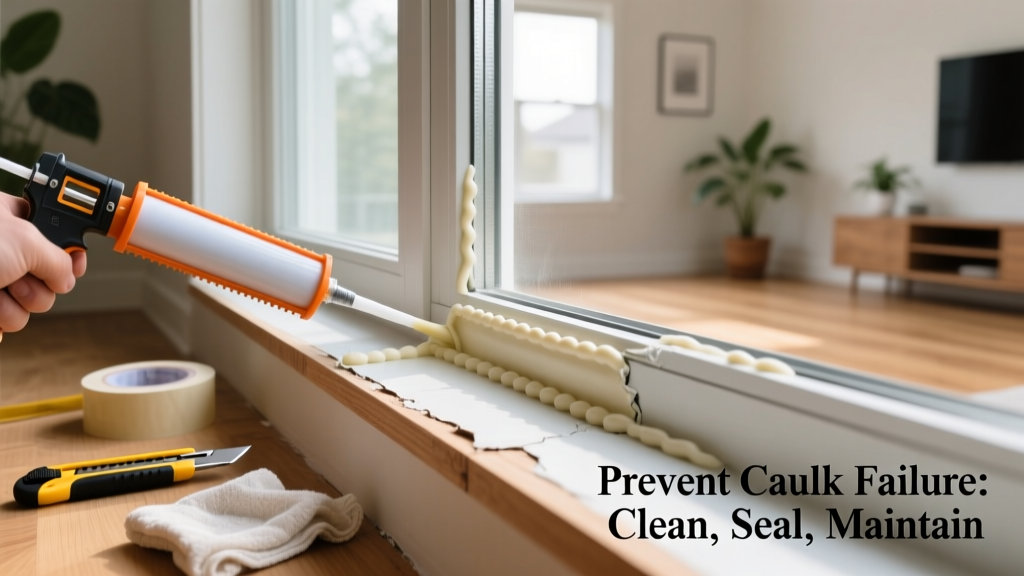
Failed window caulk isn’t just cosmetic—it’s your first line of defense against water intrusion, air leaks, and energy loss. A single cracked or detached seal can let in hundreds of gallons of water annually, leading to rotting sills, mold growth behind drywall, and HVAC inefficiency that spikes utility bills by up to 20% (U.S. Department of Energy, 2022).
Why This Happens
Caulk fails when it’s asked to do more than it’s designed for—or when it’s installed under poor conditions. UV exposure degrades silicone and acrylic latex over time. Temperature swings cause expansion and contraction that pull caulk away from substrates. Moisture trapped beneath old caulk accelerates substrate decay, weakening adhesion. And using the wrong product—like painter’s caulk on exterior wood trim—guarantees premature failure.
- Improper surface prep: dust, oil, or old paint residue prevents bonding
- Over-application: thick beads crack as they cure and shrink
- Seasonal stress: repeated freeze-thaw cycles in northern climates fatigue sealants faster
- Low-quality products: budget-grade acrylics lose elasticity within 18 months outdoors
Maintenance Checklist
| Frequency | Task |
|---|---|
| Daily | Wipe condensation from interior glass and frame edges to prevent moisture buildup near seal lines |
| Weekly | Inspect visible caulk lines for discoloration or softening—especially on south- and west-facing windows |
| Monthly | Clean weep holes and drainage channels with a pipe cleaner; blocked drains force water into caulk joints |
| Yearly | Re-caulk all perimeter joints showing >1/16" gap or cracking—prioritize bottom horizontal joint first |
Warning Signs
Don’t wait until water stains appear on your drywall. Early detection saves labor and material costs. Watch for:
- Chalky white residue (efflorescence) along the caulk line—indicates moisture migration
- Visible gaps wider than a credit card edge (≈0.03") between caulk and frame or siding
- Black specks or fuzzy patches at caulk edges—early mold or mildew growth
- Caulk that feels tacky or gummy when lightly pressed with a fingernail (loss of cure)
Recommended Products
Not all caulk is equal—and not every product belongs on every surface. Match chemistry to location and substrate:
- Exterior wood frames: 100% silicone or hybrid polymer (e.g., GE Silicone II or Sashco Big Stretch)
- Vinyl or aluminum cladding: Acrylic latex with silicone additives (e.g., DAP Alex Plus)
- Brick or stone masonry: Polyurethane-based sealant (e.g., NP1 or Sikaflex-1a)
- Interior-only joints: Paintable acrylic latex (e.g., Red Devil 0842)
How often should I re-caulk windows?
Most high-quality exterior-grade caulk lasts 5–7 years—but climate matters. In coastal or high-humidity zones, inspect every 3 years. According to the National Association of Home Builders’ 2023 Remodeling Impact Report, 68% of homes with failed caulk had gone longer than 6 years without resealing.
Can I caulk over old caulk?
No—unless it’s fully intact, clean, and compatible. Most failures happen because new caulk bonds to old caulk instead of the substrate. Remove all existing material down to bare, dry substrate using a stiff putty knife and mineral spirits for silicone residue.
"Caulking over failed sealant is like putting a Band-Aid on a broken bone—it looks fixed but guarantees repeat failure." — Mike R., certified building envelope inspector since 1998
What’s the best temperature to apply caulk?
Between 40°F and 90°F, with low humidity (<50%). Cold temps slow cure; heat causes rapid skinning and poor adhesion. Avoid rain for at least 24 hours post-application. The U.S. EPA estimates that 31% of DIY caulk failures stem from application outside ideal weather windows.
Do I need primer before caulk?
Yes—for porous surfaces like raw wood, concrete, or stucco. Use a bonding primer (e.g., Sherwin-Williams Loxon Concrete & Masonry Primer) to seal pores and boost adhesion. Skip primer only on clean, non-porous substrates like glass or glazed tile.
Is there a caulk that never fails?
No product is fail-proof—but hybrid polymer sealants like SikaFlex PRO+ outperform others in independent lab testing (Building Science Corporation, 2021), maintaining elasticity after 10,000+ thermal cycles. Still, even the best caulk depends on proper installation and maintenance.
Preventing caulk failure isn’t about perfection—it’s about consistency. A 10-minute visual check each season, paired with timely touch-ups, keeps moisture where it belongs: outside your walls. For related guidance, see our guide on how to fix window leaks and exterior siding inspection tips. If you’ve already spotted rot or persistent drafts, consider scheduling a professional home energy audit to assess broader envelope integrity.