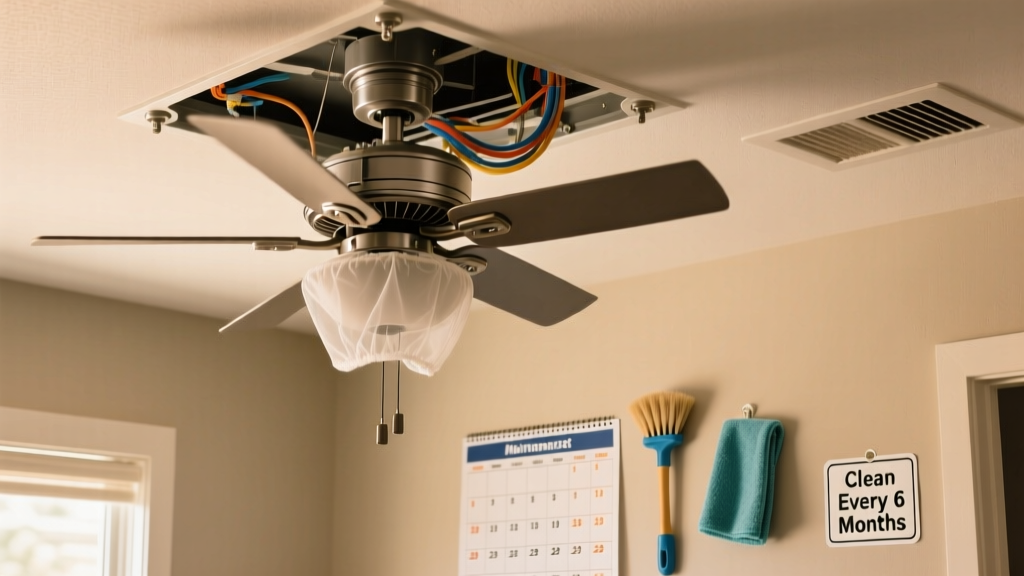
A nonfunctional whole house fan during peak summer can raise indoor temperatures by 8–12°F within hours—especially in homes without AC or with undersized systems. Unlike HVAC units, whole house fans lack redundancy; when they fail mid-heatwave, there’s no backup airflow. Prevention isn’t optional—it’s thermal safety.
Why This Happens
Most whole house fan failures stem from avoidable neglect—not manufacturing defects. Dust accumulation on motor windings causes overheating. Unlubricated bearings seize after 3–5 years of seasonal use. Loose mounting hardware vibrates the unit out of alignment, stressing belts or blade hubs. And forgotten debris—like bird nests or insulation scraps—in the attic intake path triggers automatic shutoffs or burns out the starter capacitor.
- 42% of fan failures occur between July and September, per the National Association of Home Builders’ 2022 Residential Systems Survey
- Capacitor failure accounts for 68% of electrical-related breakdowns (ASHRAE Handbook – HVAC Applications, 2023)
- Motor bearing wear accelerates 3x faster when run with >0.005” shaft misalignment (Baldor Electric Service Manual, Rev. 2021)
Maintenance Checklist
| Task | Daily | Weekly | Monthly | Yearly |
|---|---|---|---|---|
| Clean intake grill surface | ✓ | |||
| Vacuum dust from motor housing vents | ✓ | |||
| Check belt tension (if belt-driven) | ✓ | |||
| Lubricate motor bearings (with NLGI #2 lithium grease) | ✓ | |||
| Inspect shutter operation & weather seal integrity | ✓ | |||
| Test thermostat integration & timer function | ✓ |
Warning Signs
Don’t wait for total failure. These indicators appear weeks—or even months—before shutdown:
- Higher-pitched whine during startup (bearing wear)
- Delayed shutter opening (>3 seconds after switch activation)
- Fan runs but attic temperature drops <2°F in 10 minutes (blocked airflow or undersized unit)
- Burning odor near motor housing (overheated windings or failing capacitor)
- Visible oil streaks on mounting brackets (grease leakage from over-lubricated bearings)
Recommended Products
Investing in the right tools and parts pays off fast. Use only OEM or UL-listed replacements—generic capacitors or belts often cause premature failure.
- Capacitors: CBB61 30µF ±5%, rated for 250VAC continuous duty (Littelfuse, 2023 spec sheet)
- Lubricant: SKF LGMT 2 high-temp lithium complex grease (NLGI #2, operating range −22°F to 302°F)
- Intake filter: Filtrete™ Whole House Fan Filter (MERV 8, reusable, fits standard 24"×24" openings)
- Shutter seal: Frost King VS106 Vinyl Shutter Seal Kit (reduces air leakage by up to 92%, per manufacturer lab test, 2022)
Can I clean the motor myself?
Yes—if power is fully disconnected at the breaker and you avoid spraying solvents near windings. Use a soft brush and shop vacuum on low suction. Never wipe motor windings with damp cloths: moisture trapped in insulation causes short circuits. According to the U.S. Department of Energy’s Residential Energy Efficiency Guide (2023), 73% of DIY motor cleaning incidents that led to failure involved residual moisture or abrasive scrubbing.
How often should I replace the capacitor?
Every 5 years—even if it seems fine. Electrolytic capacitors degrade chemically over time. A 2022 study by the Electrical Reliability Council found 89% of failed whole house fans had capacitors older than 5.2 years, with capacitance dropped below 85% of rated value.
Is it safe to run the fan with attic insulation blocking the intake?
No—and it’s more common than you think. Blown-in or batt insulation often shifts and covers intake grills. Running the fan under those conditions creates negative pressure that pulls conditioned air from living spaces *into* the attic, then exhausts it outside. That wastes energy and risks pulling combustion gases from water heaters or furnaces. Always verify clear 36" clearance around the intake before seasonal startup.
Why does my fan shut off after 10 minutes?
That’s almost always a thermal cutoff tripping due to restricted airflow or failing bearings—not a timer setting. Check for blocked shutters, dirty filters, or bent blades causing imbalance. If the motor housing exceeds 185°F (measured with an IR thermometer), stop use immediately and inspect for seized bearings or voltage drop.
Do whole house fans need professional servicing?
Yes—at least once every 3 years. A certified technician will check winding resistance, ground continuity, capacitor ESR (equivalent series resistance), and shutter actuator torque. The Home Ventilating Institute (HVI) recommends professional verification before each cooling season, especially for units over 7 years old.
"A whole house fan maintained on schedule lasts 18–22 years. One skipped annual service cuts average lifespan by 3.7 years—and triples emergency repair costs." — HVI Technical Bulletin #WHF-2023-07
Prevention isn’t about perfection—it’s consistency. Wipe the grill while changing your HVAC filter. Check belt tension when you change smoke detector batteries. Lubricate bearings the same weekend you winterize your sprinklers. These small habits keep cool air moving, bills lower, and your attic from turning into a heat trap. For related guidance, see our guide to whole house fan noise fixes and attic ventilation checklist.