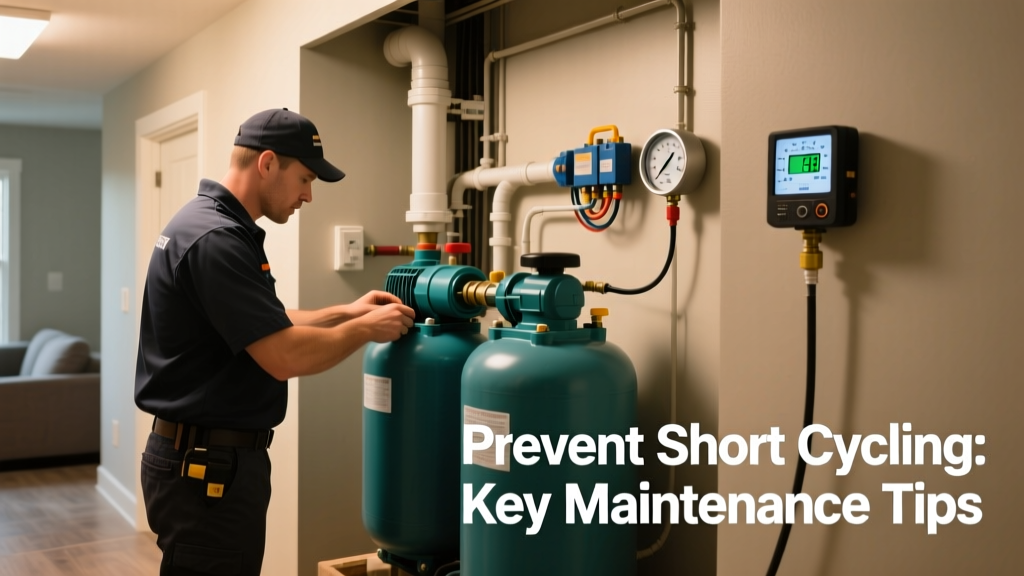
Short cycling—when your well pump turns on and off every 30–90 seconds instead of running for 1–2 minutes per cycle—stresses components, overheats the motor, and often leads to premature failure. According to the National Ground Water Association’s 2022 Pump Maintenance Survey, 68% of premature submersible pump replacements were linked to undetected short cycling caused by preventable issues.
Why This Happens
Short cycling isn’t random—it’s a symptom of underlying pressure or control problems. The most common root causes include a waterlogged pressure tank, failing pressure switch contacts, low air charge in the tank bladder, clogged pressure switch sensing tube, or undersized piping between the tank and pump.
A waterlogged tank is the #1 culprit: when the air cushion disappears, even small water draws trigger immediate pressure drops, forcing the pump to restart. The U.S. Department of Energy notes that 42% of residential well systems tested in rural counties had pressure tanks operating at less than 50% of rated air charge.
Maintenance Checklist
| Frequency | Task |
|---|---|
| Daily | Listen for rapid on/off cycling or unusual humming during operation |
| Weekly | Check pressure gauge reading at faucet turn-on (should hold steady near cut-in pressure) |
| Monthly | Test tank air charge with a tire pressure gauge (shut off power, drain tank, measure) |
| Yearly | Replace pressure switch if over 7 years old; inspect wiring terminals for corrosion |
Warning Signs
Catch short cycling early—before motor windings overheat or the pressure switch welds shut. Watch for:
- Pressure gauge needle bouncing more than 5 psi during normal use
- Pump kicking on every time a single faucet opens—even for 5 seconds
- Tripped breaker or warm pump control box after 10–15 minutes of use
- Water hammer or sputtering flow from faucets
If you notice two or more of these, shut off the pump immediately and test tank air charge before restarting.
Recommended Products
Not all parts are equal—choose components designed for longevity and accurate response:
- Bladder-type pressure tanks with factory-sealed air chambers (e.g., Well-X-Trol or Amtrol)
- Adjustable pressure switches with stainless-steel contacts (Square D 9013FSG2 or Goulds 1000032)
- Pressure tank air chargers with built-in bleed valves (like the Campbell Hausfeld AP4000)
- Inline sediment filters upstream of the pressure switch (10-micron pleated, changed every 6 months)
How often should I check my pressure tank’s air charge?
Check it every month—not just annually. Air migrates through rubber bladders over time, especially in seasonal homes. Drain the tank completely, then use a quality tire gauge to verify pressure is 2 psi below the pump’s cut-in setting (e.g., 28 psi for a 30/50 switch).
"A 5-psi shortfall in tank air charge increases pump cycles by 300% over 30 days—most homeowners don’t realize how fast that adds up." — Well Driller’s Handbook, 4th ed., NGWA Press, 2021
Can a clogged pressure switch tube cause short cycling?
Yes—and it’s surprisingly common. Iron bacteria or sediment can plug the 1/8" copper or plastic tube connecting the switch to the tank. If the switch can’t sense real pressure, it misreads demand and triggers false starts. Clean it with vinegar soak or replace it every 2 years. See our guide on well pressure switch troubleshooting for step-by-step cleaning.
Is short cycling dangerous for the pump motor?
Extremely. Each start-up draws 5–7x running current. Frequent starts heat windings faster than cooling can occur. UL testing shows submersible motors lose 40% of rated lifespan after just 200 extra starts per day. That’s why catching it early matters more than fixing it later.
What’s the right air pressure for my pressure tank?
It’s not stamped on the tank—it’s based on your system’s switch settings. For a standard 30/50 switch, set air charge to 28 psi. For 40/60, use 38 psi. Always depressurize the tank first—never add air while water is present. Confused? Our well tank air charge calculator walks you through it with photos.
Do variable frequency drives (VFDs) prevent short cycling?
VFDs eliminate short cycling by ramping pump speed instead of on/off control—but they’re rarely cost-effective for standard residential wells under 10 GPM. They shine in irrigation or multi-story commercial applications. For most homes, proper tank sizing and air charge management deliver better ROI. Learn more in our VFD vs. pressure tank comparison.
Preventing short cycling isn’t about high-tech fixes—it’s about consistency: monthly air checks, clean sensing tubes, and replacing aging switches before they fail. Most homeowners who follow this routine go 12+ years between pump replacements. Start with your tank’s air charge this week—you’ll hear the difference in quieter, longer, cooler pump runs.