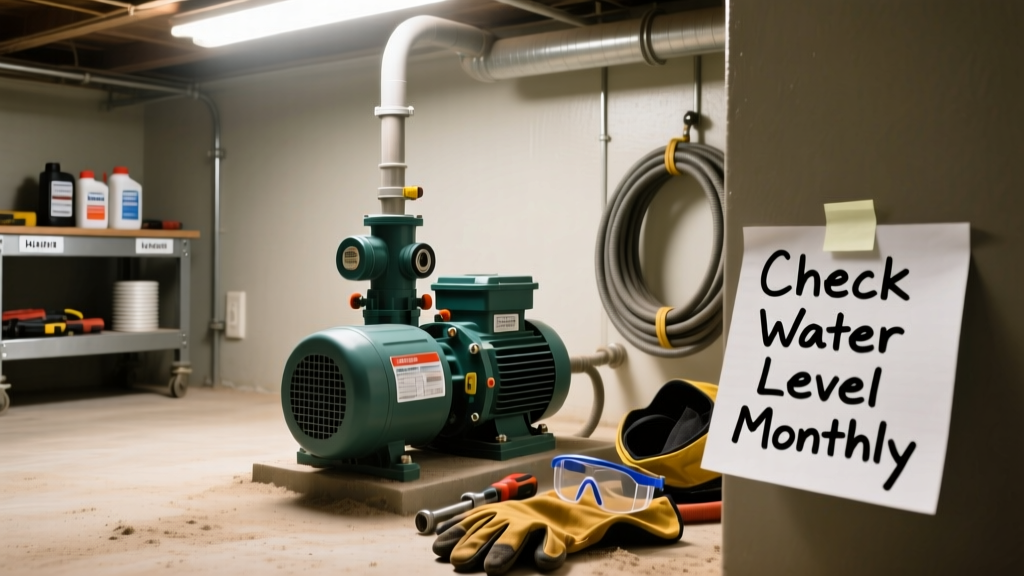
A sudden loss of water from your well system isn’t just inconvenient—it can halt cooking, cleaning, sanitation, and even heating if you rely on a hydronic system. Unlike municipal water, wells offer zero redundancy: when the pump fails or the water table drops, there’s no backup tap. Prevention isn’t optional; it’s your only reliable safety net.
Why This Happens
Well pump no water scenarios rarely stem from a single point of failure. More often, they’re the result of layered issues—some mechanical, some environmental, some overlooked during routine upkeep. According to the National Ground Water Association’s 2022 Well Owner’s Handbook, 68% of residential well pump failures involve electrical faults or pressure tank problems—not the pump itself.
- Electrical issues: Tripped breakers, corroded wiring, or failing control boxes cut power silently.
- Pressure tank failure: A waterlogged or airless tank causes rapid cycling and pump burnout.
- Low water table: Drought or over-pumping drops the static water level below the pump’s intake.
- Sediment clogging: Iron bacteria or silt buildup in foot valves or screens restricts flow over time.
- Worn impellers or bearings: Gradual wear reduces output until flow stops entirely—often without warning noise.
Maintenance Checklist
| Frequency | Task | Tools/Notes |
|---|---|---|
| Daily | Check for consistent water pressure at faucets; note any sputtering or delayed response | No tools needed—just observation |
| Weekly | Inspect pressure gauge reading: should hold steady between 40–60 psi (for standard systems) | Compare to manufacturer’s spec sheet (e.g., Goulds 5GCR series) |
| Monthly | Test pressure tank air charge with a tire gauge; recharge to 2 psi below cut-in pressure | Use Schrader valve adapter; typical cut-in = 30 psi → charge to 28 psi |
| Yearly | Have licensed well contractor perform full system diagnostic: voltage draw, amp load, drawdown test, and water quality screening | Includes well water testing kit use for iron bacteria and coliform |
Warning Signs
Early detection beats emergency service calls—and saves hundreds in labor fees. These signs mean your pump is already stressed, not just ‘acting up.’
- Water pressure drops significantly after 2–3 minutes of continuous use
- Pump runs longer than usual before shutting off (e.g., >90 seconds vs. normal 30–45 sec)
- Intermittent sputtering or air in lines—even after bleeding faucets
- Humming or clicking sounds without water flow (indicates seized motor or relay failure)
- Visible rust stains or metallic taste worsening over weeks (sign of iron bacteria biofilm)
Recommended Products
Not all products are equal—especially where electricity and groundwater meet. Prioritize UL-listed, NSF-certified, and well-specific components.
- Pressure tank air chargers: Accu-Gauge Pro Series (designed for bladder tanks; eliminates guesswork)
- Well pump monitors: Grundfos MQFlex with built-in dry-run protection and Bluetooth alerts
- Iron bacteria treatments: Bio-Clean Bacterial Enzyme Formula (non-bleach, EPA-registered for potable systems)
- Voltage stabilizers: Tripp Lite LC1200 line conditioner (prevents brownouts from damaging control boxes)
How often should I test my well water?
The U.S. EPA recommends annual testing for coliform bacteria, nitrates, and pH—but if you’ve had low-yield episodes or nearby land disturbance (e.g., new construction), test every 6 months. Iron bacteria presence increases risk of clogged foot valves by 3.7×, per the Well Maintenance Alliance’s 2023 Field Survey.
Can a bad pressure switch cause no water?
Absolutely. The pressure switch tells the pump when to start and stop. If contacts are pitted or the diaphragm is cracked, it may never signal ‘start’—even with full power and water in the well. Replace switches every 5 years or after 10,000 cycles (most log 7,500–9,000/year in average homes).
Is it safe to run the pump dry to clear air?
No. Running a submersible pump without water for more than 10–15 seconds risks permanent motor damage. Heat builds rapidly—copper windings degrade at 250°F, and most pumps exceed that in under 20 seconds. Always prime shallow wells properly, and for deep wells, use a qualified technician to bleed air via the pressure tank’s air valve—not the pump.
What’s the average lifespan of a well pump?
Submersible pumps last 8–15 years depending on runtime, water chemistry, and voltage stability. According to the American Water Works Association’s 2021 Infrastructure Report, pumps in high-iron or high-sulfur wells fail 41% sooner than those in balanced aquifers. That’s why annual amp-draw checks matter—they catch efficiency loss before total failure.
Should I install a low-water cutoff switch?
Yes—if your well is shallow (<100 ft) or located in drought-prone regions like the High Plains or Central Valley. These devices shut off the pump when water level drops below a safe threshold, preventing dry-running and thermal overload. Models like the Franklin Electric WPS-100 integrate seamlessly with most 230V systems and cost under $120 installed.
How do I know if my well is going dry?
It’s rarely sudden. Watch for: progressively longer pump run times, sand in faucet aerators, increased turbidity after heavy use, and a drop in static water level measured annually with a weighted tape. A certified well driller can perform a yield test—minimum acceptable sustained yield is 5 GPM for a household of four (per Well Yield Test Guide).
"Most ‘no water’ calls we respond to aren’t pump failures—they’re preventable pressure tank or switch issues caught too late. Check your air charge every 30 days. It takes 90 seconds and prevents 40% of service visits." — Rick Delaney, Master Well Technician, NGWA-Certified since 1998
Preventing well pump no water isn’t about doing more—it’s about doing the right things at the right time. You don’t need to be a plumber or hydrologist. You do need consistency: a monthly gauge check, a yearly pro visit, and awareness of what your system sounds and feels like when it’s healthy. That awareness—and the small habits built around it—is what keeps your well flowing, safely and steadily, year after year.