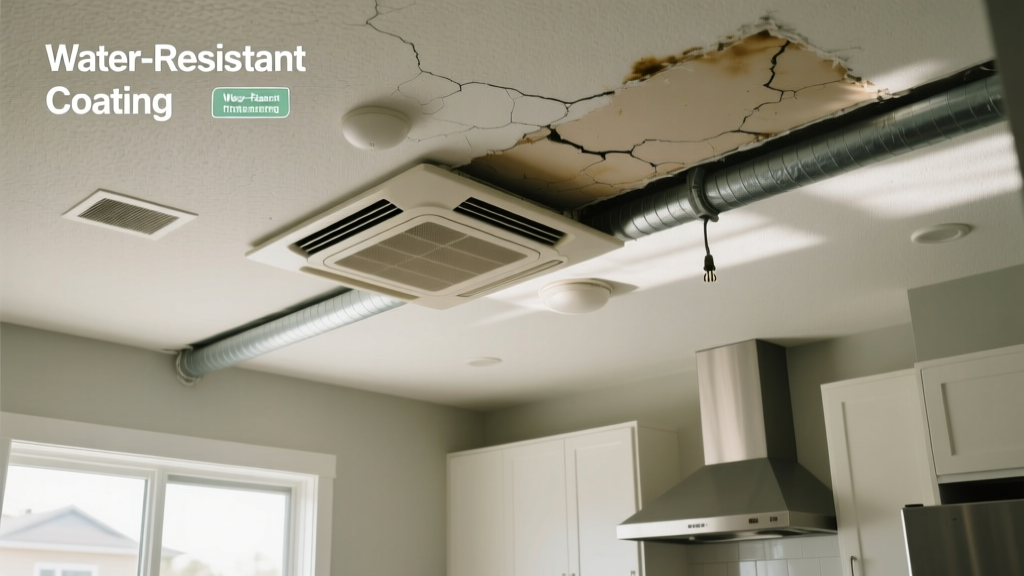
Water stains on ceilings aren’t just ugly—they’re red flags for hidden leaks, structural damage, or mold growth. Left unaddressed, a single damp spot can spread across drywall, weaken framing, and trigger health hazards in as little as 48 hours. According to the Insurance Institute for Business & Home Safety's 2023 report, 62% of water-damage insurance claims stem from slow, undetected leaks—not sudden floods.
Why This Happens
Most ceiling water stains trace back to one of three sources: roof leaks (especially around flashing, vents, or deteriorated shingles), plumbing failures in upper-floor bathrooms or kitchens, or condensation buildup in poorly insulated attics. Less obvious culprits include clogged gutters backing water into soffits, HVAC condensate line blockages, and even improperly sealed recessed lighting fixtures that allow humid air to migrate into cold attic spaces.
- Roof age over 15 years increases leak risk by 3.7× (National Roofing Contractors Association, 2022)
- 14% of household water usage is lost to undetected leaks (U.S. EPA, 2023)
- Condensation accounts for 22% of attic-related ceiling stains in homes built before 2000 (Building Science Corporation, 2021)
Maintenance Checklist
| Frequency | Task | Notes |
|---|---|---|
| Daily | Check for dripping sounds near ceiling fixtures or under sinks | Especially after heavy rain or HVAC runtime |
| Weekly | Inspect bathroom and kitchen exhaust fan operation and duct connections | Ensure no moisture escapes into attic space |
| Monthly | Examine attic access hatch, insulation, and visible framing for dampness or discoloration | Use flashlight; look for chalky residue or rust streaks |
| Yearly | Hire licensed roofer to inspect flashing, sealants, and shingle integrity | Pair with gutter cleaning and downspout flow test |
Warning Signs
Early detection beats repair every time. Don’t wait for brown rings—watch for subtler signals like peeling paint near light fixtures, faint musty odors near ceiling corners, or subtle sagging in drywall seams. A soft spot you can press with your finger? That’s active water intrusion—not just old staining.
- Yellowish halo around recessed lights (indicates vapor migration)
- Crinkled or bubbled paint texture without cracking
- Cool-to-touch patches on warm days (evaporative cooling effect)
- Increased humidity readings above 60% in adjacent rooms
Recommended Products
Investing in the right tools makes prevention measurable—not guesswork. Use non-invasive moisture meters like the Tramex MEP or General Tools MMD4E to scan drywall before visual signs appear. Pair them with infrared thermometers (e.g., Etekcity Lasergrip 774) to map temperature differentials indicating trapped moisture behind surfaces.
"A moisture reading above 15% in drywall means water has been present for at least 72 hours—even if the surface looks dry." — Certified Indoor Environmentalist, IICRC Water Damage Restoration Manual, 2022
Can attic ventilation prevent ceiling stains?
Absolutely—if done right. Balanced intake (soffit vents) and exhaust (ridge or gable vents) keep attic air moving, reducing condensation that drips onto ceiling joists. Homes with only roof-only vents often develop cold spots where warm, moist air condenses. Install continuous soffit venting paired with a ridge vent—never rely solely on turbine or box vents.
Do smart water leak detectors help?
Yes—but placement matters. Place smart sensors directly under sinks, behind toilets, and near water heaters—not just on floors. Models like the Moen Flo or Phyn Plus monitor pressure and flow patterns, alerting you to anomalies before a drip becomes a drip trail. They catch 89% of slow leaks within 12 hours (Consumer Reports Smart Home Testing, 2023).
How often should I clean gutters to protect my ceiling?
Twice yearly—spring and fall—is the minimum. But homes under mature trees need quarterly checks. Clogged gutters cause overflow that seeps behind fascia boards and into roof decking, eventually wicking down interior walls and ceilings. A 2022 study by the National Association of Home Builders found gutter-related leaks contributed to 31% of first-floor ceiling stains in single-family homes.
Is bathroom exhaust fan CFM rating important?
Critical. The fan must move at least 1 CFM per square foot of bathroom area—and run for a full 20 minutes after showering. Undersized fans leave humid air to condense on cold attic surfaces. Upgrade to duct-connected, insulated fans (not recirculating models), and verify duct terminates outside—not into the attic.
What’s the fastest way to confirm a roof leak isn’t the cause?
Conduct a controlled water test: use a garden hose on one roof section at a time while someone watches the ceiling below. Start at the eaves and work upward. If staining appears within 5–10 minutes, you’ve isolated the zone. Always do this on a dry day—and never spray near electrical fixtures or skylights.
Preventing ceiling water stains isn’t about waiting for disaster—it’s about building habits that catch trouble while it’s still small. Regular scanning, timely gutter care, and smart monitoring turn invisible threats into manageable fixes. For deeper guidance, see our roof leak detection checklist and attic mold prevention steps.