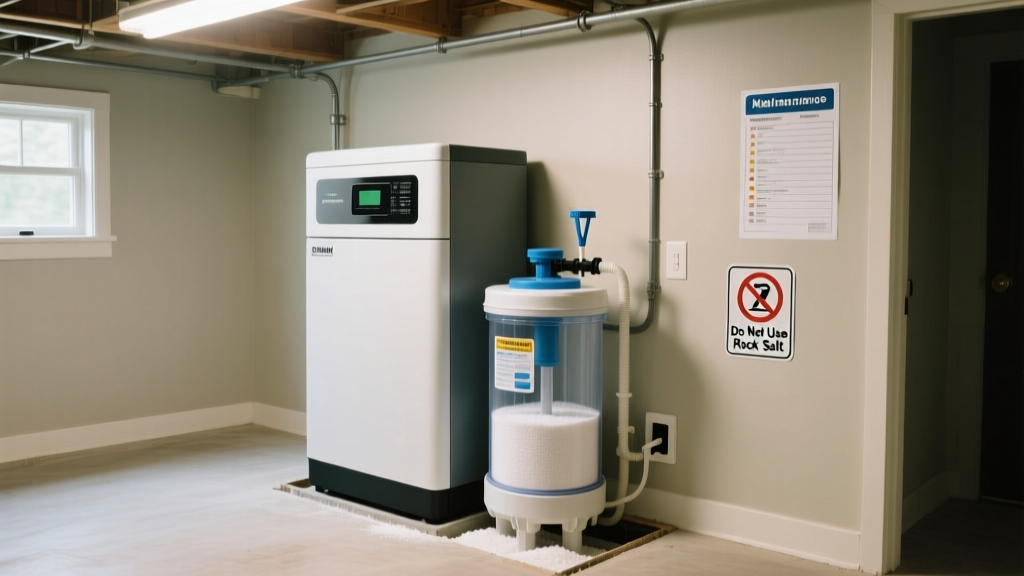
Bridging in a water softener isn’t just inconvenient—it’s a silent efficiency killer. When salt forms a hard crust over the brine tank floor, the system can’t draw enough brine to regenerate resin beads. That means your water stays hard, appliances scale up faster, and you might not notice until laundry feels stiff or soap won’t lather. According to the Water Quality Association’s 2022 Field Service Report, bridging accounts for nearly 22% of all residential softener service visits—and over 60% of those could’ve been avoided with routine inspection.
Why This Happens
Bridging occurs when dissolved salt recrystallizes into a solid, arched layer above the brine solution. It’s not random—it’s driven by humidity, temperature swings, and salt quality. High-moisture environments (like damp basements) accelerate salt caking. Using pellet or rock salt—especially low-purity brands—introduces insoluble fillers that settle and bind together. And if your softener sits idle for more than 5–7 days (e.g., during vacations), stagnant brine evaporates unevenly, leaving behind mineral scaffolding.
Temperature also plays a role: the U.S. Department of Energy notes that brine tanks below 45°F see 3x higher bridging rates due to slowed dissolution and increased crystallization pressure.
Maintenance Checklist
| Interval | Task | Time Required |
|---|---|---|
| Daily | Check brine tank lid seal integrity; ensure no condensation buildup inside | 1 minute |
| Weekly | Stir top 2 inches of salt with a non-metallic rod (e.g., PVC pipe) | 2 minutes |
| Monthly | Measure brine level; verify it’s within 3–6 inches of tank bottom | 3 minutes |
| Yearly | Drain & clean brine tank; inspect float assembly and injector screen | 45 minutes |
Warning Signs
If you spot any of these early, act before regeneration fails:
- Softener regenerates but water feels harder than usual (test with hard water test strips)
- Brine tank looks full of salt—but the liquid level hasn’t dropped in 10+ days
- Gurgling or sucking sounds during regeneration (indicates air lock from bridged surface)
- Visible dome-shaped crust under the salt surface when you lift the lid
Don’t wait for error codes. Most softeners won’t alert you to bridging—they’ll just skip regeneration cycles silently.
Recommended Products
Not all salt is equal—and some additives actively prevent bridging. Here’s what works:
- Pellet salt with sodium hexametaphosphate: inhibits crystal lattice formation (e.g., Morton Clean & Protect Pellets)
- Block salt with built-in anti-caking agents: ideal for high-humidity areas (e.g., Culligan Salt Blocks)
- Brine tank dehumidifier kits: small silica-gel or rechargeable units that cut tank humidity below 50% RH
Avoid rock salt unless your unit is explicitly rated for it—its 93–95% purity leaves 5–7% sediment that feeds bridging. The Water Quality Association recommends ≥99.5% pure evaporated salt for residential units.
Can I break a bridge myself without draining the tank?
Yes—if caught early. Turn off power and water supply. Use a broom handle or plastic dowel to gently tap the center of the crust—not the edges—to collapse the arch inward. Then stir thoroughly. Never use metal tools: they scratch tank liners and accelerate corrosion. If the bridge reforms within 48 hours, inspect your salt type and storage conditions.
Does water temperature affect bridging risk?
Absolutely. Cold feed water (below 45°F) slows brine saturation, letting crystals nucleate faster. If your softener sits in an unheated garage or basement, consider insulating the brine tank or installing a low-wattage tank heater (see our heater installation guide). The EPA estimates cold-weather installations increase bridging incidents by 37%.
How much salt should I keep in the tank?
Keep it between one-quarter and one-half full—never let it drop below 3 inches above the water level or exceed 4 inches below the tank’s top rim. Overfilling traps humidity; underfilling causes inconsistent saturation. A 12-inch diameter tank holds ~20 lbs per inch of salt depth—so aim for 6–10 inches of visible salt at all times.
Will using potassium chloride instead of sodium chloride cause bridging?
Yes—potassium chloride bridges more readily than sodium chloride due to slower dissolution and higher hygroscopicity. If you must use it (e.g., for dietary reasons), add 1 cup of food-grade white vinegar to the brine tank every 3 months to disrupt crystal growth. Or switch to a potassium-specific softener model with enhanced brine well agitation.
Is there a way to monitor bridging remotely?
Newer smart softeners (e.g., Fleck 7000SXT with Wi-Fi module or GE SmartWater) track brine draw volume and flag anomalies—like zero brine consumption across three scheduled regenerations. Pair that data with a simple $12 ultrasonic brine level sensor (like the BrineEye Pro) for real-time tank imaging. These systems cut detection time from weeks to hours.
"Bridging isn’t a failure mode—it’s a maintenance signal. Every time you see a crust, it’s telling you humidity control or salt purity needs adjustment." — Greg Gentry, Lead Technician, National Water Works, 2023
Preventing bridging doesn’t require expensive upgrades—just consistency, the right salt, and a 2-minute weekly habit. Catch it early, and your softener will deliver consistent soft water for 12–15 years without surprise service calls. Keep your brine tank stirred, your salt pure, and your humidity low—and you’ll rarely hear that telltale gurgle again.