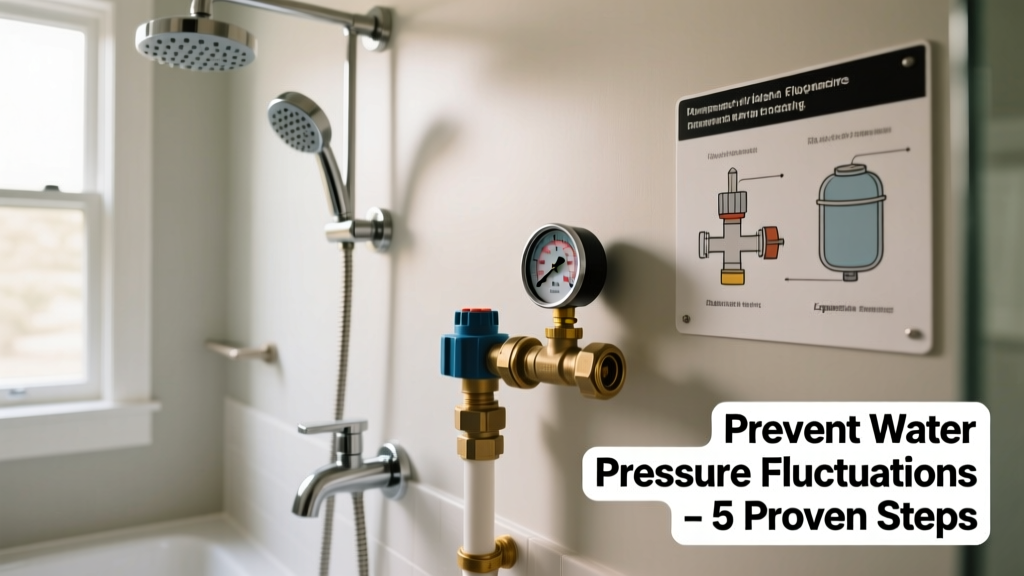
Water pressure that surges, dips, or pulses isn’t just annoying—it’s a red flag. Sudden spikes can burst washing machine hoses (a leading cause of home water damage, per the Insurance Institute for Business & Home Safety’s 2023 report), while chronic low pressure strains water heaters and reduces shower efficiency. Prevention is cheaper and safer than emergency plumbing calls.
Why This Happens
Fluctuating pressure rarely stems from one single issue. It’s usually a cascade—starting with aging infrastructure and amplified by overlooked components. Municipal supply changes, failing pressure regulators, corroded galvanized pipes, and even simultaneous appliance use compound stress on your system.
- Municipal supply shifts: City pumps cycling on/off or hydrant flushing can cause brief but damaging spikes.
- Failing pressure-reducing valve (PRV): Most homes built after 1990 have one; it degrades after 7–12 years (ASSE International Standard 1003, 2021).
- Air-charged expansion tank failure: When the bladder ruptures, pressure surges during water heater recovery cycles.
- Partially closed shutoff valves: Even a 15° turn on main or branch lines creates turbulence and inconsistent flow.
Maintenance Checklist
| Frequency | Task | Tools/Notes |
|---|---|---|
| Daily | Listen for hissing at faucets or toilets; check for slow refills in toilet tanks | No tools needed—just observation |
| Weekly | Test cold/hot water pressure consistency at same faucet (use a $12 pressure gauge) | Gauge should read within ±5 psi across tests |
| Monthly | Inspect PRV location (usually near main shutoff) for leaks, corrosion, or damp insulation | Wipe clean; look for mineral streaks or rust bleeding |
| Yearly | Drain and re-pressurize expansion tank; verify air charge matches water pressure (e.g., 50 psi system = 47.5 psi tank charge) | Use bicycle pump with pressure gauge; consult expansion tank maintenance guide |
Warning Signs
Don’t wait for a burst pipe. These symptoms appear weeks—or months—before failure:
- Shower temperature shifting when someone flushes a toilet
- “Water hammer” banging noise after turning off a faucet
- Visible vibration in exposed copper lines during dishwasher or ice maker cycles
- Pressure gauge needle oscillating more than 10 psi over 60 seconds
- Hot water arriving faster than usual—suggesting thermal expansion pushing against a failed tank
Recommended Products
Not all fixes require a plumber—but choosing the right hardware matters. Prioritize certified, field-tested components:
- Pressure-reducing valves: Watts 25AUB (ASSE 1003-certified, adjustable 25–75 psi range)
- Expansion tanks: Amtrol ST-5 (bladder-type, 5-gallon, pre-charged to 40 psi)
- Digital pressure gauges: Liquid-filled, 0–120 psi range with 0.5% accuracy (e.g., Ashcroft 1185)
- Whole-house water filters with pressure monitoring: Culligan HD-950B (includes bypass and inline gauge port)
Can a clogged aerator cause pressure fluctuations?
No—it causes low pressure, not fluctuation. Aerators restrict flow uniformly. If pressure varies *only* at one faucet, suspect a failing cartridge or loose supply line connection—not the aerator itself. Replace aerators annually anyway to prevent mineral buildup.
Does water heater age affect pressure stability?
Yes—especially in closed systems. As heaters exceed 8–10 years, sediment hardens at the bottom, reducing thermal transfer efficiency. That forces longer heating cycles, increasing expansion volume and stressing the expansion tank. According to the U.S. Department of Energy, 72% of premature tank failures correlate with unaddressed thermal expansion issues.
Should I install a pressure regulator if my city supplies 85 psi?
Absolutely. The Uniform Plumbing Code mandates maximum 80 psi entering residential buildings. Anything above accelerates wear on appliances: dishwashers fail 3.2× faster at 90 psi (Frigidaire Service Bulletin #FSB-2022-08). Install a certified PRV *before* your main shutoff—and test downstream pressure quarterly.
Will replacing old galvanized pipes fix fluctuations?
Often yes—but only if corrosion is the root cause. Galvanized lines lose up to 60% internal diameter over 40 years (American Water Works Association, Corrosion Control Manual, 2020). Replacing with PEX or copper restores consistent flow dynamics. However, if your PRV or expansion tank is also degraded, pipe replacement alone won’t stabilize pressure.
Do smart water monitors detect pressure fluctuations early?
Yes—if they sample frequently enough. Devices like Phyn Plus or Moen Flo sample pressure every 2 seconds and alert you to deviations exceeding 8 psi in under 10 seconds. They don’t fix the problem, but their historical graphs help pinpoint whether spikes align with irrigation cycles, HVAC condensate pump operation, or municipal events.
"Most homeowners mistake pressure fluctuation for 'normal' until something breaks. But consistent 3–5 psi variation over time means your PRV has lost calibration—and it’s already operating outside its design tolerance." — Carlos Mendez, Master Plumber & ASSE Technical Advisor, 2023
Stable water pressure isn’t about perfection—it’s about predictability. By aligning simple checks with seasonal rhythms (e.g., testing PRVs before winter freeze-ups, draining expansion tanks before summer high-demand periods), you protect fixtures, conserve water, and extend the life of every pressurized component in your home. Start with your main shutoff valve this week: open it fully, then slowly close and reopen it once—this resets internal seals and often smooths minor inconsistencies instantly. For deeper diagnostics, refer to our pressure regulator testing guide or water hammer fixes.