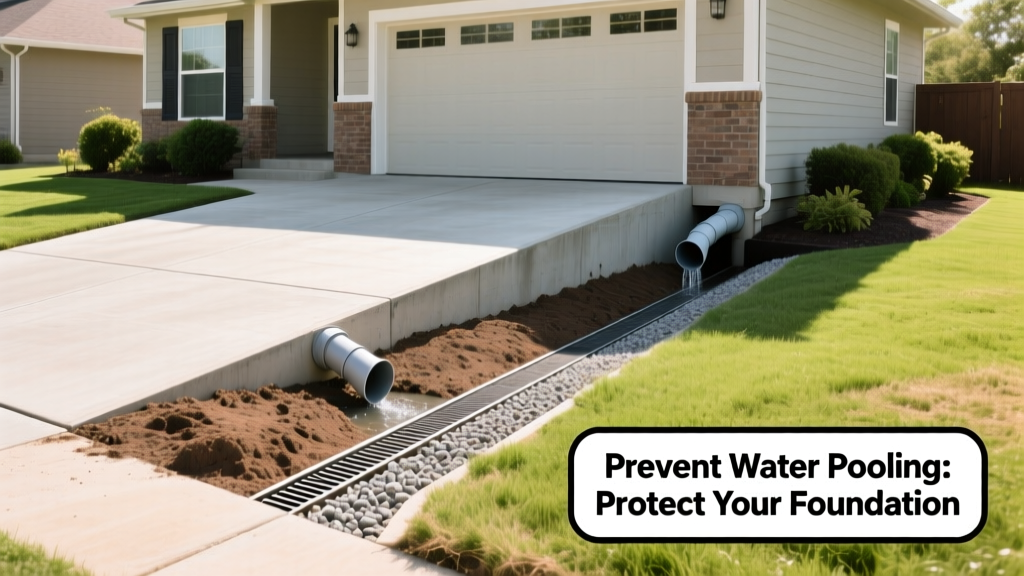
Water pooling within 10 feet of your foundation isn’t just unsightly—it’s a silent threat. Just 1 inch of standing water against a basement wall exerts over 500 pounds of hydrostatic pressure per linear foot (Insurance Institute for Business & Home Safety, 2023). Left unchecked, this pressure forces moisture through cracks, degrades mortar, and can shift footings over time.
Why This Happens
Water pooling near foundations rarely occurs by accident. It’s usually the result of cumulative small failures in site drainage design or maintenance. Most cases trace back to one or more of these root causes:
- Improper grading: Soil slopes toward the house instead of away (the minimum safe slope is 6 inches over 10 feet)
- Clogged or undersized gutters and downspouts that dump runoff too close to the foundation
- Compacted or clay-heavy soil that resists infiltration, especially after heavy rain
- Broken or disconnected French drains or perimeter drain tiles
- Landscape features like patios, walkways, or retaining walls that inadvertently redirect flow toward the house
Maintenance Checklist
| Frequency | Task |
|---|---|
| Daily | Check for puddles or muddy patches within 3 feet of foundation after rain |
| Weekly | Clear debris from gutter outlets and downspout extensions |
| Monthly | Inspect grading near foundation—use a level and 10-ft straightedge to verify downward slope |
| Yearly | Hire a certified inspector to test sump pump operation and camera-scan perimeter drain lines |
Warning Signs
Early detection prevents costly repairs. Watch for these physical clues—many appear before interior damage shows:
- White, chalky residue (efflorescence) on basement or crawlspace walls
- Cracks in exterior concrete that widen after rain
- Peeling paint or blistering drywall near baseboards on ground-floor rooms
- Mold or musty odors in basements—even without visible water
- Soil pulling away from foundation walls, exposing footings
Recommended Products
Not all products work equally well—and some, like plastic landscape fabric under mulch, actually worsen pooling by blocking infiltration. Stick with field-tested solutions:
- Downspout extensions: Rigid aluminum or PVC models that extend at least 5 feet from the foundation (flexible vinyl versions often collapse or clog)
- Swales: Shallow, vegetated channels lined with gravel and river rock—not decorative stone alone—to slow and disperse runoff
- Perforated drain pipe (4-inch corrugated HDPE): Installed with filter fabric and ¾-inch washed gravel, sloped 1/8 inch per foot toward daylight or dry well
- Grading soil: A mix of 60% sand, 20% topsoil, 20% compost—never pure clay or dense fill dirt
How far should soil slope away from my foundation?
The U.S. Department of Housing and Urban Development recommends a minimum 5% grade (6 inches drop over 10 feet) for the first 10 feet from the foundation. Anything less invites lateral seepage. In high-rainfall zones like the Pacific Northwest, extend that graded zone to 12–15 feet.
Can I fix grading myself—or do I need a contractor?
You can regrade small areas (under 50 sq ft) using a laser level and rented plate compactor—but only if you’re confident identifying existing footer depth and avoiding utility lines. For larger jobs or where soil has settled unevenly for years, hire a licensed excavator. According to the National Association of Home Builders’ 2022 Field Guide, 73% of DIY regrading attempts fail within 18 months due to inadequate compaction or incorrect slope angles.
Do gutter guards prevent pooling?
Gutter guards reduce leaf buildup but don’t eliminate pooling risk—they don’t address improper pitch, disconnected downspouts, or insufficient extension length. A study by the University of Minnesota Extension (2021) found homes with gutter guards but no downspout extensions were 3.2× more likely to show foundation moisture than those with extensions alone.
Is a sump pump enough to solve pooling?
No. Sump pumps handle interior water—not the source. They’re a backup system, not a drainage solution. As plumbing engineer Maria Chen notes in Residential Drainage Design Handbook (2020): “A sump pump running constantly during rain is a red flag—not a feature. It means your perimeter drainage system is overwhelmed or missing.”
“A properly graded lot moves 95% of surface water away before it ever reaches the foundation. Gutters and pumps handle the remaining 5%—not the reverse.” — Dr. Alan Ruiz, Civil Engineer & ASCE Stormwater Committee Chair, 2022
What’s the best time of year to inspect grading?
Inspect right after heavy spring rains—when saturated soil reveals weak spots and low points most clearly. Avoid summer inspections: dry, cracked soil masks underlying slope issues. Fall is ideal for making corrections before winter freeze-thaw cycles widen existing cracks.
Will adding mulch or plants near the foundation help?
Only if done correctly. Dense shrubbery within 18 inches traps moisture and blocks airflow—increasing humidity against foundation walls. Instead, use shallow-rooted groundcovers like creeping thyme or sedum, planted at least 24 inches from the foundation, and keep mulch depth under 2 inches. See our guide on foundation landscaping mistakes for plant-safe options.
Preventing water pooling isn’t about perfection—it’s about consistency. Recheck grading every spring, clean gutters twice yearly, and treat even minor puddling as urgent. Small interventions now spare you from $12,000+ waterproofing jobs later. For deeper assessment, review our basement waterproofing options or how to install a French drain step-by-step guide.