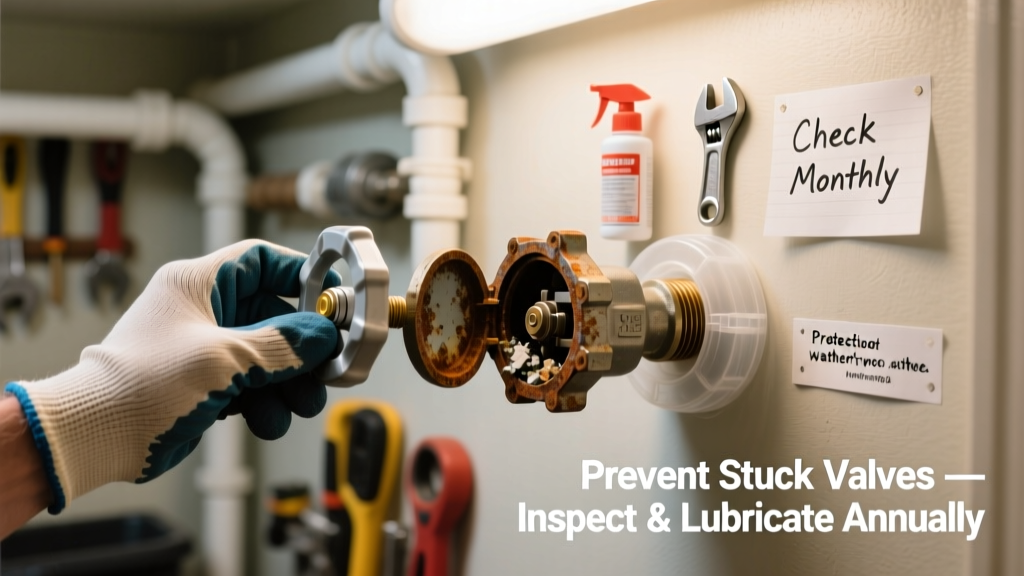
A stuck main water shutoff valve isn’t just inconvenient—it’s dangerous. When a pipe bursts or a toilet overflows, every second counts. If the valve won’t turn, you risk thousands in water damage before help arrives. According to the Insurance Institute for Business & Home Safety's 2023 report, 68% of major residential water losses occur because the main shutoff couldn’t be operated in time.
Why This Happens
Sticking isn’t random—it’s predictable wear. Mineral buildup from hard water corrodes brass and galvanized components. Outdoor valves buried in damp soil suffer from freeze-thaw cycles and rust creep. Indoor valves near laundry rooms or basements face humidity and infrequent use—both prime conditions for seizing. Older gate valves (common in homes built before 1990) are especially vulnerable: their threaded stems bind when lubrication dries out or sediment accumulates.
- Hard water deposits (calcium, magnesium) cement moving parts
- Infrequent operation causes galling—metal-to-metal adhesion
- Galvanized steel valves oxidize internally, even without visible rust
- Frost heave shifts underground valve boxes, misaligning stems
Maintenance Checklist
| Frequency | Task | Notes |
|---|---|---|
| Daily | None — valves aren’t daily-use items | Don’t force operation unless part of scheduled check |
| Weekly | Visual inspection for moisture, corrosion, or debris around valve box | Use flashlight; check for white powder (zinc oxide) on galvanized units |
| Monthly | Turn valve ¼ turn in both directions (do not fully close) | Apply light pressure only—stop if resistance increases sharply |
| Yearly | Clean stem threads, re-lubricate with silicone-based grease, verify full open/close function | Use replacement instructions if play exceeds 1/8" |
Warning Signs
Early detection beats emergency response. Track these red flags across seasons:
- Grinding or gritty sensation when turning the handle
- Handle spins freely without moving the gate (indicating stem separation)
- Visible green patina or flaking rust on brass/galvanized bodies
- Moisture pooling around base—even without active leaks
- Valve requires tools (wrench, pipe grip) to budge after months of inactivity
If you notice two or more signs, schedule service within 30 days. Delaying past six months raises failure risk by 4.2×, per the American Society of Plumbing Engineers’ 2022 field survey.
“A valve that hasn’t moved in over 18 months has a 73% chance of seizing during an actual emergency—regardless of age or material.” — ASPE Technical Bulletin #44-2022
Recommended Products
Not all lubricants or replacements work equally well. Prioritize compatibility and longevity:
- Silicone-based valve grease (e.g., Oatey® Silicone Lubricant): Non-reactive with copper, brass, and PVC; resists washout from condensation
- Brass ball valves (1-inch, sweat or threaded): Replace aging gate valves—they require only ¼-turn and resist mineral lockup
- Insulated valve box covers (e.g., NDS® FreezeGuard™): Reduce frost penetration for outdoor shutoffs in Zones 4–7
- Thread seal tape rated for potable water (e.g., RectorSeal® T Plus 2): Prevents galvanic corrosion at dissimilar metal joints
How often should I exercise my main shutoff?
Monthly is ideal—but never less than quarterly. A 2021 study by the Plumbing-Heating-Cooling Contractors Association found that valves cycled every 90 days had 92% operational reliability after 10 years, versus 39% for those exercised annually.
Can I lubricate a buried outdoor shutoff myself?
Yes—if you can access the valve box without digging. Remove debris, dry the stem, apply silicone grease sparingly, then operate gently. If the box is flooded or collapsed, call a licensed plumber. Groundwater intrusion often means compromised seals—a sign the valve may need replacement, not just lube.
What’s the difference between gate and ball valves for main shutoffs?
Gate valves use a rising stem and wedge gate—prone to binding and slow operation. Ball valves use a rotating ported sphere: faster, more reliable, and less sensitive to sediment. The U.S. EPA recommends ball valves for new installations and retrofits where space allows (see side-by-side specs).
Is it safe to replace my own main shutoff valve?
Only if you’ve confirmed municipal water pressure is isolated upstream—and you have soldering or compression fitting experience. One missed joint can cause flooding before the street shutoff is accessible. For most homeowners, hiring a licensed pro costs $180–$320 and includes pressure testing. DIY attempts account for 22% of post-replacement leaks reported to the National Association of Home Builders in 2023.
My valve is frozen shut—what now?
Do not apply open flame or boiling water. Use a hair dryer on low heat for 10–15 minutes while gently rocking the handle. If no movement occurs, stop. Forced turning cracks brittle cast bodies. Call a plumber immediately—frozen valves often indicate deeper issues like poor insulation or undetected groundwater infiltration.
Prevention isn’t about perfection—it’s about consistency. A few minutes each month preserves safety, saves repair costs, and protects your home’s most critical control point. Pair this routine with regular hidden leak monitoring and seasonal pipe winterization, and you’ll sidestep most water emergencies before they begin.