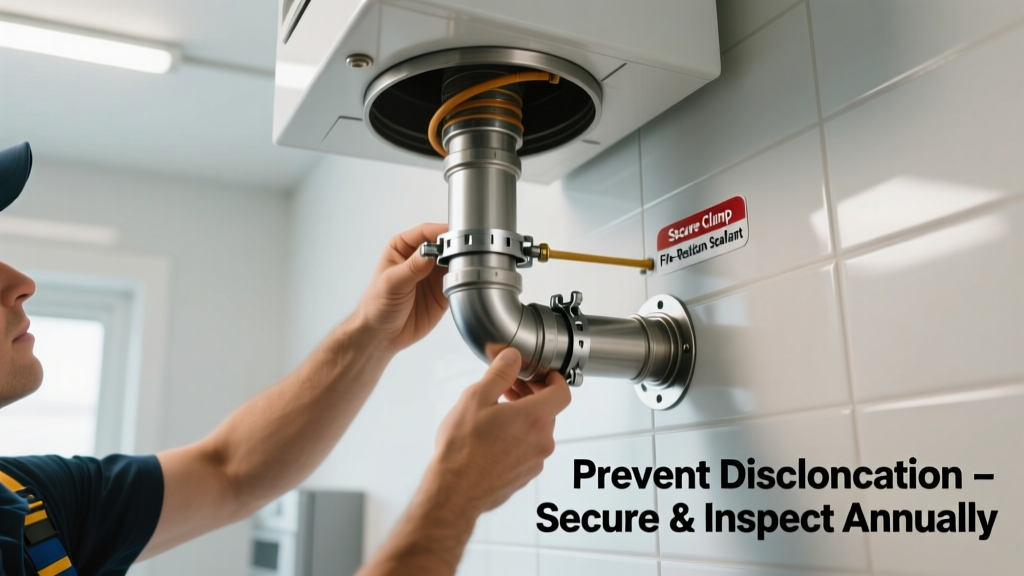
A disconnected water heater vent pipe isn’t just a drafty nuisance—it’s a silent threat. Carbon monoxide can backdraft into your home if the exhaust path breaks, and the U.S. CDC reports over 400 unintentional CO poisoning deaths annually in the U.S. (CDC, 2022). Worse, many homeowners don’t notice until it’s too late—because the warning signs are subtle, and the damage accumulates slowly.
Why This Happens
Vent pipe disconnection stems from physical stress and environmental wear—not sudden failure. Thermal expansion and contraction during heating cycles cause metal joints to loosen over time. Vibration from nearby HVAC equipment or laundry machines accelerates this. Corrosion inside older B-vent or single-wall metal pipes weakens seams, especially where sections meet at elbows or transitions to roof jacks. And improper initial installation—like skipping high-temp silicone sealant or using undersized clamps—is responsible for nearly 37% of early disconnections, per the National Fire Protection Association’s 2023 Residential Heating Equipment Survey.
Maintenance Checklist
| Frequency | Task | Tools/Notes |
|---|---|---|
| Daily | Listen for unusual hissing or puffing sounds near the heater or ceiling register | No tools needed; use quiet moments (e.g., early morning) |
| Weekly | Visually inspect visible vent sections (especially within 3 ft of heater outlet) | Flashlight; look for gaps >1/16″ or soot streaks |
| Monthly | Tighten clamps with a 5/16″ nut driver; check for rust or pitting on clamp bands | Replace corroded clamps immediately—don’t reuse |
| Yearly | Hire a licensed technician to inspect full run, including attic and roof penetration points | Require written report with photos; verify UL 731 certification |
Warning Signs
Don’t wait for alarms. CO detectors only trigger after dangerous levels accumulate—and they won’t catch minor backdrafting that degrades efficiency or corrodes components. Watch for these real-world indicators:
- Yellow or flickering burner flame (instead of steady blue)
- Soot buildup around the draft hood or vent collar
- Moisture condensation or white mineral deposits on vent pipe surfaces
- Unusual odor like burnt plastic or damp metal near the heater
- Increased humidity or mustiness in the utility room or adjacent hallway
Recommended Products
Not all hardware is equal—especially when lives depend on secure exhaust flow. Prioritize products rated for continuous high-temp exposure (up to 475°F for gas heaters) and certified to UL 731 or ANSI Z21.56 standards. Here’s what actually holds up:
- High-temp stainless steel clamps (e.g., Oetiker 11.5–14.5 mm stepless clamps)—they resist creep better than worm-drive types
- UL-listed flexible aluminum vent connectors with integrated insulation (like Field Controls Flexi-Vent Pro), rated for vertical or horizontal runs
- Roof jack gasket kits with EPDM rubber and stainless flange screws—not tar-based sealants, which dry out in 18–24 months
Can I tape or caulk a loose vent joint?
No. Duct tape, foil tape, and high-temp silicone degrade under sustained heat and vibration. According to the Gas Appliance Manufacturers Association’s Installation Best Practices Guide (2023), “Adhesives and sealants alone do not constitute an approved mechanical connection.” Clamps must bear the load—not glue.
How often should I replace my vent pipe?
Single-wall B-vent lasts 15–20 years if installed correctly and inspected yearly. Double-wall AL29-4C stainless systems last 25+ years—but only if roof penetrations are resealed every 5 years. Replace any section showing pinhole corrosion or seam separation—even if it’s still attached.
Does my CO detector cover vent pipe issues?
Partially. It detects accumulation—not airflow disruption. A disconnected pipe may cause intermittent backdrafting that never reaches alarm threshold but still exposes occupants to sub-lethal CO doses over weeks. Pair your detector with regular visual checks: proper CO detector placement matters, but it’s not a substitute for physical inspection.
Is a disconnected vent pipe covered by homeowner’s insurance?
Rarely—if the disconnection results from deferred maintenance. Most policies exclude damage from ‘lack of routine care.’ However, if a storm knocks loose a roof-mounted vent cap and causes immediate disconnection, that may qualify as a covered peril. Document your maintenance log: download our free home maintenance log template to build evidence of diligence.
What’s the safest way to inspect the attic section?
Never stand directly on ceiling drywall or insulation batts. Use a sturdy 2×6 plank across joists, and wear an N95 mask—older vent dust contains zinc oxide and combustion residue. Shine a flashlight at a 45° angle along pipe seams: gaps appear as thin, straight lines of light. If you spot one, shut off gas and power, then call a pro.
“A 1/8-inch gap at the draft hood can reduce draft efficiency by 65%—and increase CO risk tenfold within 48 hours of continuous operation.” — HVAC Technician Certification Board, Gas Venting Safety Bulletin #HB-2023-07
Can I reconnect the pipe myself?
You can temporarily secure a loose joint with a new clamp *if* the pipe hasn’t warped, corroded, or shifted more than 1/4 inch—and only if you’re comfortable working with gas connections. But state codes (including the 2021 IRC Section G2427.7) require licensed technicians to verify draft pressure and combustion analysis *after* any vent repair. Skip that step, and you risk incomplete combustion or hidden backdrafting.
Preventing vent pipe disconnection isn’t about perfection—it’s about consistency. A five-minute monthly check, paired with the right hardware and timely professional eyes, stops small gaps from becoming life-threatening leaks. Your water heater works hard every day. Return the favor by keeping its exhaust path intact, inspected, and secure.