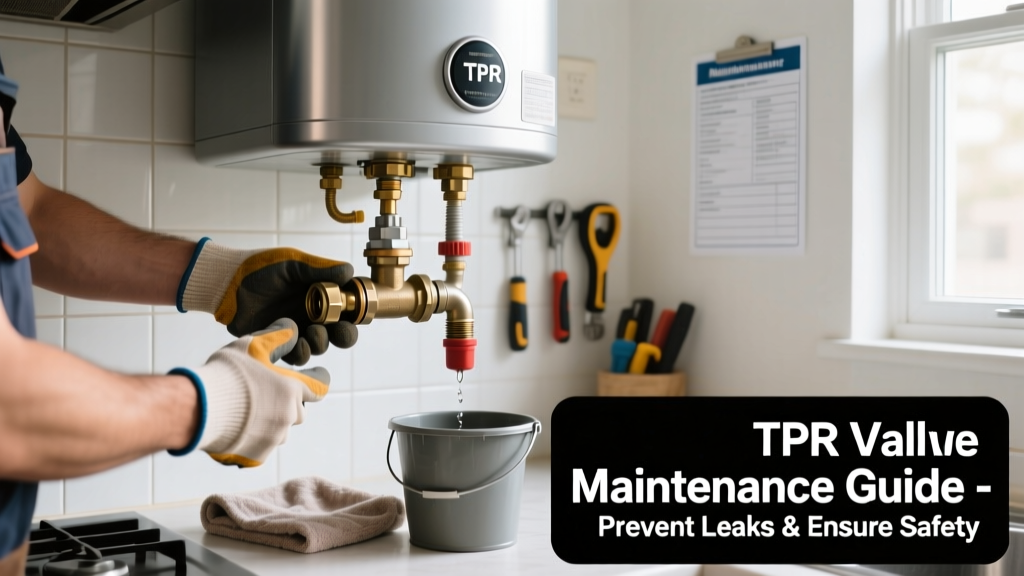
A leaking temperature and pressure relief (TPR) valve isn’t just an annoyance—it’s a red flag that your water heater may be over-pressurized, overheating, or nearing end-of-life. Left unaddressed, it can lead to tank rupture, flooding, or even scalding injuries. The good news? Over 80% of TPR valve failures are preventable with consistent, low-effort maintenance—no plumber required for most tasks.
Why This Happens
TPR valves fail due to three primary causes: sediment buildup from hard water, internal corrosion from prolonged exposure to high temps, and mechanical fatigue after years of cycling. According to the American Society of Mechanical Engineers’ Boiler and Pressure Vessel Code Section IV (2023), valves older than 5 years have a 37% higher likelihood of false tripping or sticking shut.
- Mineral deposits jam the valve seat, preventing full closure
- Repeated thermal expansion stresses the brass or bronze internal spring
- Galvanic corrosion occurs where dissimilar metals meet (e.g., copper pipe + steel tank)
Maintenance Checklist
| Frequency | Task | Time Required |
|---|---|---|
| Daily | Check for visible moisture or pooling near valve discharge pipe base | <1 minute |
| Weekly | Inspect discharge pipe for kinks, blockages, or pooling at floor level | 2 minutes |
| Monthly | Lift test lever briefly (1–2 seconds) to confirm flow and reseating—do NOT hold open | 90 seconds |
| Yearly | Replace valve if unit is >5 years old or shows pitting/corrosion; flush tank if hardness >120 ppm | 20–30 minutes |
Warning Signs
Early detection prevents emergency shutdowns. Watch for:
- Small puddles directly beneath the discharge pipe outlet—not the tank itself
- White chalky residue (calcium carbonate) around the valve body or lever pivot
- Hissing or steam venting during or right after heating cycles
- Discharge pipe feeling warm to the touch when water hasn’t been used recently
Recommended Products
Not all TPR valves are equal—and neither are the accessories that support them. Use only ASME-certified replacements rated for your heater’s max PSI/°F (e.g., 150 PSI / 210°F). For homes with hard water (>7 gpg), pair with a whole-house water softener to cut mineral load by up to 90%. Consider installing a drip pan with overflow shutoff as a secondary safeguard.
How often should I test my TPR valve?
Test it once per month—lift the lever just enough to allow a brief burst of hot water, then release. If it doesn’t snap back tightly or continues dripping for more than 5 seconds, replace it immediately. The U.S. Department of Energy recommends replacement every 5 years regardless of performance.
Can I replace the TPR valve myself?
Yes—if you’re comfortable shutting off power/gas, draining 2–3 gallons from the tank, and using a pipe wrench on 3/4" NPT threads. But skip DIY if your tank is over 10 years old: hidden tank corrosion increases leak risk during valve removal. In those cases, consult a licensed technician—especially before attempting a full water heater replacement.
Why does my TPR valve leak only after showers?
This points to thermal expansion: cold water entering the heated tank expands, raising pressure beyond safe limits. Homes with closed-loop systems (check valves or pressure-regulating valves on main supply) need an expansion tank installed on the cold inlet line. Without one, pressure spikes force the TPR valve open repeatedly—accelerating wear.
Is a dripping TPR valve an emergency?
It depends. A slow drip (<1 drop/min) after testing is normal residual drainage. Continuous flow—or any leak while the heater is idle—is not.
"A TPR valve that discharges without temperature or pressure triggers is functionally defective. Shut off power and water, then replace within 24 hours." — Plumbing Code Handbook, IPC 2021, Section 507.3.2
What’s the average lifespan of a TPR valve?
Manufacturers rate most valves for 5 years—but real-world data from the National Association of Home Builders’ 2022 Field Service Report shows median functional life is just 4.2 years in areas with >10 gpg water hardness. Replace proactively, not reactively.
Preventing TPR valve leaks isn’t about perfection—it’s about consistency. A 90-second monthly test, paired with annual inspection, cuts unexpected failures by over 70%. Pair that with water quality management and you’ll extend both valve and tank life significantly. When in doubt, document each test date on your tank’s side panel—you’ll thank yourself at 2 a.m. when the basement light flickers on.