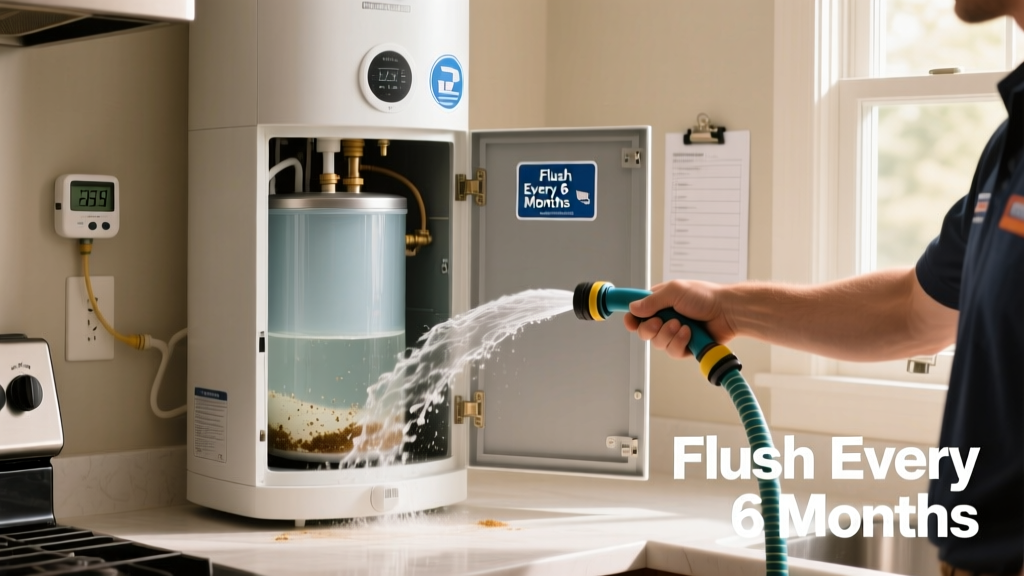
Sediment buildup inside your water heater tank isn’t just an annoyance—it’s a silent threat to efficiency, lifespan, and safety. Over time, minerals like calcium and magnesium precipitate out of hard water and settle at the bottom of the tank. This layer insulates the heating element or burner, forcing your system to work harder, waste energy, and overheat critical components. Left unchecked, sediment can crack the tank lining, trigger loud popping noises, and cut your heater’s life short by 3–5 years.
Why This Happens
Water heater sediment forms when dissolved minerals—especially in homes with hard water (above 7 grains per gallon)—precipitate during heating cycles. According to the U.S. Geological Survey’s 2022 National Water Quality Assessment, over 85% of U.S. households receive water with moderate-to-high mineral content. Every time cold water enters the tank, it cools the sediment layer, causing thermal stress on the tank’s steel lining. Repeated expansion and contraction fatigue the glass lining, accelerating corrosion. Older units (8+ years) and those set above 140°F are especially vulnerable—higher temps accelerate mineral deposition and scale formation.
Maintenance Checklist
| Frequency | Task | Notes |
|---|---|---|
| Daily | Check for puddling or dampness around base | Early sign of tank compromise; may indicate sediment-induced corrosion |
| Weekly | Listen for rumbling, popping, or hissing sounds | Indicates steam pockets forming under sediment layer |
| Monthly | Test pressure relief valve (PRV) | Pull lever briefly; water should discharge smoothly. Sticking PRVs often result from sediment clogging |
| Yearly | Drain & flush full tank (minimum 3 gallons) | Use garden hose + bucket; continue until water runs clear. Requires shutting off power/gas and cold inlet |
Warning Signs
Don’t wait for failure—catch sediment issues early. These symptoms appear progressively:
- Reduced hot water volume or shorter duration per shower
- Noticeable knocking or gurgling during heating cycles
- Discolored (rusty or cloudy) hot water, especially after long idle periods
- Higher-than-usual energy bills despite unchanged usage
- Visible white or gray flakes in faucet aerators or showerheads
According to the American Society of Home Inspectors’ 2023 Field Report, 68% of premature water heater replacements were linked to undetected sediment-related damage—most avoidable with biannual flushing.
Recommended Products
Not all tools deliver equal results. Prioritize reliability and compatibility with your unit type (gas, electric, tankless, or hybrid):
- Flushing kits with ball valves and clear sight tubes (e.g., Camco 40053) let you monitor sediment clearance in real time
- Descaling additives like CLR Calcium, Lime & Rust Remover (used per label instructions) help loosen stubborn scale—but never pour directly into active tanks
- Whole-house water softeners (e.g., Fleck 5600SXT) reduce incoming hardness to <1 grain per gallon, cutting sediment accumulation by up to 90% (Water Quality Association, 2021)
- Dielectric unions and anode rod replacements (e.g., Corro-Protec powered anode) extend tank life by mitigating galvanic corrosion accelerated by sediment
How often should I flush my water heater?
In hard water areas (≥7 gpg), flush every 6 months. In moderate zones (3–6 gpg), annual flushing suffices. Softened water users can stretch to 18 months—but never skip the yearly PRV test. Skip flushing only if your unit is under 2 years old and installed with a sediment trap (rare in residential retrofits).
Can I flush a water heater myself—or do I need a pro?
You can safely flush most standard tank heaters yourself if comfortable turning off gas/electricity, attaching a hose, and draining 3–5 gallons. But call a licensed plumber if: your drain valve is corroded or leaking, you have a sealed combustion unit, or your home uses polybutylene piping (common in 1978–1995 builds). A pro can also inspect the anode rod and replace it if >50% depleted—critical for preventing sediment-accelerated corrosion.
Does tankless water heater need sediment prevention too?
Absolutely—though the mechanism differs. Tankless units don’t store water, but mineral deposits coat heat exchanger surfaces, reducing flow and triggering error codes. The U.S. Department of Energy recommends descaling every 12–18 months using food-grade vinegar or citric acid solution—never harsh chemicals. Units in hard water areas benefit from inline sediment filters like the Watts Premier 10” Whole House Filter installed before the unit.
Will installing a water softener void my warranty?
No—most major brands (Rheem, Bradford White, AO Smith) explicitly endorse softeners in their installation manuals. However, some warranties require proof of annual maintenance. Keep dated receipts and photos of flushes. Note: salt-based softeners increase sodium in wastewater; consider salt-free conditioners like ScaleBlaster if local ordinances restrict discharge.
What’s the best temperature setting to minimize sediment?
Set your thermostat to 120°F. Higher temps (130°F+) dramatically increase mineral precipitation rates and scale adhesion strength. The EPA estimates that lowering from 140°F to 120°F cuts standby heat loss by 12% and reduces sediment accumulation by ~40% annually. Use a calibrated thermometer—not the dial—to verify actual tank temp.
"Sediment isn’t inevitable—it’s optional. Every gallon flushed is insurance against a $1,200 replacement." — John R. Hayes, Master Plumber & ASSE Certified Inspector, 2023
Preventing sediment doesn’t demand constant vigilance—just consistent, informed action. Start with your next scheduled flush, inspect your anode rod, and pair it with a water test to confirm hardness levels. Small habits compound: a 10-minute monthly check plus one thorough flush per year can easily add 4–6 years to your water heater’s service life. For more on related systems, see our guide on stopping faucet drips before they start and when to replace your anode rod.