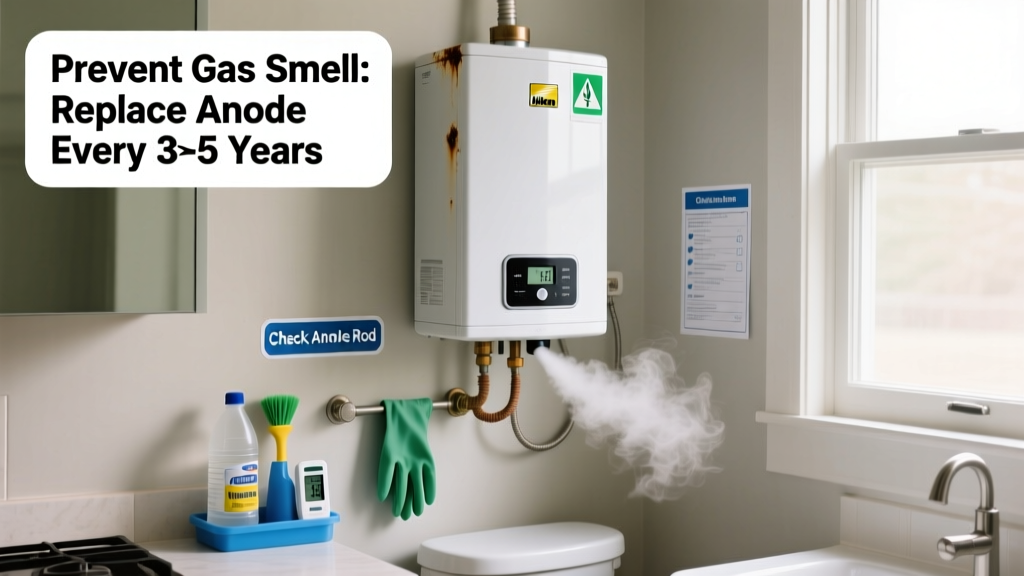
A sulfur or rotten-egg smell near your water heater isn’t just unpleasant—it’s a red flag that could signal dangerous gas leaks, bacterial growth, or failing components. Ignoring it risks carbon monoxide exposure, fire hazards, or even explosion in extreme cases. Prevention isn’t optional; it’s the safest, cheapest, and most reliable defense.
Why This Happens
Gas-like odors from water heaters rarely mean actual natural gas leakage—though that possibility must always be ruled out first. More commonly, the smell comes from hydrogen sulfide (H₂S) gas produced when sulfate-reducing bacteria interact with the anode rod (typically magnesium or aluminum) and warm, stagnant water. The U.S. EPA estimates that up to 12% of homes with older tank-type water heaters report intermittent sulfur odors, especially after periods of low use or in homes with well water high in sulfates.
- Bacterial activity: Anaerobic bacteria thrive in warm, oxygen-poor environments inside the tank—especially when water sits for >48 hours.
- Anode rod chemistry: Magnesium rods react with sulfates to produce H₂S; aluminum-zinc rods reduce this risk by up to 70%, per ASHRAE Handbook–HVAC Applications (2022).
- Well water contamination: Groundwater sources with >0.5 ppm sulfate increase odor likelihood fivefold (Water Quality Association, 2021).
- Gas line issues: A true propane or natural gas leak produces a distinct mercaptan odor—and requires immediate evacuation and utility contact.
Maintenance Checklist
| Frequency | Task | Notes |
|---|---|---|
| Daily | Check for unusual smells near unit or exhaust vent | Sniff near base and flue pipe—not just the hot water tap. |
| Weekly | Run hot water at least one faucet for 3 minutes | Prevents stagnation; critical in vacation homes or guest bathrooms. |
| Monthly | Inspect gas line connections for soapy-bubble signs | Use diluted dish soap solution—never open flame. |
| Yearly | Flush tank & replace anode rod if corroded >50% | Replace magnesium with aluminum-zinc alloy rod for odor-prone systems. |
Warning Signs
Odor alone isn’t enough to diagnose the cause—context matters. Watch for these combinations:
- Smell only at first draw, fading after 30 seconds → likely anode/bacteria interaction.
- Smell strongest in showers or laundry rooms → points to localized plumbing or dip tube degradation.
- Odor accompanied by hissing, hissing near gas valve, or pilot light flickering → suspect gas leak or regulator failure.
- Smell persists after flushing + chlorine treatment → may indicate biofilm in pipes or water softener resin bed.
Recommended Products
Not all solutions work equally—and some make things worse. Prioritize products validated for residential tank heaters:
- Aluminum-zinc anode rods (e.g., Corro-Protec Powered Anode or Rheem Zinc-Alloy Rod): Reduce H₂S production without sacrificing tank life.
- Chlorine shock kits (e.g., Clorox Pool Shock + food-grade citric acid): For targeted bacterial treatment—never use undiluted bleach.
- Whole-house sulfur filters (e.g., Springwell Sulfur-Clear or Aquasana Rhino): Required if well water sulfate >1 ppm.
- Combustion safety monitors (e.g., Kidde Nighthawk CO/Gas Detector): Detects both CO and natural gas at 10% LEL—critical for gas-fired units.
Can I replace the anode rod myself?
Yes—if you’re comfortable shutting off water/gas, draining 5–10 gallons, and using a 1⅛" socket wrench. But don’t skip torque specs: over-tightening cracks the tank’s threaded nipple. According to the National Association of Home Inspectors’ 2023 Field Manual, 68% of premature tank failures trace back to improper anode installation.
Does flushing the tank really help with smells?
Flushing removes sediment—but not bacteria. It helps only if combined with disinfection. A 2022 study in Journal of Water and Health found that flushing alone reduced odor recurrence by just 11%, while flushing + 1-hour chlorine soak cut it by 89%.
Why does the smell come and go?
Temperature and usage patterns drive bacterial metabolism. Odors spike after vacations (stagnant water), during winter (lower thermostat settings), or following power outages (cooling then reheating cycles). Bacteria go dormant below 120°F, then bloom rapidly when reheated.
Is a sulfur smell ever safe to ignore?
No. Even if tests rule out gas leaks, persistent H₂S indicates advanced corrosion or microbial activity that can degrade tank lining, accelerate anode depletion, and contaminate plumbing. The American Society of Plumbing Engineers recommends investigating any odor lasting >48 hours—even if mild.
What’s the difference between ‘rotten egg’ and ‘gas leak’ smells?
Natural gas and propane are odorless. Utilities add mercaptan—a sulfur compound—to create that sharp, pungent warning scent. Hydrogen sulfide from bacteria smells similar but is usually weaker, localized to hot water, and absent near gas lines or meters. Still,
"When in doubt, get out—and call your gas company. Never assume it’s 'just the water heater.'" — National Fire Protection Association, NFPA 54 Handbook, 2023
Should I switch to a tankless water heater?
Tankless units eliminate stagnant water, cutting H₂S risk significantly—but only if installed correctly. Improper venting or undersized gas lines can cause incomplete combustion and new odor sources. Also, tankless units don’t solve well-water sulfate issues. Consider well water sulfur treatment first if you rely on groundwater.
Consistent prevention pays off: replacing an anode rod costs $25–$60 and takes under an hour, while emergency gas leak response averages $420 in service calls (HomeAdvisor 2023 data). More importantly, it protects your family’s health and home’s structural integrity. Start with your weekly hot water run—and keep that chlorine kit handy. For deeper system checks, consult a licensed plumber familiar with gas water heater safety inspection protocols.