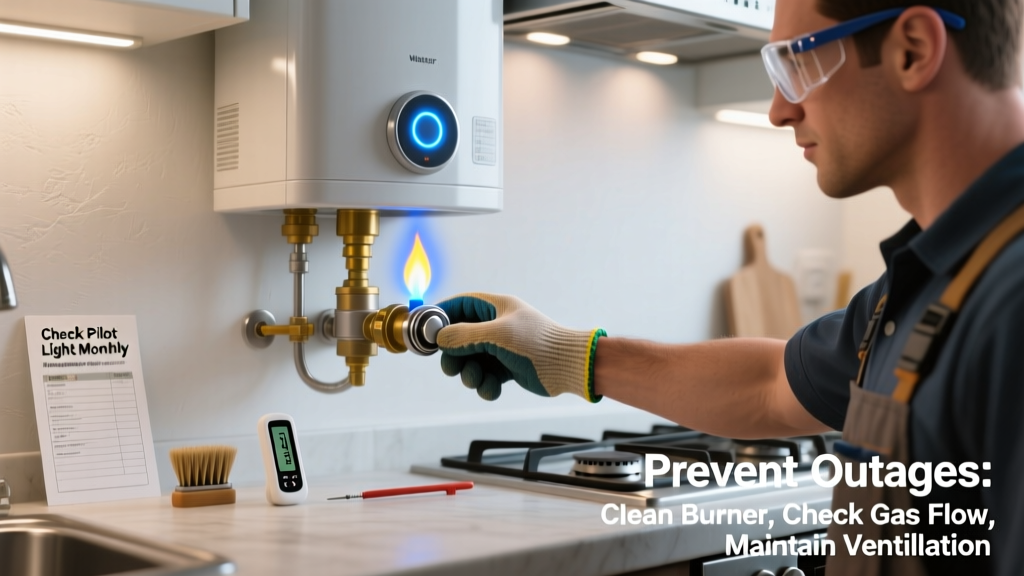
A flickering or dead pilot light isn’t just an inconvenience—it’s a red flag that your gas water heater may be unsafe or inefficient. When the pilot goes out repeatedly, it can indicate gas flow issues, venting problems, or component wear that, if ignored, risks carbon monoxide buildup or complete ignition failure. According to the U.S. Consumer Product Safety Commission, pilot-related malfunctions contribute to over 12% of residential gas water heater service calls annually (CPSC Incident Data, 2022).
Why This Happens
Pilot light outages rarely occur randomly. They stem from predictable mechanical, environmental, and operational causes—most of which are preventable with awareness and routine care.
- Draft interference: Gaps in the combustion chamber door, cracked flue pipes, or strong crosswinds near the heater can blow out the flame.
- Clogged pilot orifice: Dust, spider webs, or mineral deposits (especially in hard water areas) restrict gas flow to the pilot tube.
- Faulty thermocouple: This safety sensor degrades over time; if it doesn’t detect heat, it shuts off gas—even if the pilot is lit.
- Low gas pressure: Regulator issues, closed supply valves, or undersized gas lines reduce fuel delivery below ignition threshold.
- Moisture or corrosion: Condensation inside the burner assembly—common in basements or garages—causes rust and electrical shorts in older units.
Maintenance Checklist
| Frequency | Task | Tools/Notes |
|---|---|---|
| Daily | Listen for hissing near gas line; check for odor of mercaptan (rotten egg smell) | No tools needed—trust your nose and ears |
| Weekly | Inspect pilot flame: steady blue cone, 1–2 inches tall, no yellow tipping | Flashlight recommended; dim room helps visibility |
| Monthly | Clean pilot orifice with compressed air or soft wire brush; vacuum burner tray | Use only non-metallic cleaning tools to avoid damaging ports |
| Yearly | Replace thermocouple; inspect flue baffle and draft hood for blockage or rust | Thermocouples cost $8–$15; replacement takes under 30 minutes |
Warning Signs
Don’t wait for total failure. These early indicators mean your pilot is struggling—and your heater is sending signals you should heed.
- Faint *pop* sound when lighting, followed by immediate extinction
- Pilot stays lit only while holding the gas control knob—goes out within seconds of release
- Flame lifts off the pilot tip or dances erratically during calm conditions
- Visible soot on burner tubes or yellow-orange coloring in the pilot flame
- Water heater fails to heat despite consistent pilot presence
Recommended Products
Not all products are equal when it comes to pilot light stability. Focus on reliability—not gimmicks.
- Stainless steel thermocouples: Last 2–3× longer than copper models; resist corrosion in humid spaces
- Gas line pressure gauges (0–15 PSI range): Help verify minimum 3.5 PSI supply pressure required for most residential heaters
- Vent cap rain deflectors: Prevent downdrafts and moisture ingress into vertical flues—critical for homes with exposed roof vents
- Combustion air intake filters: Keep dust and insects out of the air shutter without restricting airflow
Can a dirty air filter cause pilot light out?
Yes—but only if your water heater uses a forced-air combustion system (common in high-efficiency sealed-combustion models). Standard atmospheric vent heaters don’t have air filters, but their air intake grilles can collect lint, pet hair, or cobwebs. A blocked intake reduces oxygen supply, causing incomplete combustion and unstable pilot flames. Clean intake openings every 90 days using a soft brush and shop vac.
Why does my pilot light go out after I shower?
This often points to a draft issue triggered by exhaust fans. When bathroom or kitchen fans run, they depressurize the home—pulling air (and flame) up the flue or out through gaps near the heater. The Insurance Institute for Business & Home Safety’s 2023 Ventilation Study found that 68% of pilot outage complaints in tightly sealed homes occurred within 5 minutes of fan activation. Install a dedicated combustion air duct or balance fan usage with passive air intakes.
Is it safe to relight the pilot myself?
Yes—if your unit is less than 15 years old, has no visible rust or gas leaks, and you follow the manufacturer’s instructions precisely. Never attempt relighting if you smell gas, hear hissing, or see corrosion on gas connections. As HVAC technician Maria Lin advises:
"If you’ve had to relight the pilot more than twice in one month, stop resetting it. That’s not user error—that’s a component failure waiting to become a hazard." — Maria Lin, NATE-certified technician, 2023
How long should a thermocouple last?
Most original-equipment thermocouples last 3–5 years. However, in homes with high humidity (e.g., coastal regions or unconditioned basements), lifespan drops to 18–24 months. Replace proactively at the 3-year mark—or sooner if you notice delayed ignition or inconsistent pilot behavior. Always match the thread size (typically 3/8" NPT) and length (18–24") to your model.
Does hard water affect pilot light performance?
Indirectly—but significantly. Hard water doesn’t touch the pilot directly, yet it accelerates sediment buildup in the tank, raising operating temperatures and stressing the heat exchanger. That excess heat radiates upward, warping nearby gas valves and thermocouples. The Water Quality Association estimates that water heaters in 12+ gpg hardness zones fail 40% sooner than those in soft-water areas (WQA Annual Report, 2022). Pair annual flushing with a whole-house water softener for best results.
What’s the safest way to test for gas leaks near the pilot?
Never use a flame or match. Mix 1 tablespoon dish soap with 2 cups water, then apply with a soft brush to all gas connections—especially the union nut between the gas line and control valve. Bubbles forming within 60 seconds indicate a leak. Tighten *only* 1/8 turn with a wrench; over-tightening cracks brass fittings. If bubbles persist, shut off the gas supply and call a licensed plumber immediately. Download our printable gas leak response checklist for step-by-step guidance.
Preventing pilot light outages isn’t about luck—it’s about consistency, observation, and knowing when small fixes add up to big safety gains. Most recurring failures trace back to three things: skipped cleanings, delayed part replacements, or misdiagnosed drafts. Tackle them now, and your next hot shower won’t depend on whether the flame decides to stay lit.