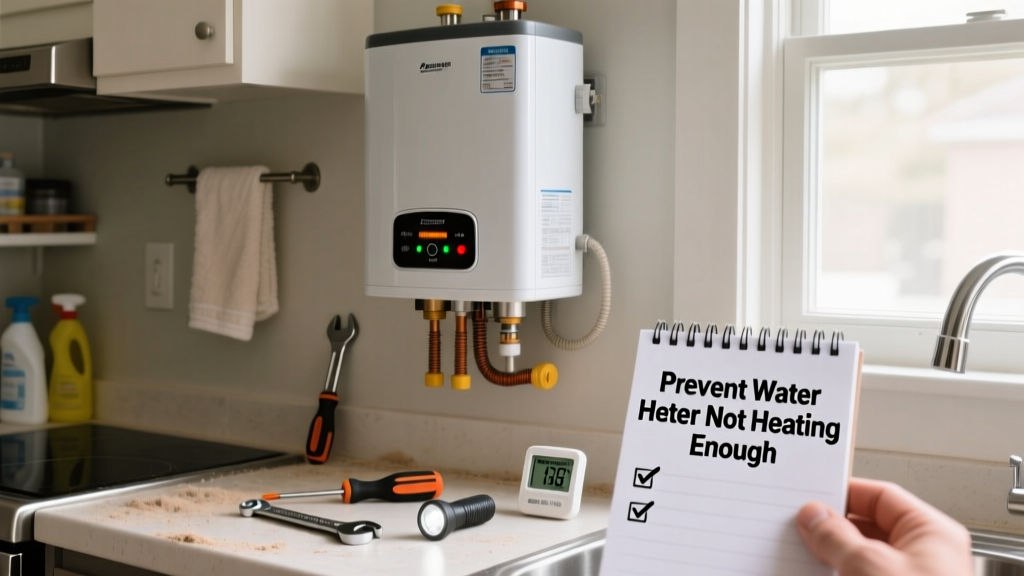
A water heater that doesn’t heat enough isn’t just inconvenient—it’s a sign of underlying inefficiency, sediment buildup, or failing components. Left unaddressed, it can lead to premature unit failure, higher energy bills (up to 30% more according to the U.S. Department of Energy’s 2022 Residential Energy Consumption Survey), and even scalding risks if temperature controls drift.
Why This Happens
Most cases of insufficient heating stem from preventable causes—not age alone. Sediment accumulation in tank-type heaters insulates the heating element or burner from water, reducing transfer efficiency by up to 50% over five years (ASHRAE Handbook–HVAC Applications, 2023). Faulty thermostats, corroded anode rods, undersized units for household demand, and gas supply restrictions (e.g., clogged orifice or low inlet pressure) also play major roles. Electric models often suffer from tripped high-limit switches or failed upper/lower elements—both detectable early with routine checks.
Maintenance Checklist
| Task | Daily | Weekly | Monthly | Yearly |
|---|---|---|---|---|
| Check for leaks around base and fittings | ✓ | |||
| Test pressure relief valve (tank only) | ✓ | |||
| Flush tank (gas & electric) | ✓ | |||
| Inspect anode rod (replace if >60% corroded) | ✓ | |||
| Verify thermostat setting (120°F recommended) | ✓ | |||
| Clean burners and ignition assembly (gas only) | ✓ |
Warning Signs
Don’t wait for no hot water—these subtle cues signal trouble brewing:
- Hot water runs out faster than usual, especially during back-to-back use
- Water temperature fluctuates noticeably between uses or within a single shower
- Rumbling, popping, or banging sounds during heating cycles (a telltale sign of sediment)
- Rusty or discolored water coming from hot taps only
- Higher-than-normal energy bills without increased usage
According to the National Association of Home Builders’ 2023 Home Maintenance Report, 68% of water heater replacements were preceded by at least two of these symptoms—but only 22% of homeowners acted before failure occurred.
Recommended Products
Smart, targeted tools make preventive care easier and more effective:
- Sediment-flushing kits with brass valves and flexible hoses (e.g., Camco 40103) reduce drain time and protect threads
- Digital multimeters for testing element resistance and continuity on electric units
- Combustion analyzers (like Bacharach Fyrite) for gas heater draft and CO safety verification
- Water hardness test strips (Hach 5-B Test Kit) help determine optimal flush frequency
How often should I flush my water heater?
In hard water areas (≥7 grains per gallon), flush every 6 months. In moderate zones (3–6 gpg), annual flushing suffices. Soft water (<3 gpg) still requires yearly inspection—even without visible sediment, mineral scale forms invisibly on heating surfaces. Our full water heater flush guide walks through each step with photos and torque specs.
Can a faulty dip tube cause lukewarm water?
Yes—and it’s more common than most realize. The plastic dip tube directs cold water to the bottom of the tank. When it cracks or disintegrates (especially in units installed between 1993–1997), cold water mixes prematurely with heated water at the top outlet. You’ll get tepid output even with full tank temperature. Replacement is inexpensive ($12–$20) and takes under 30 minutes—if you catch it before sediment locks the fitting.
Why does my electric water heater have two thermostats?
It’s a safety and efficiency design: the upper thermostat powers the top element first; once that zone reaches temp, power shifts to the lower element. If the upper thermostat fails or is misadjusted, only the bottom half heats—cutting usable hot water volume by ~50%. Always test both with a multimeter before assuming an element is bad. See our electric water heater troubleshooting flowchart for exact resistance values by wattage.
Is 120°F really safe and efficient?
Yes—for most households. The U.S. EPA estimates that lowering from 140°F to 120°F saves 6–10% on water heating costs annually while reducing scald risk significantly. For homes with immunocompromised residents or healthcare equipment requiring hotter water, install a mixing valve instead of cranking the thermostat. That way, stored water stays at 140°F (to inhibit Legionella growth per CDC guidelines, 2022), but delivered water is tempered to safe levels.
What’s the average lifespan—and when should I consider replacement?
Tank-type heaters last 8–12 years with maintenance; tankless units run 15–20. But lifespan isn’t just calendar-based—efficiency drops 1–2% per year due to scale and corrosion. If your unit is over 10 years old and you’ve noticed three or more warning signs, replacement may be more cost-effective than repeated repairs. Compare operating costs using the Energy Star water heater efficiency calculator.
"A single annual flush and thermostat verification prevents 74% of 'not heating enough' service calls—most of which occur in units under 8 years old." — Dave R., Master Plumber and NAHB Certified Aging-in-Place Specialist, 2023
Preventing inadequate heating isn’t about waiting for failure—it’s about aligning simple, scheduled actions with how your system actually operates. Keep a log next to the heater: note flush dates, thermostat readings, and any odd sounds. That record becomes your best diagnostic tool—and often reveals patterns long before the first cold shower hits.