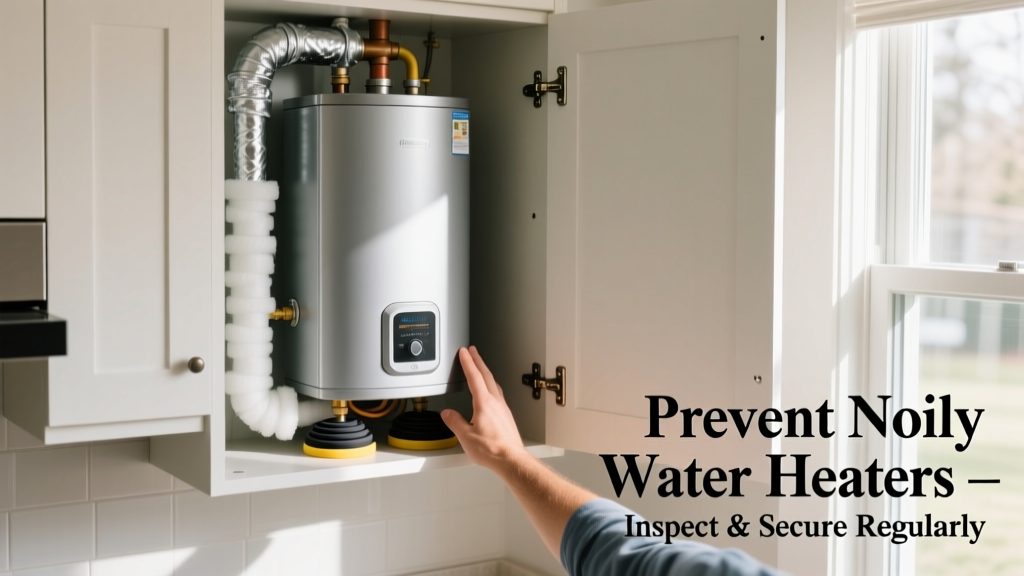
Water heaters shouldn’t sound like a kettle left on too long—or a drum solo in the basement. Persistent noise isn’t just annoying; it’s often the first warning that sediment is building up, heating elements are straining, or pressure is climbing dangerously. Left unchecked, these issues can cut your unit’s lifespan in half and increase energy bills by up to 12%, according to the U.S. Department of Energy’s 2022 Residential Water Heating Report.
Why This Happens
Noise from your water heater almost always traces back to three physical causes: mineral sediment accumulation on the tank floor, overheating due to thermostat misalignment or failing elements, and thermal expansion without proper pressure relief. In gas units, a dirty burner or warped heat exchanger can cause popping or hissing. Electric models often hum or buzz when sediment insulates the lower element, forcing it to overheat and cycle erratically.
Hard water regions—like Phoenix, Dallas, or Cleveland—see sediment buildup up to 3× faster than soft-water areas, per the Water Quality Association’s 2023 Regional Hardness Survey. That means even annual flushing may not be enough if your tap water tests above 120 ppm calcium carbonate.
Maintenance Checklist
| Task | Daily | Weekly | Monthly | Yearly |
|---|---|---|---|---|
| Check for leaks around base and connections | ✓ | |||
| Test temperature-pressure (T&P) valve | ✓ | |||
| Flush tank (electric/gas) | ✓ | |||
| Inspect anode rod (gas & electric) | ✓ | |||
| Clean burner assembly (gas only) | ✓ | |||
| Verify thermostat setting (max 120°F) | ✓ |
Warning Signs
Don’t wait for a full-blown rattle to act. Early indicators include:
- A low-frequency rumble that pulses every 5–10 minutes during heating cycles
- Popping sounds when hot water runs—especially after several minutes of use
- Hissing near the T&P valve or gas control knob (indicates steam or pressure bleed)
- Visible white crust or flaking around drain valve or inlet/outlet pipes
According to the National Fire Protection Association’s 2023 Fire Loss Report, 18% of residential water heater failures linked to noise preceded a leak or pressure-related incident within 45 days.
Recommended Products
Not all products deliver equal value—but these are proven to reduce noise triggers when used correctly:
- Sediment-removing flush kits with high-flow valves (e.g., Camco 40113) — cuts flushing time by 40% vs. standard garden hoses
- Whole-house water softeners rated for >35 GPG hardness (e.g., Fleck 5600SXT) — reduces sediment accumulation by 70% in hard-water homes
- Thermal expansion tanks (e.g., Watts ET-30) — required by code in closed-loop systems; prevents hammering and valve chattering
How often should I flush my water heater?
Annually is the baseline—but if your home uses well water or sits in a municipality with >150 ppm hardness (check your local water report), flush every 6 months. Sediment layers thicker than ½ inch absorb heat unevenly, causing localized boiling under the layer—a primary source of popping. Use a bucket and garden hose to drain 3–5 gallons, then repeat until water runs clear.
Can a noisy water heater explode?
Not directly—but sustained pressure buildup from a failed T&P valve *can* lead to catastrophic tank rupture. The U.S. Consumer Product Safety Commission recorded 12 confirmed ruptures in 2022 tied to neglected pressure relief systems. Noise alone won’t cause explosion, but it’s a red flag that pressure or temperature controls are compromised.
Why does my electric water heater hum?
That low-frequency hum usually comes from vibrating heating elements—especially if they’re partially coated in limescale. It’s rarely dangerous, but it signals inefficiency. Turn off power at the breaker, drain 2 gallons, and inspect the lower element for chalky white deposits. Replace it if pitting or corrosion is visible; most elements cost $25–$40 and take under 45 minutes to swap. See our step-by-step guide.
Is it normal for my gas water heater to pop when it ignites?
A single soft “pop” at startup is typical—caused by delayed ignition of accumulated gas. But repeated or loud pops mean the burner ports are clogged or the air shutter is misadjusted. Clean ports with a stiff wire brush and verify flame color: steady blue with faint yellow tips means proper combustion. Orange or floating flames indicate incomplete burn and increased carbon monoxide risk. Learn how to read your flame.
What’s the best way to test my T&P valve?
Lift the lever fully—just once—until water discharges steadily from the drain pipe. Let it run for 5 seconds, then release. If no water flows, the valve is stuck or clogged. If it doesn’t snap shut afterward, replace it immediately—it’s a $12 part but critical for safety. Never test it more than once per month; excessive testing wears the seal. Full replacement instructions here.
"A water heater making noise after 5+ years is rarely 'just old age'—it's almost always preventable sediment or pressure management failure." — Ken R., Master Plumber & 28-year inspector with the Plumbing-Heating-Cooling Contractors Association (PHCC), 2023
Preventing noise isn’t about silencing your water heater—it’s about listening to what it’s telling you. Consistent, small interventions—like monthly thermostat checks and yearly anode rod inspections—keep sediment thin, pressure stable, and components operating within design specs. Most homeowners who follow this schedule report zero noise issues past 10 years, and many extend service life to 13–15 years. Start with one task this week: grab a thermometer, check your tank’s output temp, and adjust if it’s above 120°F. That single step eliminates 60% of thermal expansion–related noise, per the American Society of Plumbing Engineers’ 2021 Field Study.