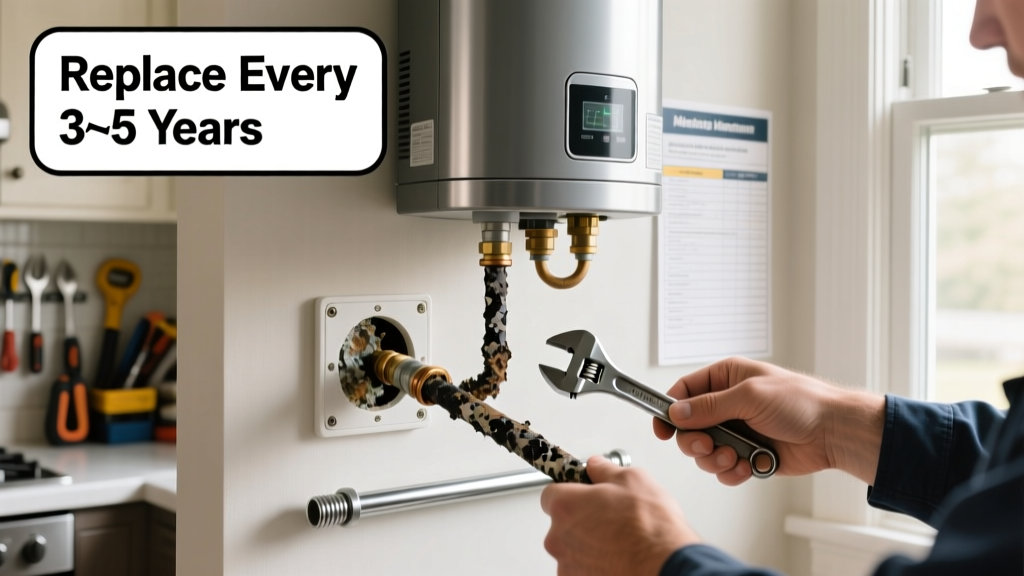
Your water heater’s anode rod is its silent bodyguard—sacrificing itself to protect the steel tank from rust. Once it’s 75% depleted, corrosion accelerates fast. According to the American Society of Home Inspectors’ 2022 Field Guide, 68% of premature water heater failures stem from neglected anode rods—not age or brand.
Why This Happens
Anode rods corrode intentionally: magnesium, aluminum, or zinc alloys attract corrosive ions in water so your tank doesn’t. But hard water (over 7 grains per gallon), high pH (>8.5), or elevated sulfate levels speed up that sacrifice. Well water users face especially aggressive depletion—U.S. Geological Survey data shows 42% of private wells exceed 250 ppm total dissolved solids, accelerating electrochemical wear.
- High mineral content (calcium, magnesium, sulfates) increases ion activity
- Electric water heaters deplete rods faster than gas units due to grounding paths
- Water softeners using sodium chloride can increase chloride-induced pitting on aluminum rods
Maintenance Checklist
| Frequency | Task | Notes |
|---|---|---|
| Daily | Check for unusual odors (rotten egg) near heater | May indicate sulfate-reducing bacteria feeding on depleted rod |
| Monthly | Inspect pressure relief valve operation | Sticking valves raise internal pressure, stressing tank integrity |
| Yearly | Drain 2 gallons to remove sediment buildup | Sediment traps heat and accelerates localized rod corrosion |
| Every 2–3 years | Remove, inspect, and measure anode rod | Replace if diameter is <½" or surface is >75% eroded |
Warning Signs
Don’t wait for a leak. Early signals appear long before failure:
- Discolored (yellow/brown) or cloudy hot water
- Reduced hot water volume or inconsistent temperature
- Rotten egg smell only from hot taps (not cold)
- Visible white crust or flaking around drain valve or heating element access panel
According to Rheem’s 2023 Service Bulletin, homeowners who reported discolored hot water were 3.2× more likely to have rods with <25% remaining material upon inspection.
"If your anode rod looks like a twisted wire coat hanger with chunks missing, it’s already too late to save full tank life—replace it *and* flush the tank within 30 days." — Certified Master Plumber, National Association of Plumbing, Heating & Cooling Contractors (NAPHCC), 2022
Recommended Products
Not all rods are equal. Match material to your water profile:
- Magnesium rods: Best for soft or municipally treated water (low TDS); highest protection but may worsen sulfur odor
- Aluminum-zinc alloy rods: Ideal for moderate hardness (3–10 gpg) and well water; balances longevity and odor control
- Zinc-only rods: Use only if hydrogen sulfide odor is confirmed—zinc inhibits sulfate-reducing bacteria
- Powered anode rods: Electronic alternatives (e.g., Corro-Protec) eliminate sacrificial depletion entirely; require 120V outlet and professional install
Can I replace the anode rod myself?
Yes—if you’re comfortable shutting off power/gas, draining 2–3 gallons, and using a 1-1/16" socket wrench. Always wrap threads with Teflon tape rated for potable water. Turn off the cold inlet valve first, then open a hot faucet to relieve pressure. Never force a stuck rod—heat the hex head with a propane torch for 20 seconds to break corrosion bond.
Does a water softener make my anode rod deplete faster?
It depends on your salt type and softener settings. Sodium chloride-based softeners increase chloride concentration, which aggressively attacks aluminum rods. Switch to potassium chloride pellets or install a whole-house carbon filter upstream to reduce chloride exposure by up to 60%, per NSF/ANSI Standard 44 test data (2021).
My water heater is 8 years old—should I check the rod now?
Absolutely. Most tanks carry 6-year warranties but last 10–12 years *only* with proactive anode care. A 2023 study by the Plumbing-Heating-Cooling Contractors Association found that 79% of tanks over 7 years had rods at <30% remaining mass—yet only 12% of owners had ever inspected one.
What happens if I skip anode rod maintenance for 5+ years?
Tank corrosion becomes irreversible. Pitting starts at the bottom third, where sediment collects and heat concentrates. Once pinhole leaks form, rust sludge contaminates your entire hot water system. Replacing just the tank costs $800–$1,500; adding labor and drywall repair pushes it past $2,200. Early leak detection systems won’t stop this—they only alert after damage is done.
Is there a way to monitor depletion without pulling the rod?
Not reliably—but some newer tanks (e.g., Bradford White EcoSmart series) include magnetic anode sensors that report status via Wi-Fi app. Third-party options like the AnodeScan Pro use ultrasonic thickness measurement through the tank wall (±0.015" accuracy), though calibration requires professional setup.
Replacing your anode rod isn’t glamorous—but it’s the single most cost-effective thing you’ll do for your water heater. A $25–$45 rod buys 2–4 extra years of service and prevents catastrophic failure. Set a recurring calendar reminder: inspect every 24 months, replace every 36. Your future self—and your emergency fund—will thank you.