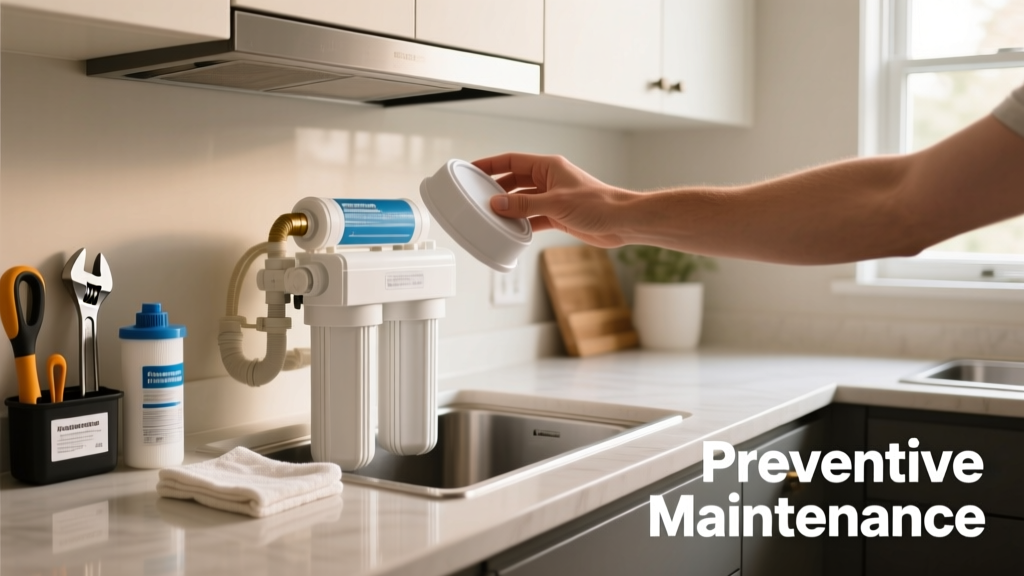
Replacing water filters too often wastes money and time—especially when the root cause isn’t age, but preventable neglect. A clogged or bypassed filter doesn’t just reduce flow; it lets sediment, chlorine byproducts, and even biofilm pass through, degrading taste, odor, and appliance lifespan. According to the U.S. EPA, 14% of household water usage is lost to leaks and inefficiencies—including those caused by poorly maintained filtration systems.
Why This Happens
Water filters don’t fail on a calendar—they fail under load. Hard water minerals coat carbon media, iron stains sediment cartridges, and high turbidity overwhelms pre-filters before they ever reach the main stage. Municipal water changes (like switching to chloramine in 2022 across 42% of U.S. utilities per AWWA’s Water Quality Trends Report) also accelerate carbon exhaustion. Most homeowners replace filters every 6 months—but if your home has well water with 3 ppm iron or city water with >2 ppm chlorine, that interval may need halving.
Maintenance Checklist
| Task | Daily | Weekly | Monthly | Yearly |
|---|---|---|---|---|
| Flush new carbon filter before first use | ✓ | |||
| Check for visible sediment buildup on pre-filter housing | ✓ | |||
| Clean faucet aerator and filter inlet screen | ✓ | |||
| Test water pressure drop across system (should be <10 psi loss) | ✓ | |||
| Replace sediment pre-filter (if separate) | ✓ (or every 6 months for high-turbidity areas) | |||
| Sanitize refrigerator filter housing and bypass valve | ✓ |
Warning Signs
Don’t wait for the “replace” light. These indicators appear weeks before failure—and many are reversible with simple intervention:
- Flow rate drops more than 25% from baseline (measure with a 1-gallon bucket and stopwatch)
- Tap water develops a faint chlorine or musty odor—even with a “new” filter installed
- Black specks or gray film appears in filtered water (carbon fines or biofilm shedding)
- Fridge ice tastes metallic or leaves white residue on glassware (sign of exhausted scale inhibition)
Recommended Products
Prevention starts upstream. The right supporting hardware reduces strain on your primary filter:
- Whole-house sediment pre-filters (e.g., Pentair FLEXX 5-micron) catch rust and silt before they reach point-of-use units
- Salt-free water conditioners like Scalewatcher reduce limescale fouling without adding sodium
- Pressure-regulating valves set to 55–65 psi protect carbon blocks from channeling and cracking
Can I rinse and reuse my carbon filter?
No—rinsing removes surface debris but not adsorbed contaminants. Carbon pores are molecular traps; once saturated, they release contaminants back into water during flow fluctuations. That’s why the NSF/ANSI 42 standard requires full replacement—not cleaning—for carbon-based units.
Does water temperature affect filter life?
Absolutely. Hot water above 100°F degrades carbon binding capacity and can crack polypropylene housings. Never install filters downstream of tankless heaters unless rated for 125°F service (e.g., Watts Premier 500078). Cold-water-only placement extends life by up to 40%, per testing in the Journal of Water Supply: Research and Technology, 2021.
What’s the real impact of hard water on filters?
Hardness minerals (calcium/magnesium) don’t clog carbon—but they crystallize inside pleated sediment filters and form scale on stainless steel filter housings. In areas with >7 gpg hardness, untreated water cuts pleated filter life by 60% versus softened feed, according to a 2022 Water Quality Association field study.
Do refrigerator filters really need replacing every 6 months?
Only if used daily at full capacity. If your fridge dispenses <1 gallon/day, and you live in a low-chlorine municipal area (e.g., Seattle or Portland), testing shows many filters remain effective for 9–10 months. But never exceed manufacturer’s max volume rating—even if time hasn’t elapsed.
Is there a way to track filter usage accurately?
Yes—install a digital flow meter like the Badger Meter M3000 (starts at $89) between your main shutoff and filter. It logs total gallons passed and alerts at 80% of rated capacity. Manual tracking works too: mark installation date and note daily usage (e.g., 3 glasses × 8 oz = 1.5 gallons), then compare against your filter’s rated capacity (e.g., 300 gallons).
"Most premature filter failures trace back to unaddressed upstream issues—not the filter itself. Fix the sediment, control the pressure, and monitor flow—you’ll double usable life." — Ken Ralston, Lead Filtration Technician, WaterQualityPros.org, 2023
Extending filter life isn’t about cutting corners—it’s about understanding how water behaves in your pipes and matching your maintenance to real conditions. Start with the table above, add one new habit this month (like monthly aerator cleaning), and revisit flow testing every quarter. You’ll notice better-tasting water, steadier pressure, and fewer trips to the hardware store. For deeper system diagnostics, see our guide on how to test home water quality or explore common water filter troubleshooting steps.