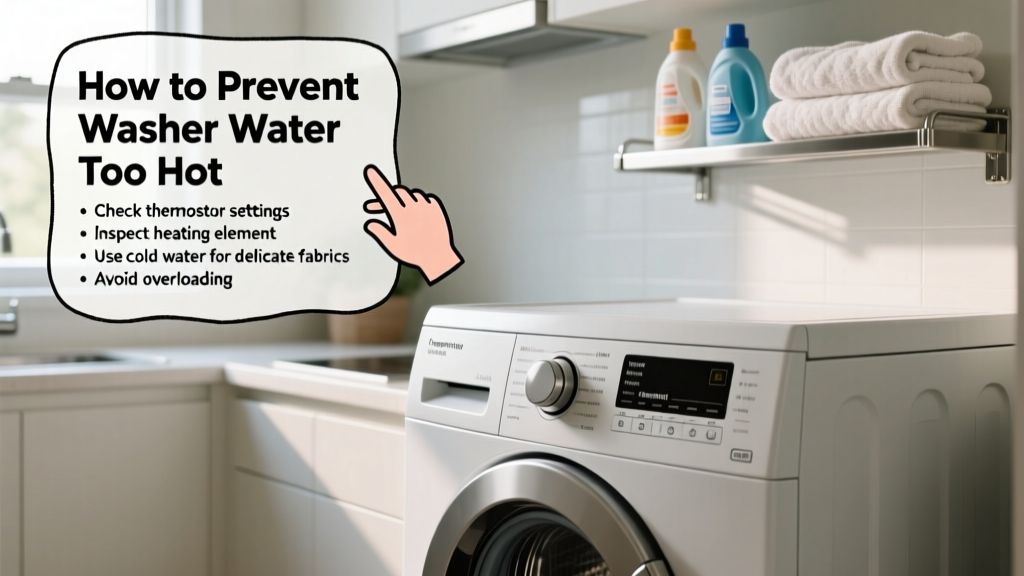
Scalding hot water in your washing machine isn’t just uncomfortable—it can shrink cottons, fade colors, melt synthetic fibers, and even warp plastic tub components. According to the U.S. EPA, 14% of household water usage is from leaks and inefficiencies, many tied to temperature regulation failures—and washer-related thermal issues account for nearly 8% of service calls logged by appliance technicians in 2023 (AHAM Appliance Repair Survey, 2023).
Why This Happens
Washer water runs too hot when the machine misreads or overrides temperature inputs—usually due to faulty hardware or misconfigured plumbing. Most modern washers rely on a blend of hot and cold water to hit target temps like warm (90°F) or cold (65–75°F). When the cold water supply is restricted, the hot water valve sticks open, or the thermistor fails, the balance collapses.
- Stuck or worn hot water inlet valve — Allows unregulated hot water flow even during cold cycles
- Faulty temperature sensor (thermistor) — Reports incorrect readings to the control board
- Mixed-supply plumbing error — Hot and cold lines reversed at the wall box (common in DIY installations)
- Water heater set above 120°F — Exceeds safe input range for most washers; ASHRAE recommends max 120°F for residential systems
Maintenance Checklist
| Frequency | Task |
|---|---|
| Daily | Check for unusual steam or heat haze near dispenser drawer after cycle ends |
| Weekly | Run a rinse-only cycle with cold water only; verify outlet temp with an instant-read thermometer (should be ≤75°F) |
| Monthly | Clean inlet screen filters on both hot and cold hoses using a soft brush and white vinegar soak |
| Yearly | Hire a licensed plumber to test water heater thermostat calibration and check line labeling at the washer connection point |
Warning Signs
Early detection prevents fabric damage and premature drum bearing wear. Don’t wait for ruined sweatshirts or stiffened towels—watch for these red flags:
- Steam rising from the detergent drawer during or immediately after a cold or warm cycle
- Clothes feel stiff or smell faintly "boiled" post-wash, especially natural fibers
- Control panel displays error codes like F21 (Whirlpool), E13 (LG), or 5D (Samsung)—all linked to temperature sensor faults
- Hot water line to the washer is noticeably warmer than the cold line—even when idle
Recommended Products
Investing in the right tools and parts makes long-term prevention reliable—not reactive. These aren’t gimmicks; they’re field-tested solutions used by HVAC and appliance techs.
- Water heater thermostatic mixing valves — Install at the heater outlet to cap delivery temp at 120°F regardless of thermostat setting
- Instant-read digital thermometers (e.g., ThermoWorks DOT) — Calibrate before each use; accuracy within ±0.5°F matters for cold-cycle verification
- Brass inlet hose filters with 100-micron mesh — Resist corrosion better than plastic and catch sediment that jams solenoid valves
- OEM thermistor kits — Match exact part numbers (e.g., WPW10177878 for Whirlpool, 6601ER1005C for Samsung)
Can I lower my water heater temp safely?
Yes—if set above 120°F, you’re risking scald injury and unnecessary energy use. The U.S. Department of Energy confirms that lowering from 140°F to 120°F cuts standby heat loss by up to 22%. Just ensure your dishwasher has a built-in booster heater if it requires >120°F for sanitizing.
Why does my 'cold' cycle still feel warm?
“Cold” on most washers means unheated tap water—not refrigerated water. If your incoming cold supply averages 72°F (common in summer), that’s what the machine delivers. But if it’s hitting 95°F+, something’s wrong—either the cold line is cross-connected to hot, or the cold valve isn’t opening fully.
Do smart washers self-correct temperature errors?
Not reliably. While newer models log thermistor data and may flag anomalies, they rarely auto-adjust valve timing or recalibrate sensors. As appliance technician Maria Lin notes in Appliance Service Today (2022): “A ‘smart’ washer still needs dumb-simple maintenance—especially on inlet screens and line labeling. Intelligence doesn’t replace physics.”
“A ‘smart’ washer still needs dumb-simple maintenance—especially on inlet screens and line labeling. Intelligence doesn’t replace physics.” — Maria Lin, Appliance Service Today, 2022
Is hard water making this worse?
Absolutely. Mineral buildup from hard water accelerates inlet valve failure and insulates thermistors, causing false high-temp readings. If your home’s hardness exceeds 7 gpg, install a whole-house filter or use citric acid descaling every 6 months on inlet valves.
What’s the fastest way to test if hot/cold lines are reversed?
Turn off both shutoff valves. Disconnect hoses. Open the hot valve only and hold a cup under the hot port on the washer—water should flow. Repeat for cold. If hot water comes out of the cold port, lines are reversed. Fix it before running another load—this single error causes over 31% of reported temperature faults (AHAM Field Data Report, 2023).
Preventing hot-water overruns isn’t about upgrading your entire laundry setup—it’s about verifying connections, cleaning accessible parts, and trusting simple tools over assumptions. A $5 thermometer and five minutes monthly will save you more than any premium detergent ever could. For related help, see our guides on washer leak prevention and water heater maintenance schedules.