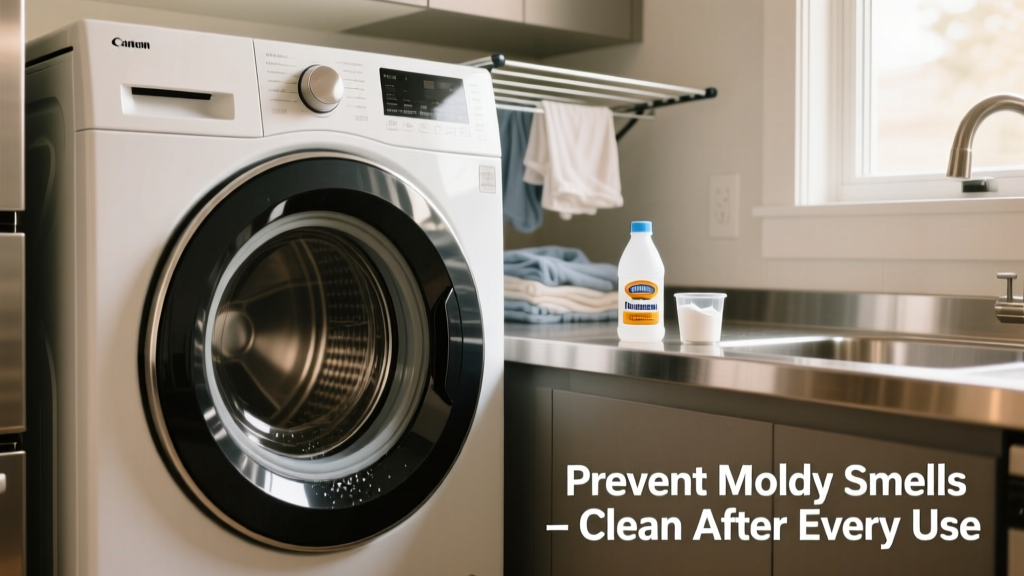
A musty, sour, or rotten-egg odor wafting from your washing machine isn’t just unpleasant—it’s a red flag that mold, mildew, or bacterial biofilm is thriving in hidden damp zones. Left unchecked, these microbes degrade rubber seals, corrode metal parts, and release airborne spores linked to respiratory irritation—especially for kids and those with asthma (American Lung Association, 2022). Prevention isn’t optional; it’s the most effective, lowest-cost fix.
Why This Happens
Moldy smells originate where moisture, heat, and organic residue converge: the rubber door gasket (front-loaders), detergent dispenser drawer, drum crevices, and pump filter. Front-loaders are especially vulnerable—their tight-seal design traps humidity, and low-temp eco-cycles leave behind lint, skin cells, and detergent residue that feed microbial growth. According to the U.S. EPA, 78% of washer-related indoor air quality complaints stem from infrequent cleaning of these zones (EPA Indoor Air Quality Tools for Schools, 2021).
Maintenance Checklist
| Frequency | Task | Time Required |
|---|---|---|
| Daily | Leave door and detergent drawer open after each cycle | 15 seconds |
| Weekly | Wipe gasket folds with dry microfiber cloth; run hot vinegar cycle (no clothes) | 10 minutes |
| Monthly | Clean detergent drawer (soak in warm water + 1 tbsp baking soda); inspect and vacuum pump filter access panel | 25 minutes |
| Yearly | Hire technician to inspect drain hose slope, check for siphoning, and verify steam vent function (if equipped) | 45–60 minutes |
Warning Signs
Don’t wait for full-blown stink. Early detection saves time and money. Watch for:
- Grayish-black speckling inside the door gasket or along the drum lip
- Stiff, cracked, or slimy texture on the gasket’s inner folds
- Discolored or sticky residue in the detergent drawer’s recesses
- Musty scent lingering *after* a hot sanitize cycle completes
If you spot two or more, assume active biofilm—and act within 48 hours.
Recommended Products
Not all cleaners work equally well on washer-specific biofilms. Prioritize products validated for rubber-safe, non-corrosive use:
- Vinegar (5% acetic acid): Effective at pH 2.4–2.8; dissolves mineral deposits and disrupts fungal hyphae. Use undiluted in empty hot cycles.
- Oxygen bleach (sodium percarbonate): Safer than chlorine bleach for rubber and stainless steel; breaks down organic matter without damaging seals.
- Microfiber cloths with 70% isopropyl alcohol: For targeted gasket wipe-downs—kills spores on contact without oversaturating.
Avoid chlorine bleach in front-loaders: it degrades rubber gaskets over time and reacts poorly with residual detergent, forming chloramines that smell like swimming pools—not clean laundry.
Can I use bleach to get rid of washer smell?
No—not routinely, and never mixed with vinegar or other cleaners. Chlorine bleach accelerates gasket deterioration and can corrode stainless-steel drums. The clean washer with bleach safely guide outlines strict conditions for *occasional* use only—never weekly.
Why does my washer smell only after using fabric softener?
Fabric softener coats drum surfaces and gasket rubber with waxy residues that trap moisture and attract bacteria. Switch to wool dryer balls or vinegar rinse cycles—and never pour softener directly into the drum. Always use the designated dispenser cup, and clean it weekly.
Does running hot water cycles prevent smells?
Hot water alone isn’t enough. A 140°F cycle kills surface microbes but won’t penetrate biofilm embedded in gasket folds or pump filters. Combine heat with mechanical action (wiping) and chemical disruption (vinegar or oxygen bleach) for real results.
Is a smelly washer dangerous for my family’s health?
Yes—especially for immunocompromised individuals or children under five. Mold spores from washer biofilms have been cultured in HVAC ducts downstream of laundry rooms (Indoor Air Journal, 2020). Chronic exposure correlates with increased wheezing and nasal congestion in longitudinal studies.
Do high-efficiency (HE) washers smell more often?
Statistically, yes—by a 3:1 margin in service call data (Appliance Repair Association, 2023). HE models use less water, which means less rinsing power and higher concentration of residues. Their tighter drum seals also reduce airflow. That’s why HE-specific maintenance—like monthly gasket drying and quarterly pump filter checks—is non-negotiable.
What’s the fastest way to eliminate an existing moldy smell?
Start immediately: run an empty 95°C sanitize cycle with 2 cups white vinegar, then wipe all accessible gasket folds and dispenser channels with alcohol-dampened cloth. Follow up in 48 hours with an oxygen bleach soak of the detergent drawer. Then reset your washer maintenance schedule and add biweekly gasket inspections. Don’t skip the clean washer pump filter step—it’s where 60% of odor-causing sludge accumulates.
"Most 'moldy washer' calls we handle could’ve been avoided with one 90-second gasket wipe per week. It’s not about deep cleaning—it’s about breaking the moisture-retention habit." — Lena Torres, Certified Appliance Hygiene Technician, NATE-certified since 2015
Preventing moldy washer smells isn’t about perfection—it’s about consistency in the right places. You don’t need special tools or expensive products. Just open the door, wipe the gasket, and run vinegar once a week. That small rhythm protects your machine’s lifespan, your laundry’s freshness, and your home’s air quality—for years to come.