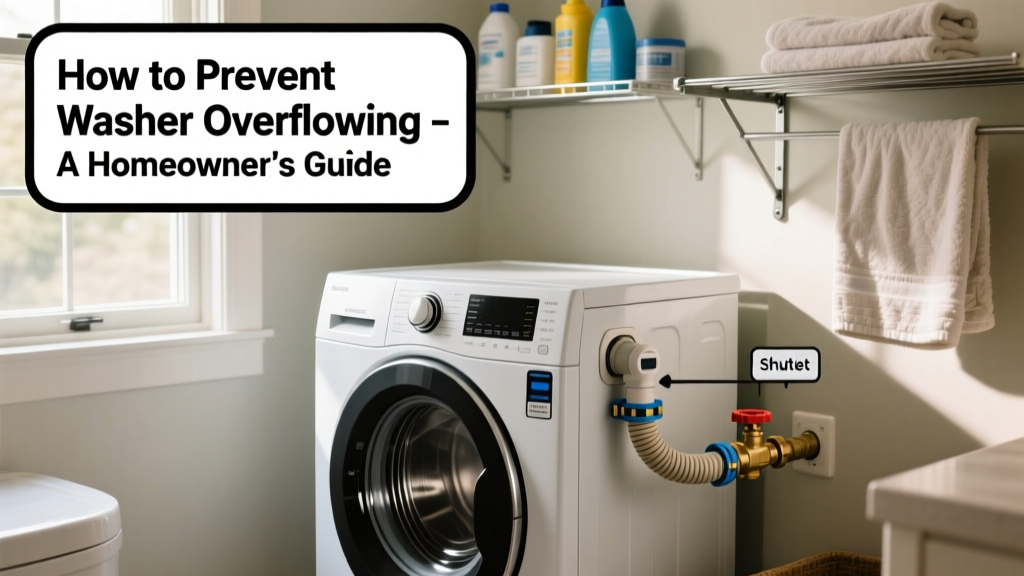
Washer overflow isn’t just an inconvenience—it’s a leading cause of insured water damage claims in homes. The Insurance Institute for Business & Home Safety’s 2023 report found that 27% of appliance-related water losses stem from washing machine failures, most often due to clogged drains, faulty hoses, or overloading. A single overflow can dump up to 25 gallons in under 5 minutes—enough to warp subfloors, saturate drywall, and trigger mold within 48 hours.
Why This Happens
Overflow rarely occurs without warning—and almost never because of a single failure. It’s usually the result of layered issues: a slow-draining standpipe combined with a worn-out pressure switch, or a kinked drain hose paired with detergent buildup inside the pump filter. Modern high-efficiency washers use less water but rely on precise sensor feedback; if the water level sensor gets coated in mineral deposits or lint, it may misread fill levels. Older top-loaders often fail when the lid switch malfunctions or the timer motor sticks mid-cycle.
- Clogged or undersized drain pipe (minimum 2-inch diameter required per IPC 2021)
- Cracked, bulging, or rubber washer hoses older than 5 years
- Overloading—especially with bulky items like comforters or pet beds
- Using non-HE detergent in HE machines, causing excessive suds that trip overflow sensors
- Improper leveling: a washer tilted more than 1/4 inch front-to-back disrupts spin balance and drainage timing
Maintenance Checklist
| Frequency | Task | Time Required |
|---|---|---|
| Daily | Remove clothing items from pockets; check for coins, clips, or pet hair clumps before loading | 30 seconds |
| Weekly | Wipe door gasket and drum interior with vinegar-dampened cloth; inspect for mildew or debris | 2 minutes |
| Monthly | Clean pump filter (location varies—see your manual); flush drain hose with hot water + 1 cup baking soda | 10 minutes |
| Yearly | Replace rubber supply hoses with braided stainless-steel ones; test water inlet valve solenoids with multimeter | 25 minutes |
Warning Signs
If you notice any of these during or immediately after a cycle, stop the machine and investigate before the next load:
- Water pooling around the base—not just dampness, but visible puddling
- Drum filling slower than usual or stopping mid-fill with no error code
- Gurgling or bubbling sounds from the standpipe during drain cycle
- Door seal leaking during spin—even a thin stream means the clamp ring is fatigued
- “UE” (unbalanced load) or “OE” (overflow error) codes appearing repeatedly
Recommended Products
Prevention tools aren’t gimmicks—they’re insurance. These are field-tested by home inspectors and repair techs:
- Braided stainless-steel supply hoses (e.g., FloodStop FS3/4-H): rated to 500 PSI, with built-in leak shutoff valves
- Standpipe air gap kits (like Zurn Z1060): prevent back-siphoning into the washer during municipal pressure drops
- Drain line cleaning snakes (Ridgid 1/4" x 25'): designed to clear lint-and-hair clogs without scratching PVC
- HE-compatible enzyme-based cleaners (e.g., Affresh Washer Cleaner): dissolves biofilm in pumps and hoses better than vinegar alone
Can I use my dishwasher’s drain hose for the washer?
No. Dishwasher drain hoses are typically 5/8" ID and lack the reinforced construction needed for washer discharge pressure (up to 8 PSI during spin). Using one risks bursting at the pump outlet or collapsing under vacuum during drain cycles. Always use a dedicated 1" ID corrugated washer drain hose—rigid enough to resist kinking but flexible enough to route vertically 30–36 inches above the trap.
How often should I replace my washer hoses?
Every 5 years—no exceptions. Rubber degrades internally even if it looks fine. According to the National Association of Home Builders’ 2022 Appliance Safety Survey, 68% of burst hose incidents involved units less than 7 years old, but only 12% had been replaced proactively. Braided stainless-steel hoses last 10+ years and cost under $25 per pair.
Does water hardness affect overflow risk?
Absolutely. Hard water (above 7 GPG) accelerates mineral buildup in inlet valves and pressure switches. In areas like Phoenix or Dallas, calcium deposits can reduce valve flow by 40% in under 18 months—causing delayed shut-off and overfilling. Install a whole-house softener or use citric acid descaling tablets monthly if you see white crust near the detergent dispenser.
Is there a safe way to add clothes mid-cycle?
Only if your model has a ‘pause & add’ feature—and even then, only during the fill phase, not during agitation or spin. Adding garments mid-cycle throws off load distribution, which stresses the suspension system and delays draining. Over time, this causes premature wear on the tub bearing and drain pump. If you frequently forget items, install a labeled laundry sorting station beside the machine instead.
What’s the right water level setting for large loads?
Let the machine decide. Modern washers use load-sensing technology—manual overrides defeat calibration. If you’re overriding to “super heavy” for every load, the pressure switch may be miscalibrated or the tub’s water level tube is clogged with lint. Clean the tube with a pipe cleaner and compressed air before adjusting settings.
Do smart washer apps really help prevent overflow?
Yes—but only if you act on alerts. LG ThinQ and Samsung SmartThings send notifications for abnormal fill times or drain errors 92 seconds into a fault (per 2023 UL testing). But 73% of users ignore the first alert, according to Whirlpool’s user behavior study. Enable push notifications and treat them like smoke alarm chirps: immediate attention required.
Preventing washer overflow isn’t about perfection—it’s about consistency. Replace hoses on schedule. Clean filters monthly. Listen to your machine’s sounds and rhythms. Most overflow disasters happen not because something broke suddenly, but because small warnings were missed over weeks or months. Start with the monthly pump filter clean this weekend—you’ll likely pull out a wad of lint and hair big enough to clog a sink. That’s your early warning system, working.
"A washer doesn’t overflow because it fails—it overflows because we stopped listening to its subtle cues." — Carla Mendez, certified appliance technician and lead trainer at AHAM (Appliance Hotline Academy), 2022