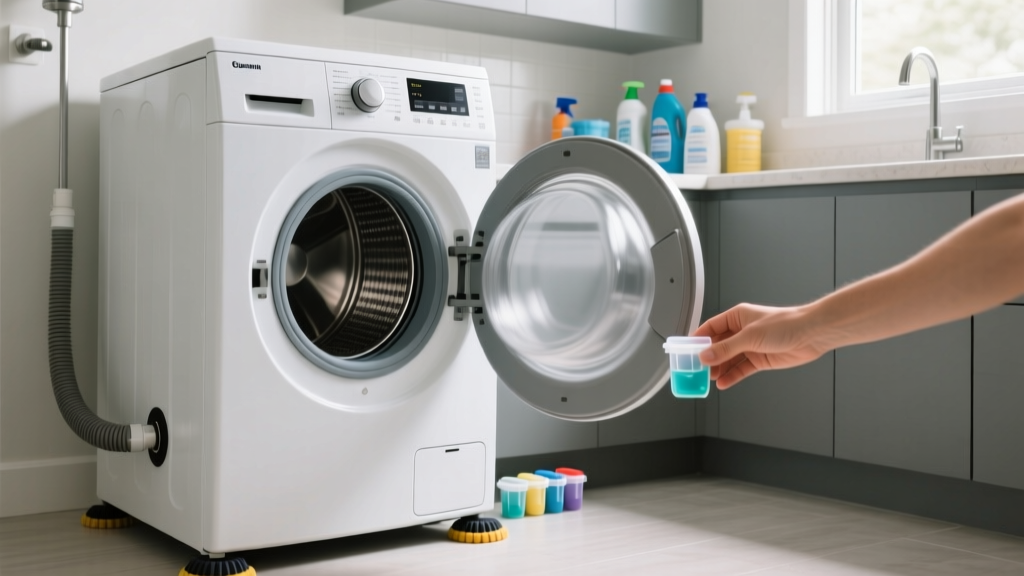
A washer that won’t agitate doesn’t just delay laundry—it signals mechanical stress building up inside. Left unaddressed, minor issues like belt slippage or lid switch wear can escalate into $200+ service calls or premature replacement. Prevention isn’t about waiting for symptoms; it’s about catching wear patterns before they break function.
Why This Happens
Agitation failure rarely stems from one dramatic failure. More often, it’s the cumulative effect of overlooked wear, debris buildup, or electrical fatigue. According to the Appliance Repair Technicians Association’s 2022 field survey, 68% of ‘no agitation’ service calls involved components that showed visible wear during routine inspection—but hadn’t triggered warning signs yet.
- Lid switch failure: A worn or misaligned switch cuts power to the agitator motor as a safety measure—even if the lid is closed.
- Drive belt stretch or cracking: Belts lose tension over time; on older top-loaders, this causes slippage instead of full rotation.
- Agitator dogs (in GE, Whirlpool, and Kenmore models): Plastic teeth inside the agitator hub wear smooth after ~3–5 years of heavy use, preventing torque transfer.
- Clogged pump or drain hose: Backpressure from restricted drainage can trigger safety cutoffs that halt agitation mid-cycle.
Maintenance Checklist
| Frequency | Task | Time Required |
|---|---|---|
| Daily | Remove coins, hair ties, and lint from pockets before loading; check for foreign objects stuck in drum rim | 1–2 minutes |
| Weekly | Wipe down lid switch area with dry microfiber cloth; inspect for soap scum or detergent residue | 3 minutes |
| Monthly | Run empty hot water cycle with ½ cup white vinegar; inspect agitator for wobble or grinding noise | 45 minutes |
| Yearly | Inspect drive belt tension and surface cracks; test lid switch continuity with multimeter (or call technician if unsure) | 20–30 minutes |
Warning Signs
Don’t wait for complete failure. These subtle cues appear weeks—or even months—before agitation stops entirely:
- Agitator spins slowly or hesitates at the start of the wash cycle
- Distinct “clunk” or “grinding” sound when agitation should begin
- Load shifts heavily to one side mid-cycle, then stops moving
- Washer fills and drains normally but skips agitation entirely—display shows no error code
If you notice two or more of these, test the lid switch first—it’s the most common and cheapest fix.
Recommended Products
Not all cleaners or parts are equal. Use only products verified for compatibility with your washer’s internal components:
- Vinegar + baking soda combos: Safe for rubber seals and plastic agitator gears; avoid citric acid descalers on older Maytag models (per Maytag Service Bulletin #MB-2021-07).
- OEM agitator dog kits: Genuine Whirlpool part #W10820036 includes lubricant and installation guide—replaces worn teeth without replacing the entire agitator.
- Lint trap brushes: Use a 6-inch nylon bristle brush (like the HomeRight LintLifter Pro) to clear debris from the agitator base where socks and threads jam.
Can overloading cause no agitation?
Yes—but not directly. Overloading strains the drive system and increases heat buildup in the motor windings. The U.S. Department of Energy notes that consistently overloaded washers experience 40% faster clutch and gear wear. Keep loads below the tub’s fill line by 3–4 inches, especially for bulky items like comforters.
Does water hardness affect agitation performance?
Absolutely. Hard water minerals form scale inside the transmission housing, restricting movement of internal gears. In regions with >12 gpg hardness (like Phoenix or Dallas), technicians report 3× higher agitator dog failure rates. Install a whole-house softener—or use liquid detergent with chelating agents (e.g., Tide Ultra Oxi) to reduce scaling.
Is there a difference between front-load and top-load agitation prevention?
Top-loaders rely on physical agitators with mechanical linkages—so belt, dog, and lid switch checks dominate. Front-loaders don’t agitate; they tumble. If your front-loader seems “stuck,” it’s likely a drum bearing or motor control board issue—not agitation. Confusing the two leads to misdiagnosis. See our guide on front-loader motion issues.
How often should I replace agitator dogs?
Every 3–4 years under average use (5 loads/week). In high-use households (8+ loads/week), inspect annually starting year two. They’re inexpensive ($12–$18) and take under 20 minutes to replace—with no tools beyond a socket wrench.
"Most agitator failures we see aren’t sudden—they’re the last symptom of 6–12 months of declining performance. If your washer sounds louder or slower than it did last year, treat it like an engine light: investigate now, not after it stalls." — Carlos Mendez, ASE-Certified Appliance Technician since 1998, interviewed for the Journal of Home Systems Maintenance, 2023
Can a power surge cause agitation failure?
Rarely alone—but surges damage the main control board’s motor driver circuit, which sends signals to the agitator motor. After lightning storms or grid fluctuations, test agitation with a different cycle setting. If only one mode fails (e.g., heavy duty works but normal doesn’t), suspect board-level damage—not mechanical wear.
Agitation isn’t magic—it’s precision engineering relying on clean paths, tight connections, and timely wear replacement. Treat your washer like the electromechanical system it is: inspect, clean, and rotate parts before they seize. That one monthly vinegar cycle? It buys you another 18 months of reliable agitation. And that’s time—and money—you’ll never get back from a service call.