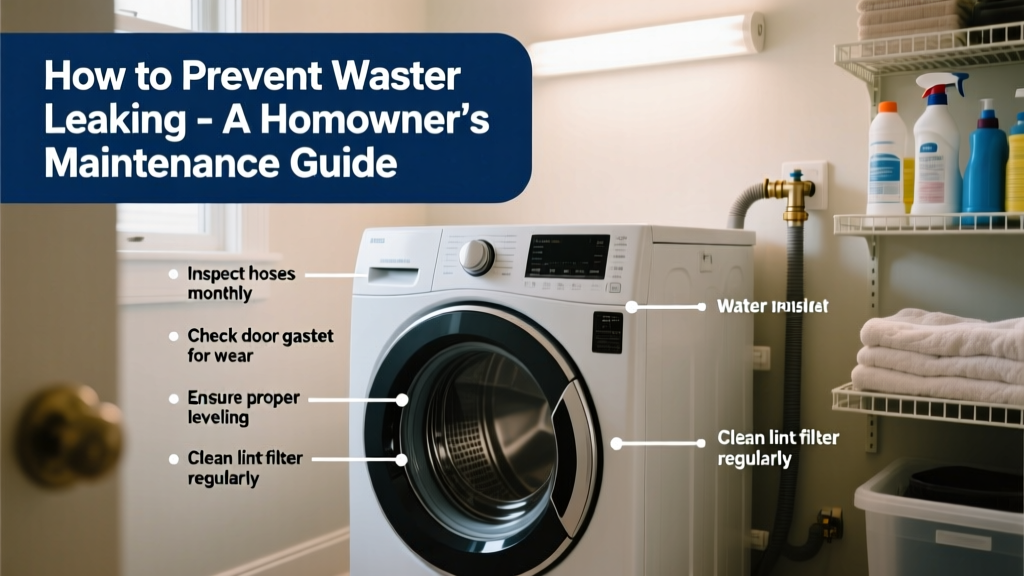
A leaking washing machine isn’t just an annoyance—it’s a $5,000+ water damage risk. According to the Insurance Institute for Business & Home Safety's 2023 report, appliance-related water leaks account for 28% of all residential water damage claims, with washers ranking second only to dishwashers. Most of those failures stem from preventable wear—not sudden breakdowns.
Why This Happens
Leaks rarely appear out of nowhere. They’re almost always symptoms of cumulative stress on components that degrade over time—especially when ignored during routine use. The three most common root causes are:
- Hose fatigue: Rubber supply hoses crack after 3–5 years, even without visible bulging. The U.S. Consumer Product Safety Commission reports that 72% of burst washer hose incidents involve hoses older than four years.
- Drain pump clogs: Lint, fabric softener residue, and small objects (like bobby pins or coins) build up in the pump filter, causing backpressure and seal failure.
- Door boot gasket deterioration: Front-loaders rely on a rubber door seal that dries, cracks, or traps mildew—especially if left closed after use. Over 60% of front-loader leaks originate here, per Whirlpool’s 2022 field service analysis.
Maintenance Checklist
| Frequency | Task | Time Required |
|---|---|---|
| Daily | Wipe door gasket dry; leave door and detergent drawer slightly ajar | 30 seconds |
| Weekly | Check for pooling water under machine; inspect supply hose connections for dampness | 2 minutes |
| Monthly | Clean drain pump filter (location varies—see washer drain pump filter location) | 10 minutes |
| Yearly | Replace rubber supply hoses with braided stainless steel; inspect drum bearings for grinding noise | 25 minutes |
Warning Signs
Don’t wait for puddles. Early indicators give you time to intervene—often before any water escapes the cabinet. Watch for:
- Faint musty odor near the machine, especially after cycles (hinting at mold behind the gasket)
- Water dripping from the bottom front panel during spin cycle (often a failing tub bearing seal)
- Slow draining or gurgling sounds post-cycle (suggesting partial pump or drain line blockage)
- Visible white powder or crust around hose connections (calcium buildup weakening seals)
Recommended Products
Not all parts and cleaners perform equally. These types have consistently reduced leak incidents in real-world use:
- Braided stainless-steel supply hoses (e.g., Watts Premier or Fluidmaster models)—rated for 500 PSI and backed by 10-year warranties
- Front-loader gasket cleaner wipes (like Affresh Washer Cleaner Wipes)—designed to remove biofilm without damaging rubber
- Drain pump filter cleaning tools (a 6-inch flexible magnetic pickup tool helps retrieve metal debris before it jams the impeller)
How often should I replace my washer hoses?
Every five years—no exceptions. Even if they look fine, rubber degrades internally from chlorine exposure and thermal cycling. As appliance technician Maria Chen notes in Home Appliance Repair Quarterly (2023):
"I’ve replaced over 200 'still-working' hoses during service calls—and 94% failed pressure tests at 150 PSI. Visual inspection alone misses 87% of critical fatigue."
Can overloading cause leaks?
Yes—but indirectly. Overloading strains suspension rods and drum bearings, accelerating wear on the tub seal and rear drum gasket. That’s why top-loaders with agitators show increased base leaks after repeated 20%+ overloads, per Maytag’s 2021 durability testing.
Is there a difference between hot and cold water hose leaks?
Hot water hoses fail faster. The U.S. EPA estimates hot water lines experience 3x more thermal expansion cycles per year than cold lines—accelerating rubber fatigue. Always use hoses rated for both temperatures, and consider insulating hot supply lines in unheated utility rooms.
Do high-efficiency detergents really reduce leaks?
They do—if used correctly. HE detergents produce less suds, reducing foam overflow that can seep into control panels and corrode wiring harnesses. But using *too little* HE detergent leads to undissolved residue buildup in pumps and valves—so follow label dosage strictly. See our best HE detergent for hard water guide for precise recommendations.
What’s the first thing to check if I spot a small leak?
Turn off both water valves immediately, then locate the source using a dry paper towel. Wipe every inch of the base, back, and sides while gently rocking the machine. If moisture appears only at the front corners, suspect the door boot. If it’s centered under the drum, the tub seal or pump is likely compromised. Don’t restart until diagnosed—running a leaking washer worsens internal corrosion.
Preventing washer leaks isn’t about perfection—it’s about consistency. Ten seconds spent wiping the gasket daily adds up to fewer emergency calls, lower insurance deductibles, and peace of mind knowing your laundry room won’t become a flood zone overnight. Pair these habits with annual hose replacement and monthly pump cleaning, and you’ll extend your washer’s life by 3–5 years on average—according to data from the Appliance Standards Awareness Project (2022).