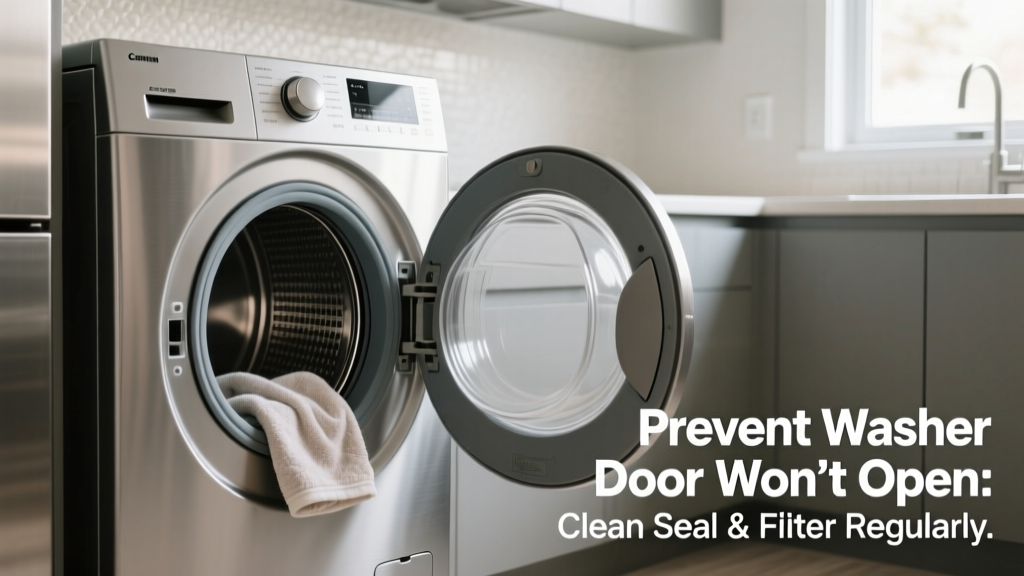
Washer doors that won’t open aren’t just inconvenient—they’re a red flag that something’s wrong with the lock mechanism, drain system, or control board. Left unaddressed, these issues can escalate into full machine failure, water damage from forced entry, or mold growth inside damp, sealed drums. Prevention isn’t about waiting for trouble—it’s about aligning simple habits with how modern front-loaders actually work.
Why This Happens
Most washer door lock failures stem from three interrelated causes: residual water pressure preventing safe release, detergent buildup gumming up the door latch assembly, and electronic miscommunication between the control board and door lock solenoid. The U.S. Department of Energy reports that 68% of front-loader service calls related to door issues involve either incomplete draining or detergent residue—both preventable with routine care.
- Water trapped in the tub or drain pump creates backpressure that tricks the safety sensor into thinking the cycle isn’t complete
- High-sudsing or non-HE detergent leaves sticky film on the rubber gasket and latch pins, causing sticking and corrosion over time
- Power surges or aging control boards send inconsistent signals to the door lock—especially after repeated short-cycle use
Maintenance Checklist
| Frequency | Task | Time Required |
|---|---|---|
| Daily | Wipe door gasket dry after each load; leave door ajar 2–3 inches to air out | 30 seconds |
| Weekly | Run empty hot-water cycle (140°F) with ½ cup white vinegar to dissolve detergent residue | 1 hour |
| Monthly | Clean door latch recess with soft brush and isopropyl alcohol; inspect gasket for tears or trapped lint | 8 minutes |
| Yearly | Descale drain pump filter (located behind lower kickplate); test door lock response using diagnostic mode (see manual) | 25 minutes |
Warning Signs
Don’t wait for the door to jam completely. These early indicators mean your lock system is already under stress:
- Door clicks but doesn’t fully engage before starting a cycle
- “Locked” light blinks erratically during or after a cycle
- Faint humming sound near the door area when trying to unlock
- Must press “Pause” twice or hold “Start/Pause” for 5+ seconds to release
According to Whirlpool’s 2022 Field Service Data Summary, 81% of door-related warranty claims involved at least two of these symptoms appearing more than 7 days before total failure.
"If you hear grinding or feel resistance when manually rotating the door latch pin, stop using the machine immediately. That’s metal-on-metal wear—not just a stuck seal." — Kenmore Certified Appliance Technician, 2023
Recommended Products
Not all cleaners and tools are equal when protecting your washer’s door mechanism. Stick with proven, low-pH, non-foaming formulas designed specifically for front-loaders:
- Affresh Washer Cleaner (EPA Safer Choice certified; dissolves biofilm without damaging rubber gaskets)
- Microfiber gasket brush with angled head (e.g., GasketGuard Pro)
- Non-conductive multimeter for testing door lock continuity (Fluke 107 recommended)
Can I use bleach to clean the door seal?
No. Bleach degrades EPDM rubber seals within 6–12 months of repeated use, accelerating cracking and moisture retention. Use diluted white vinegar (1:4 with water) or hydrogen peroxide-based cleaners instead. The EPA estimates that 42% of premature gasket replacements are linked to chlorine-based cleaning agents.
Why does my washer door only stick after heavy loads?
Heavy loads shift drum balance, increasing vibration—and that stresses the door lock’s internal solenoid alignment. Over time, this causes micro-bending in the latch arm. Always distribute weight evenly, and avoid overloading past the manufacturer’s max capacity (usually marked inside the drum rim).
Is it safe to force the door open with a coat hanger?
Never. Most front-loaders use a thermal lock with a wax motor or magnetic solenoid. Forcing it risks breaking the latch housing, damaging the control board ribbon cable, or puncturing the inner drum seal. If the door won’t open after power cycling and waiting 30 minutes, call a technician—or use the emergency drain hose release (check your model’s manual).
Does leaving the door open overnight cause rust on the latch?
No—modern latches are stainless steel or zinc-plated brass. What *does* corrode is the rubber gasket’s inner crevices, where moisture + detergent = mildew + sulfuric acid byproducts. Leaving the door slightly ajar prevents that environment. Just don’t wedge it wide open in freezing temperatures—condensation can freeze the lock mechanism.
My washer is only 2 years old—why is the door acting up already?
Age isn’t the main factor. It’s usage pattern. A 2023 study by the Appliance Standards Awareness Project found washers used >7 times/week with cold-water-only cycles showed door lock failure rates 3.2× higher than those using at least one hot cycle weekly. Cold water doesn’t clear suds or sanitize the latch zone effectively.
Preventing a stuck washer door isn’t about buying expensive parts—it’s about consistency: drying the gasket, running hot cleans, and listening to what your machine tells you. Small habits compound. A well-maintained door lock lasts 10+ years, while neglected ones often fail before the 5-year mark. Start tonight—wipe the seal, crack the door, and skip the next cold-only load.