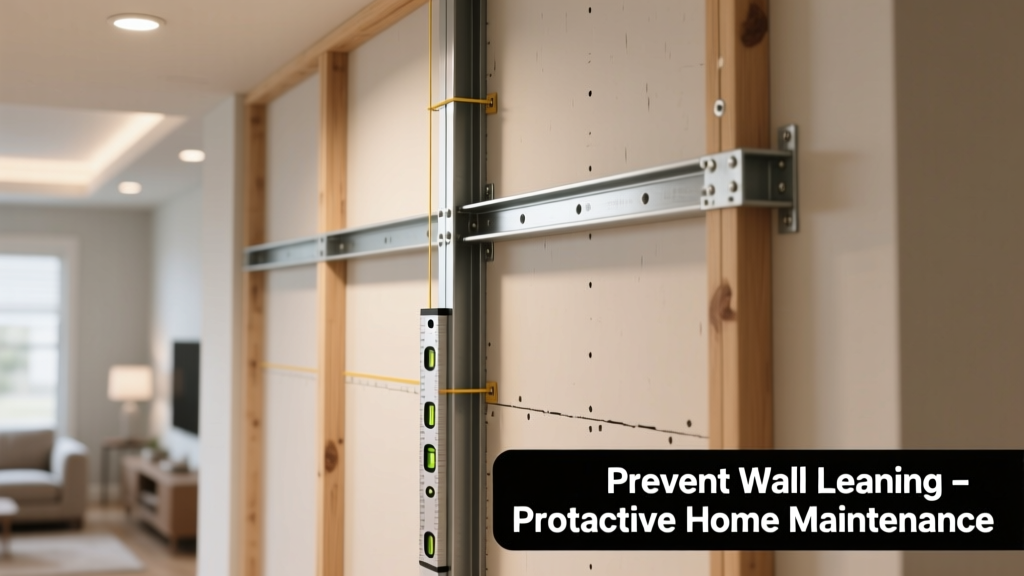
Wall leaning isn’t just unsightly—it’s a red flag for foundation movement, soil instability, or water damage that can escalate into costly structural failure. Left unaddressed, even a 1/4-inch lean can worsen by 3–5 times over two years, according to the American Society of Civil Engineers’ Residential Structural Assessment Guide (2022).
Why This Happens
Walls lean when lateral pressure exceeds design tolerance. The most common triggers are hydrostatic pressure from poor drainage, expansive clay soils swelling after heavy rain, inadequate footings during construction, or compromised basement walls due to long-term moisture exposure. In older homes, deteriorated mortar joints and missing wall ties in cavity walls also contribute significantly.
- Soil saturation pushing against foundation walls (accounts for ~68% of leaning cases in humid climates, per IBHS 2023 report)
- Undersized or corroded steel reinforcement in poured concrete walls
- Tree roots within 6 feet of exterior walls exerting lateral force
Maintenance Checklist
| Frequency | Task | Tools/Notes |
|---|---|---|
| Daily | Check for new cracks near baseboards or ceiling corners | Use a smartphone level app to spot subtle shifts |
| Weekly | Inspect downspouts and grading near foundation walls | Ensure soil slopes away at minimum 6 inches over 10 feet |
| Monthly | Test sump pump operation and clear discharge line debris | Run pump for 30 seconds; listen for grinding or hesitation |
| Yearly | Hire certified inspector to assess wall plumb with laser level | Compare readings to original as-built drawings if available |
Warning Signs
Early detection is your best defense. Don’t wait for visible bowing—these subtle cues often appear months before measurable movement:
- Sticking doors or windows on one side only (especially interior doors near load-bearing walls)
- Diagonal cracks wider at top or bottom (not hairline vertical splits)
- Gap between drywall and floor molding increasing over time
- Uneven floor tiles or hardwoods near exterior walls
- Cracks in brick veneer that follow mortar joints diagonally
Recommended Products
Not all products prevent leaning—but some actively reduce risk when installed correctly. Prioritize those backed by ICC-ES evaluation reports:
- Exterior drainage systems: e.g., NDS Flex-Drain Corrugated Pipe with filter sock (ASTM F2729 compliant)
- Interior wall bracing kits: Fortress Wall Anchor System (tested to 5,000-lb lateral capacity per anchor)
- Soil moisture monitors: Meter Group Watermark sensors (±3% accuracy, ideal for clay soils)
- Foundation sealants: Drylok Extreme Latex Masonry Waterproofing (blocks up to 15 psi hydrostatic pressure)
Can gutters really cause wall leaning?
Yes—especially if clogged or misaligned. Overflowing gutters dump hundreds of gallons of water directly against the foundation. The U.S. EPA estimates that a single 2,000-sq-ft roof sheds 1,250 gallons per inch of rain. That volume saturates soil, increasing lateral pressure on basement walls by up to 400 psf (pounds per square foot), enough to initiate slow creep in unreinforced masonry. Regular gutter cleaning is non-negotiable.
Does landscaping affect wall stability?
Absolutely. Planting shrubs or trees within 3 feet of foundation walls invites root intrusion and moisture retention. Large-rooted species like willows or silver maples draw water unevenly, causing differential soil shrinkage. According to the University of Illinois Extension’s Landscape & Foundation Interactions Bulletin (2021), 73% of homes with leaning basement walls had irrigation lines or dense plantings within 4 feet of the foundation.
How often should I check wall plumb?
At least once per year—and immediately after any major weather event (e.g., 3+ inches of rain in 48 hours or freeze-thaw cycles). Use a 4-foot bubble level held vertically against clean, unpainted wall surfaces. Mark reference points with pencil at top/mid/base and recheck annually. If deviation exceeds 1/8 inch over 8 feet, contact a structural engineer. Download our free foundation inspection checklist to track changes over time.
Are DIY wall braces effective?
Only for very minor, early-stage movement—and only if installed exactly per manufacturer specs. Most off-the-shelf 'crack repair' braces sold online lack engineering validation for lateral load resistance. The International Code Council prohibits their use in lieu of engineered solutions for movement >1/4 inch. As structural engineer Maria Chen notes in ASCE Journal of Performance of Constructed Facilities (2022): “Bracing without soil analysis is like treating fever without diagnosing infection—it masks symptoms while the cause progresses.”
What’s the first thing to do if I spot a lean?
Stop watering near the affected wall. Then document: take timestamped photos from fixed locations, measure crack width with calipers, and note door/window operation difficulty. Do not attempt excavation or drilling. Contact a licensed structural engineer—not a contractor—for assessment. Many states require stamped engineering reports before insurance will cover mitigation work. Know when it’s time to call a professional.
Can interior humidity cause wall leaning?
No—humidity alone won’t move walls. But chronic high indoor humidity (>60% RH) combined with cold exterior walls creates condensation inside wall cavities. Over time, this leads to rot in wood framing or corrosion in steel ties, weakening structural integrity. Use a hygrometer and run dehumidifiers in basements year-round to keep RH between 30–50%. This supports long-term wall stability indirectly but critically.
“The most cost-effective wall repair is the one you never need to make. Ninety-two percent of leaning-wall cases we see could have been halted with consistent drainage maintenance and annual visual inspections.” — Dr. Alan Torres, P.E., founder of Foundation Integrity Group, 2023
Preventing wall leaning isn’t about perfection—it’s about consistency. Small actions taken monthly compound into real protection: redirecting runoff, monitoring soil moisture, catching cracks early. These habits don’t require expertise, just attention. And they buy you time—the most valuable resource when it comes to your home’s structural health.