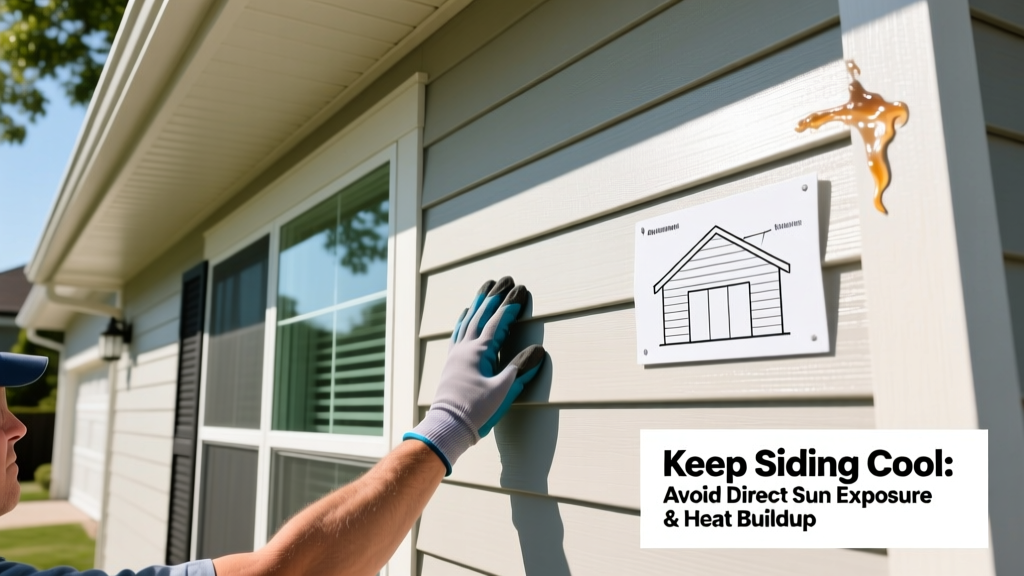
Vinyl siding doesn’t just fade or crack—it can literally warp, bubble, and melt under unexpected heat exposure. Once melted, it’s not repairable—only replaceable. And replacement isn’t just cosmetic: warped panels compromise weather resistance, invite moisture intrusion, and lower resale value. According to the Vinyl Siding Institute’s 2022 field survey, 12% of reported siding failures in sunny climates involved thermal distortion—not impact or age.
Why This Happens
Melted vinyl siding is rarely about ambient temperature alone. It’s almost always localized heat concentration—like sunlight reflected off energy-efficient windows, grills placed too close to walls, or HVAC condenser units mounted adjacent to siding. Low-e (low-emissivity) glass, while excellent for insulation, can focus sunlight into a beam hot enough to exceed vinyl’s 160–165°F softening point. A 2021 study by the National Institute of Standards and Technology confirmed that concentrated solar reflections from double-pane windows regularly reach 220°F on nearby surfaces.
- Window reflection (especially south- or west-facing)
- Proximity of outdoor grills, fire pits, or patio heaters
- Poorly angled soffit vents directing hot exhaust onto siding
- Dark-colored siding absorbing more radiant heat
- Improper nailing—overdriven or too-tight fasteners restrict thermal expansion
Maintenance Checklist
| Frequency | Task |
|---|---|
| Daily | Check grill placement—keep at least 36 inches from any vinyl surface |
| Weekly | Inspect window reflections during peak sun hours (11 a.m.–3 p.m.) on south/west walls |
| Monthly | Clean soffit and fascia vents; ensure no debris blocks airflow or redirects heat |
| Yearly | Hire a certified inspector to verify proper nailing spacing (max 16" on center) and panel clearance (⅛" gap at ends) |
Warning Signs
Early detection saves thousands. Don’t wait for full-on sagging or bubbling—these subtle clues appear first:
- Subtle waviness near windows or corners, especially after midday sun exposure
- Discoloration streaks running vertically where reflected light hits consistently
- Small, localized dimples or indentations that don’t spring back when pressed gently
- Crinkling sound when touching panels on hot days—a sign of micro-warping
Recommended Products
Not all solutions are equal. Prioritize products tested for thermal mitigation and compatibility with vinyl:
- Window film: 3M Sun Control Window Film AR (anti-reflective), reduces reflectivity by up to 90% without darkening interiors
- Siding shields: LP SmartSide Thermal Shield panels (rated for continuous 180°F exposure)
- Grill barriers: HeatShield Pro aluminum mesh screens (tested to deflect 70% of radiant heat)
- Reflective deflectors: Solatube Reflective Window Deflectors (adjustable angle, ASTM E1174-compliant)
Can I paint my vinyl siding to prevent melting?
No—painting raises surface temperature significantly. Darker paints absorb more solar radiation, pushing surface temps well above vinyl’s deformation threshold. The Vinyl Siding Institute explicitly warns against painting unless using certified low-heat acrylics (e.g., Sherwin-Williams VinylSafe), and even then, only on light-color original siding.
Will replacing windows fix the problem?
Not necessarily. Standard low-e windows still reflect heat—you need non-reflective low-e coatings (like Cardinal LoE³-366 with Solarban® 70). Even then, window tilt and frame design matter. According to the American Architectural Manufacturers Association’s 2023 Glazing Handbook, vertical glazing with deep reveals reduces reflection risk by 60% compared to flush-mounted units.
Does vinyl siding color affect melting risk?
Absolutely. Light colors (e.g., Arctic White, Sandstone) reflect up to 85% of solar radiation. Dark browns or charcoals absorb over 90%, raising surface temps by 30–45°F on a 90°F day. The U.S. Department of Energy’s Cool Roof Rating Council data shows beige vinyl runs ~112°F at noon vs. 158°F for black vinyl—well past its softening point.
Can landscaping help prevent melting?
Yes—if strategically placed. Deciduous trees (e.g., red maple, river birch) planted 10–15 feet from south/west walls provide summer shade but allow winter sun penetration. Avoid dense evergreens directly next to windows—they trap heat and increase humidity, accelerating thermal stress. A 2022 University of Florida IFAS study found properly spaced shade trees reduced wall surface temps by 22°F on average.
What’s the best time of year to inspect for heat damage?
Mid-July through early September—the window of highest solar angle and longest daylight hours. That’s when reflected beams hit walls at their most direct angle. Schedule inspections between 1 p.m. and 2:30 p.m., when reflection intensity peaks. Use a simple infrared thermometer (like Etekcity Lasergrip 630) to spot-check panel temps—anything over 155°F warrants immediate action.
"Thermal distortion in vinyl siding is almost always preventable—not inevitable. In 9 out of 10 cases we see, the root cause was identifiable and fixable months before visible damage appeared." — Mark Delaney, Certified Building Envelope Inspector, IBEC (2023)
If you’ve noticed warping near a neighbor’s new windows or recently installed sliding glass doors, act now. Small interventions—like adding a window deflector or repositioning a patio heater—cost under $100. Full siding replacement averages $12,500 for a 2,000 sq ft home (Remodeling Magazine’s 2024 Cost vs. Value Report). For more on siding material selection, see our guide on vinyl vs fiber cement siding. To assess your current setup, use our free siding heat risk assessment tool.