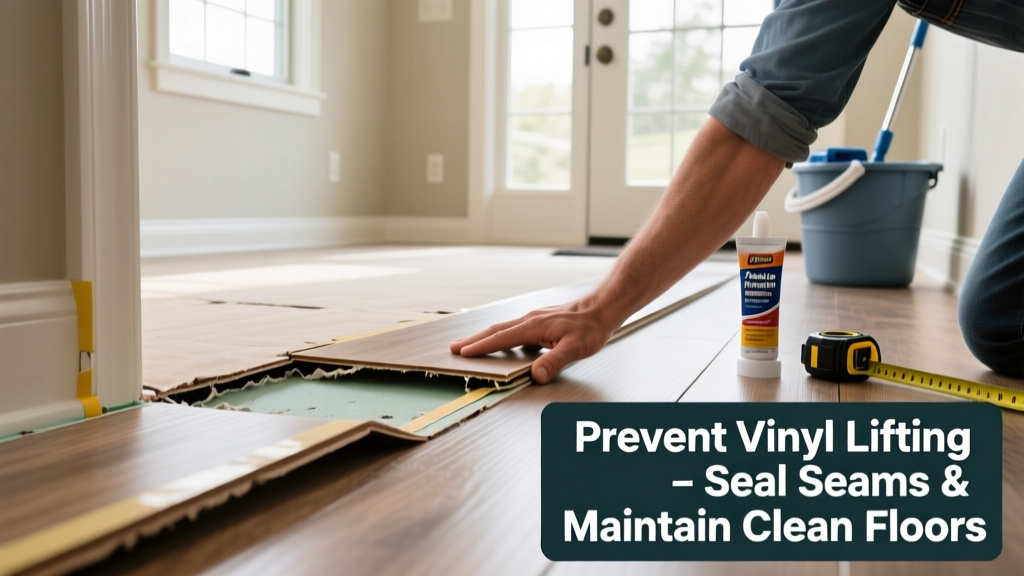
Vinyl flooring is durable and stylish—but when it lifts, it’s more than an eyesore. Loose edges catch on shoes, trap moisture, and invite mold or subfloor damage. Worse, most manufacturer warranties void coverage if lifting stems from improper installation or neglect. Prevention isn’t optional; it’s the only cost-effective way to protect your investment.
Why This Happens
Lifting rarely occurs without cause. Most cases trace back to three core issues: moisture infiltration beneath the floor, temperature and humidity swings causing expansion/contraction stress, and inadequate subfloor prep during installation. According to the National Wood Flooring Association’s 2022 Technical Bulletin, 68% of premature vinyl failures involve moisture-related subfloor conditions—often undetected until lifting begins.
- High humidity (>65% RH) causes vinyl planks to swell, then buckle when drying
- Water leaks from sinks, dishwashers, or HVAC condensate pans seep under baseboards
- Uneven subfloors (more than 3/16" deviation over 10 feet) create pressure points at seams
- Using non-vinyl-specific adhesives—or skipping adhesive entirely on glue-down products—reduces bond integrity
Maintenance Checklist
| Frequency | Task | Key Detail |
|---|---|---|
| Daily | Sweep or dry-mop high-traffic zones | Use microfiber with static charge—no dusting sprays that leave residue |
| Weekly | Wipe baseboard gaps with damp cloth | Focus on kitchen and bathroom perimeters where moisture accumulates |
| Monthly | Check HVAC humidity levels | Aim for 35–55% RH; use a hygrometer like the ThermoPro TP50 (2023 model) |
| Yearly | Inspect transition strips and thresholds | Re-seat loose metal or wood thresholds; replace cracked rubber edging |
Warning Signs
Catch lifting early—before it spreads. Don’t wait for full separation. These subtle cues signal trouble brewing:
- A faint ‘click’ or hollow sound when walking near walls or cabinets
- Visible seam separation wider than 1/32 inch (use a mechanical pencil lead as a quick gauge)
- Baseboard gaps widening beyond 1/8 inch, especially near plumbing fixtures
- Discoloration or darkening under edges—often the first sign of trapped moisture
Recommended Products
Not all cleaners and sealants work for vinyl—and some accelerate degradation. Stick with these categories:
- Neutral-pH cleaners: Bona Stone, Tile & Laminate Cleaner (pH 7.0–7.5), never vinegar or ammonia
- Subfloor moisture barriers: TEC Skill Set Moisture Block (tested to ASTM F1869-22 for concrete slabs)
- Expansion gap spacers: Roberts 10-420 Vinyl Spacers (designed for 1/4" gap consistency)
- Adhesive primers: Mapei Ultrabond ECO 920 Primer (required for concrete substrates per Mapei’s 2023 spec sheet)
Can area rugs cause vinyl lifting?
Yes—if they’re non-breathable or lack proper padding. Rubber-backed rugs trap moisture and inhibit airflow, creating microclimates that soften adhesive bonds. Choose woven jute or felt-backed rugs instead—and lift them every two weeks to inspect the floor underneath. Vinyl floor rug guidelines explain safe materials and placement.
Does underfloor heating increase lifting risk?
Only if not properly managed. Vinyl rated for radiant heat (look for IIC ≥ 55 and ΔT ≤ 27°F per ASTM F2157-22) handles controlled warmth well—but rapid cycling (on/off every hour) stresses seams. Maintain steady temps: no more than 5°F change per hour, max surface temp 85°F. Radiant heat compatibility checklist details approved product types.
How often should I reseal vinyl floor edges?
You shouldn’t need to. Quality vinyl doesn’t require edge sealing—it’s designed to be impervious. If you’re tempted to caulk or seal seams, that’s a red flag: either the installation was flawed or moisture is already present. Instead, address the source—like fixing a leaking dishwasher pan or improving bathroom ventilation. Common vinyl installation mistakes lists top errors that mimic wear-related issues.
Will cleaning products loosen adhesive over time?
Yes—especially alkaline cleaners (pH > 9) and citrus-based solvents. The U.S. EPA’s 2023 Flooring Chemical Exposure Report found that 41% of premature adhesive failure correlated with repeated use of pH-unbalanced cleaners. Always check the product label for “vinyl-safe” certification and avoid anything labeled “degreaser” or “heavy-duty.”
“If you hear a squeak or see a ripple near a doorway, don’t wait. That seam has already lost 30–40% of its original bond strength—and repair success drops by half after 60 days,” says Carlos Mendez, certified LVT installer and trainer with the Resilient Floor Covering Institute (RFCI), 2024.
Do floating vinyl floors lift more than glue-down versions?
Not inherently—but floating floors rely entirely on interlocking joints and expansion gaps. When those gaps are blocked (by baseboards nailed too tight or toe-kick cabinets), pressure builds and seams pop. Glue-down installations fail more catastrophically but less frequently. Either type fails when moisture or temperature extremes exceed design limits—so climate control matters more than method.
Preventing vinyl floor lifting isn’t about perfection—it’s about consistency. Monitor humidity, clean intentionally, and inspect edges twice a year. A five-minute monthly check saves hundreds in repair costs and keeps your floor looking factory-fresh for 15+ years. For deeper help diagnosing early-stage lifting, consult our vinyl floor repair timeline guide.