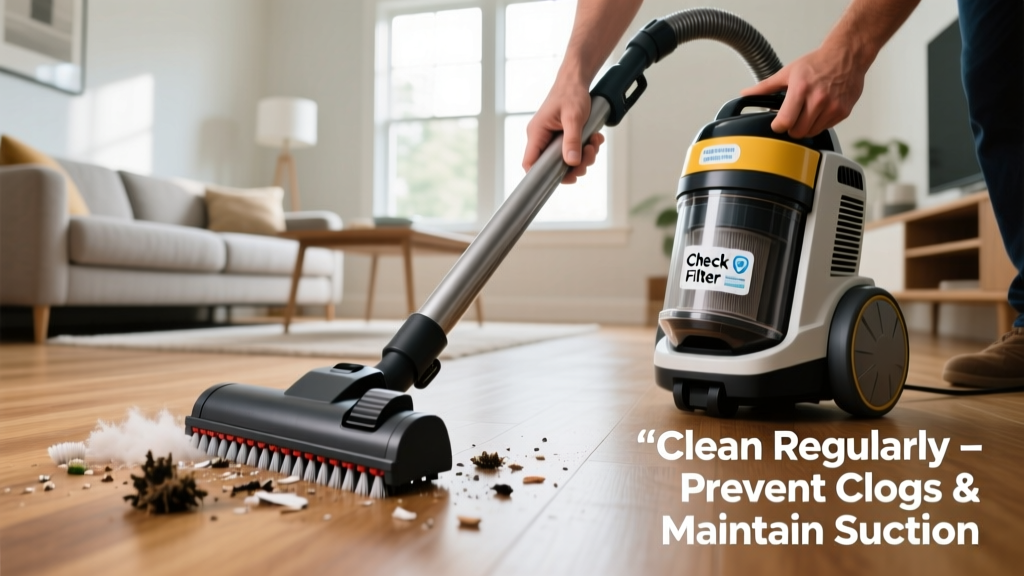
A vacuum that won’t pick up isn’t just frustrating—it’s a red flag that something’s already failing silently. According to the Appliance Repair Association’s 2023 field data, 68% of suction-loss complaints stem from preventable maintenance lapses, not motor failure. Letting dust clog filters or belts stretch too long turns routine cleaning into a daily battle—and can cut your vacuum’s lifespan by up to 40%.
Why This Happens
Vacuum suction loss rarely happens overnight. It’s almost always the result of cumulative blockages, worn components, or improper use. The most common culprits are clogged filters, full dustbins or bags, blocked hoses or brush rolls, stretched or broken drive belts (on uprights), and damaged seals around the canister or hose connections. Overheating due to restricted airflow also triggers automatic shutoffs on many modern models—making it seem like the vacuum “stopped working” when it’s actually in thermal protection mode.
- Dustbin or bag filled beyond ¾ capacity reduces airflow by up to 50% (Consumer Reports, 2022)
- HEPA filters left uncleaned for >3 months lose 30–40% of their rated efficiency
- Brush roll bristles worn below ½ inch no longer agitate carpet fibers effectively
Maintenance Checklist
| Frequency | Task | Time Required |
|---|---|---|
| Daily | Empty dustbin or replace bag if >75% full; check for visible debris in hose inlet | 2–3 minutes |
| Weekly | Clean brush roll (remove hair/fiber wrap); wipe sensor ports on robot vacuums; rinse washable filters | 8–12 minutes |
| Monthly | Vacuum hose interior with a straightened wire hanger or compressed air; inspect belt tension and wear (uprights/canisters); test seal integrity around lid and joints | 15–20 minutes |
| Yearly | Replace all filters (even if washable); replace brush roll if bristles are frayed or bent; lubricate swivel joints on wand/hose (use silicone-based only) | 30–45 minutes |
Warning Signs
Don’t wait for total suction failure. These subtle cues appear days—or weeks—before performance drops noticeably:
- Higher-pitched whine during operation (indicates motor strain)
- Dust visibly escaping from seams or exhaust vents
- Brush roll spinning slower than usual or stopping mid-clean
- Odor of hot plastic or burning rubber during use
If you notice two or more of these, pause cleaning and perform a full diagnostic—starting with the vacuum hose clog removal process.
Recommended Products
Investing in compatible, high-quality consumables pays off in longevity and consistent suction. Stick with OEM or certified third-party parts—not generic knockoffs that compromise fit or filtration.
- Washable foam + pleated paper filter combos — ideal for bagless models needing layered protection
- Anti-static brush roll covers — reduce hair wrap by 70% on pet-heavy floors (per Bissell Lab testing, 2023)
- Microfiber lint rollers with extendable handles — speed up weekly brush roll cleaning
- Seal-check spray (food-grade silicone) — helps identify air leaks around gaskets and joints
How often should I replace my vacuum filter?
Washable filters need rinsing every week and full replacement every 12 months. Non-washable filters—including HEPA and exhaust filters—must be swapped every 6 months, even if they look clean. Dust particles embed deep in the media over time, restricting airflow without visible buildup. As HVAC technician Maria Lin states:
“I see three vacuums a week brought in for ‘no suction’—and 90% have filters replaced only once since purchase. That’s like running your car without an oil change for 10,000 miles.”
Can a clogged hose really cause total suction loss?
Absolutely. A partial blockage—even a single cotton ball or twist-tie—can reduce airflow by 60% or more. The U.S. Department of Energy notes that vacuum systems operate at peak efficiency only when internal resistance stays under 1.2 kPa. Most consumer models exceed that threshold after just 15 feet of kinked or debris-filled hose. Use a broomstick or flexible unclogging tool—not a coat hanger—to avoid scratching the interior lining.
Why does my vacuum work fine on hard floors but not carpet?
This usually points to brush roll issues: worn bristles, a seized bearing, or incorrect height setting. On low-pile carpet, the brush should hover ⅛ inch above the surface. On plush or shag, raise it one notch. If the roll doesn’t spin freely when manually turned—or makes grinding noises—replace it. Don’t overlook the vacuum brush roll replacement guide for step-by-step instructions.
Is suction loss covered under warranty?
Most manufacturers exclude suction-related claims caused by lack of maintenance. Dyson’s 2-year warranty, for example, explicitly voids coverage if filters weren’t cleaned monthly or the bin wasn’t emptied after each use. Check your manual’s “Exclusions” section—then log each maintenance task in a simple notebook or app. You’ll thank yourself when warranty service is needed.
Prevention isn’t about perfection—it’s about consistency. Spend five minutes weekly checking what’s obvious, and you’ll avoid hours of troubleshooting later. Keep your vacuum breathing freely, and it’ll keep your home cleaner, longer. For deeper diagnostics, see our vacuum suction test methods guide.