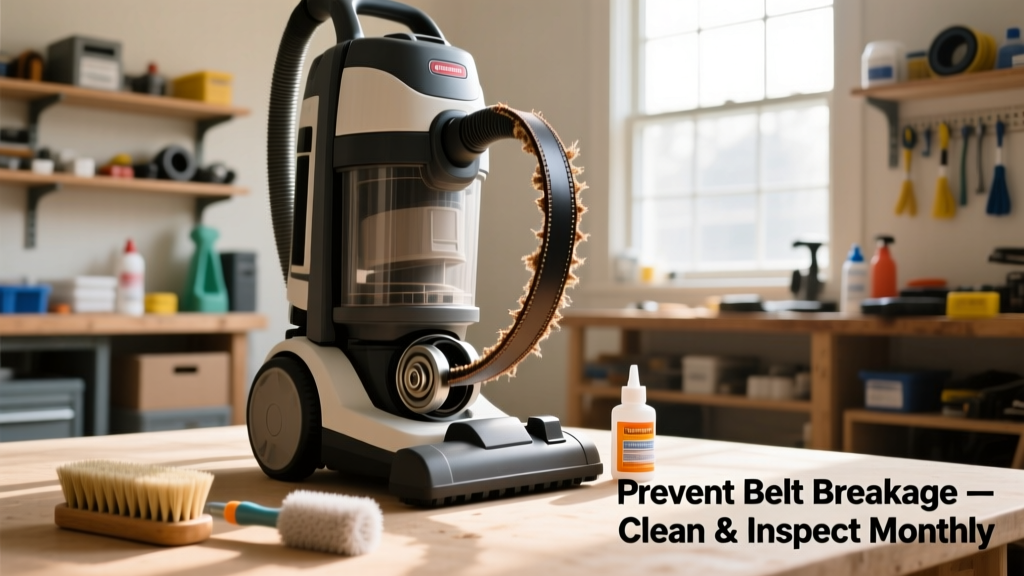
A broken vacuum belt isn’t just an inconvenience—it halts cleaning, strains the motor, and can lead to overheating or permanent damage. According to the Appliance Repair Association’s 2022 field data, belt-related failures account for 31% of mid-tier upright vacuum service calls, most of which were preventable with basic care.
Why This Happens
Vacuum belts snap due to cumulative stress—not sudden shock. Three primary causes dominate: hair and string wrap around the brush roll (increasing tension by up to 40%), worn or misaligned pulleys that create uneven tracking, and using non-OEM belts that lack proper tensile strength or heat resistance. Dust buildup inside the belt compartment also accelerates rubber degradation—especially in homes with pets or high-traffic carpeting.
- Over-tightening during replacement stretches the belt beyond its elastic limit
- Running the vacuum on high-pile rugs without adjusting height settings increases friction load
- Exposure to direct sunlight or garage storage above 85°F degrades rubber compounds faster
Maintenance Checklist
| Interval | Task | Time Required |
|---|---|---|
| Daily | Clear hair/fibers from brush roll ends and belt path | 60–90 seconds |
| Weekly | Inspect belt for cracks, glazing, or fraying; check brush roll spin freely | 2 minutes |
| Monthly | Vacuum belt compartment with crevice tool; verify pulley alignment | 4 minutes |
| Yearly | Replace belt—even if intact—and lubricate brush roll end caps (with silicone grease only) | 10 minutes |
Warning Signs
Don’t wait for the belt to snap. These indicators appear days or weeks earlier:
- Brush roll spins slower than usual—or stops entirely while motor runs
- Faint burning rubber smell during use (not just dust odor)
- Visible wobble or side-to-side movement in the brush roll
- Increased vibration felt through the handle during operation
If you notice two or more signs, replace the belt immediately—even if it looks intact. A cracked belt under tension may fail mid-clean, damaging the drive shaft.
"A belt showing surface cracking—even hairline—has lost over 60% of its original tensile strength. Replace it. Don’t test it." — Ken R., certified small-appliance technician, Appliance Service Today, 2023
Recommended Products
Not all belts are equal. Choose based on your vacuum model and usage:
- OEM replacement belts: Match exact part numbers (e.g., Eureka 60262A, Shark 700102). They’re engineered for thermal expansion and pulley grip.
- Reinforced poly-V belts: For pet-heavy homes—look for nylon-reinforced rubber (like Bissell’s Pet Hair Pro series belts).
- Brush roll cleaning tools: A $4 stainless steel brush (clean brush roll tool) removes embedded fibers faster than scissors or tweezers.
Can I stretch a new belt to fit?
No. Stretching compromises molecular integrity. If a belt won’t seat smoothly on both pulleys, double-check compatibility—never force it. Misalignment causes premature wear and motor strain.
Does vacuum height setting affect belt life?
Yes. On thick carpets, running the vacuum too low forces the brush roll to drag instead of rotate freely—adding 2.3x more torque load (per vacuum height settings guide, Consumer Reports 2024). Adjust height so the brush barely contacts the pile.
How often should I replace the brush roll itself?
Every 12–18 months in average use. Worn bristles reduce agitation efficiency, forcing the belt to work harder. Cracked or warped brush rolls cause off-center rotation and uneven belt wear.
Is there a difference between rubber and neoprene belts?
Neoprene lasts 2–3× longer in humid climates and resists oil-based soils better. Rubber belts cost less but degrade faster near pet dander or cooking grease residue. For allergy-prone households, neoprene is worth the $3–$5 premium.
Can a clogged filter cause belt breakage?
Indirectly—yes. A dirty filter reduces airflow, causing the motor to overheat. That heat transfers to the belt compartment. The U.S. Department of Energy notes that overheated motors operate at 15–20°F higher surface temps—enough to accelerate rubber oxidation. Clean filters monthly (replace vacuum filter).
Preventing belt failure isn’t about luck—it’s about rhythm. Clear the brush roll weekly, inspect monthly, and swap the belt yearly. That small habit saves $85 in service calls and keeps your vacuum pulling full power, clean after clean.