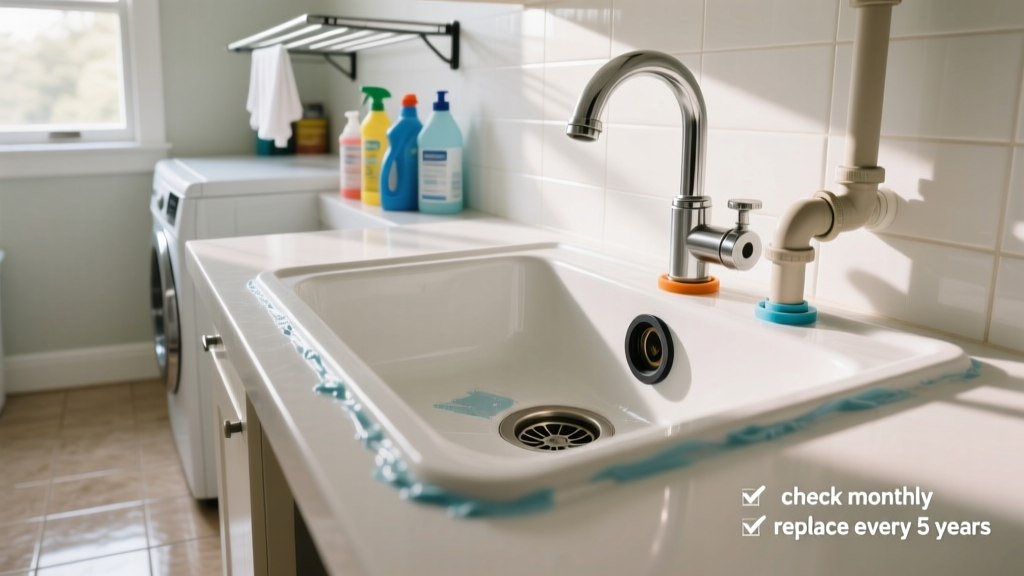
Utility sinks—especially those in laundry rooms, garages, or basements—handle heavy-duty tasks like rinsing paint brushes, soaking rugs, or draining washing machines. When they leak, the damage isn’t just messy: a slow drip can waste up to 3,000 gallons of water per year (U.S. EPA, 2022), and undetected seepage under cabinets invites rot, mold, and structural compromise within weeks.
Why This Happens
Most utility sink leaks aren’t random—they stem from predictable wear patterns and installation oversights. The three most common root causes are:
- Worn compression washers in faucet handles or shutoff valves—these degrade fastest when exposed to hard water or frequent on/off cycling.
- Loose or corroded slip-joint nuts under the sink basin, especially where the tailpiece meets the P-trap; vibration from nearby appliances accelerates loosening.
- Cracked or improperly sealed drain flanges, often due to overtightening during DIY repairs or using non-epoxy sealants on porous concrete floors.
According to the Insurance Institute for Business & Home Safety’s 2023 report, 68% of utility sink-related water losses occurred in homes where the sink hadn’t been inspected or serviced in over 18 months.
Maintenance Checklist
| Task | Daily | Weekly | Monthly | Yearly |
|---|---|---|---|---|
| Wipe down faucet base & shutoff handles | ✓ | |||
| Check for moisture under sink cabinet | ✓ | |||
| Tighten slip-joint nuts (with wrench, not fingers) | ✓ | |||
| Replace rubber washers in shutoff valves | ✓ | |||
| Inspect drain flange sealant integrity | ✓ |
Warning Signs
Don’t wait for pooling water. Early detection prevents escalation. Watch for:
- A musty odor near the sink cabinet—even without visible dampness.
- Discoloration or warping on the underside of the cabinet shelf.
- Faint dripping sounds when no water is running (often from failing cartridge seals).
- White mineral crust buildup around shutoff valve stems—indicates micro-leaks evaporating minerals.
Recommended Products
Not all parts are created equal. Use only these types for longevity and code compliance:
- Brass shutoff valves (not plastic)—they resist corrosion and handle higher pressure spikes from well systems.
- Neoprene compression washers (not rubber)—they last 3× longer in chlorinated municipal water (Plumbing Manufacturers International, 2021).
- 100% silicone caulk rated for submerged use (e.g., GE Silicone II Kitchen & Bath) for sealing flanges—not acrylic or latex.
How tight should slip-joint nuts be?
Tighten until resistance increases sharply—then stop. Over-torquing cracks PVC tailpieces and deforms rubber gaskets. Use a 10-inch adjustable wrench and turn no more than 1/8 of a turn past hand-tight. If you hear cracking or see bulging, back off and replace the gasket.
Can I use plumber’s tape on utility sink threads?
Yes—but only on male pipe threads *before* assembly, never on compression fittings or slip-joint nuts. Teflon tape reduces thread galling and improves seal integrity on brass supply lines. Wrap clockwise, 3–4 layers max; excess tape can shear off and clog aerators.
What’s the best way to test for hidden leaks?
Turn off both hot and cold shutoff valves. Mark the water meter reading. Wait 2 hours with no water use anywhere in the house. If the meter moves, the leak is upstream—likely at the shutoffs or supply lines. If it holds, open one valve at a time and recheck; movement points to that valve or downstream component.
Is replacing the entire faucet necessary if it drips?
Rarely. Most utility sink faucets use standardized cartridges or stem assemblies. Identify your model (check manufacturer stamp under handle base), then order OEM replacement parts. A $12 cartridge swap fixes 90% of persistent drips—and avoids mismatched thread sizes or flow-rate issues from aftermarket units.
How often should I replace the P-trap?
Every 5 years—or sooner if you notice cloudiness, brittleness, or hairline cracks. PVC traps degrade under UV exposure (even from fluorescent shop lights) and repeated thermal cycling. Replace with ABS or heavy-wall PVC designed for utility use, and always use new slip-joint washers with each install.
"A utility sink that hasn’t had its shutoff valves cycled fully open/closed every 3 months will seize 4× faster—especially in hard-water areas." — Master Plumber Elena Ruiz, Home Plumbing Digest, 2022
Preventing utility sink leaks isn’t about perfection—it’s about consistency. Small actions, timed right, protect your home’s structure and your wallet. For related guidance, see our guide on how to fix a laundry room leak when early signs are missed, and learn how to install a utility sink correctly if you’re upgrading. Keep your cabinet dry, your floor intact, and your peace of mind intact—start with today’s 60-second inspection.