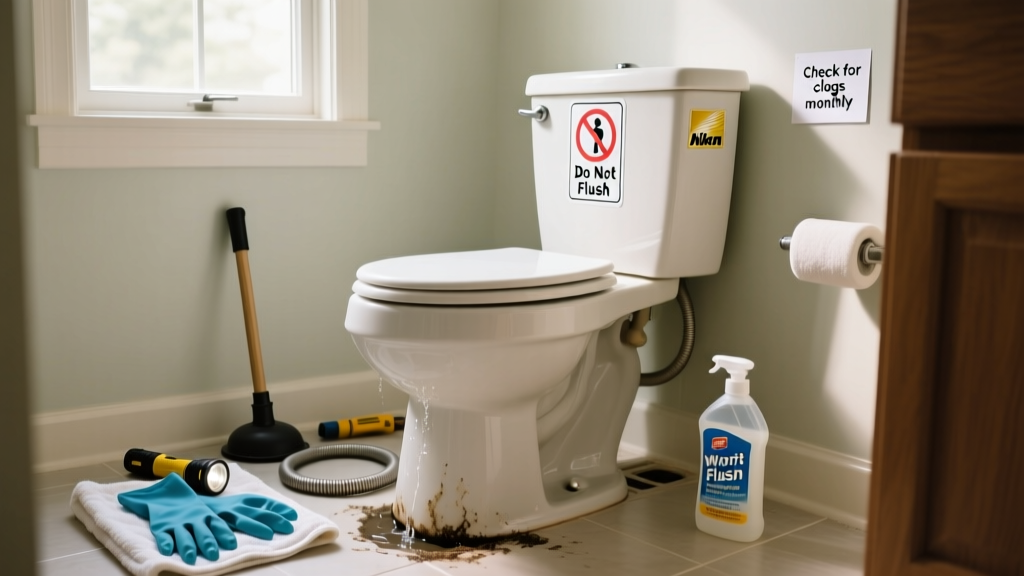
A toilet that won’t flush isn’t just inconvenient—it’s often the first sign of a deeper plumbing issue. Left unaddressed, partial blockages become full stoppages, float valves fail silently, and worn flappers waste up to 200 gallons of water per day (U.S. EPA WaterSense, 2022). Prevention is cheaper, faster, and far less messy than emergency service calls or floor repairs.
Why This Happens
Most 'won’t flush' failures trace back to three mechanical or behavioral causes: debris buildup in the trap or drain line, degraded internal tank components, or improper use—like flushing non-dissolvable wipes or excessive toilet paper. According to the American Society of Home Inspectors’ 2023 Field Report, 68% of toilet flush failures involved either a faulty flapper or a corroded chain—both replaceable in under 10 minutes with basic tools.
- Mineral deposits from hard water gumming up the flush valve seat
- Flapper warping or calcium buildup preventing full seal release
- Low water level in the tank (below the refill line) starving the flush cycle
- Obstruction in the rim jets or siphon jet at the bowl base
Maintenance Checklist
| Frequency | Task | Time Required |
|---|---|---|
| Daily | Check for slow draining or gurgling after flush | 15 seconds |
| Weekly | Pour 1 cup white vinegar into overflow tube to dissolve mineral deposits | 2 minutes |
| Monthly | Inspect flapper for cracks, warping, or slime; clean chain and lever pivot | 5 minutes |
| Yearly | Replace flapper and fill valve; test shut-off valve operation | 20 minutes |
Warning Signs
Don’t wait for total failure. These early indicators mean action is needed within 48 hours:
- Flush requires holding the handle down longer than usual
- Bowl water level drops slowly after flush instead of refilling promptly
- Gurgling sound from nearby drains during or after flushing
- Visible mineral crust on the underside of the flapper or inside the tank
If you notice two or more of these, inspect the flapper and chain alignment first—it resolves over half of all intermittent flush issues.
Recommended Products
Not all parts are equal. Choose components designed for longevity and compatibility:
- Flappers: Fluidmaster 502PRT (rubber compound resists chlorine degradation)
- Fill valves: Korky Quiet-Fill Platinum (adjustable height, anti-siphon design)
- Cleaners: CLR Calcium, Lime & Rust Remover (for tank and rim jet cleaning—not bleach)
- Drain maintenance: Bio-Clean enzymatic drain treatment (monthly use prevents organic buildup)
Can I use vinegar instead of chemical cleaners?
Yes—for light mineral buildup. Vinegar dissolves calcium and magnesium deposits but won’t break down grease or biofilm. Use it weekly as a preventive rinse, not as a fix for existing clogs. For stubborn deposits, follow up with a soft-bristle brush and warm water—never steel wool or abrasive pads.
How often should I replace the flapper?
Every 3–5 years—even if it seems fine. Rubber degrades with chlorine exposure and temperature swings. The U.S. Department of Energy notes that a worn flapper can leak 200–400 gallons daily without visible signs. Replace it during your annual maintenance, or sooner if you see discoloration or stiffness.
Why does my toilet flush weakly but still drain?
A weak flush usually points to restricted water flow—not a full blockage. Check the siphon jet (the large hole at the bottom front of the bowl) and rim jets (small holes under the bowl rim) for mineral clogs. Use a wire hanger or pipe cleaner to gently clear them. Also verify the water level in the tank sits 1 inch below the top of the overflow tube.
Is low water pressure affecting my flush?
Rarely. Toilets rely on gravity-fed tank volume, not household water pressure. If other fixtures work normally but the toilet flushes poorly, the issue is almost always internal: low tank water level, obstructed jets, or a failing flush valve. Test this by pouring a 2-gallon bucket of water quickly into the bowl—if it flushes strongly, the tank delivery system is the culprit.
What’s the fastest way to test if the fill valve is failing?
Turn off the shut-off valve, flush once, then turn it back on. Watch the tank refill. If water runs continuously past the fill line—or stops short and restarts intermittently—the fill valve is failing. Replace it before it causes overflow or constant running. See our guide on how to replace a toilet fill valve for step-by-step visuals.
"A toilet that flushes inconsistently isn’t ‘acting up’—it’s sending a diagnostic message. The tank is the control center: 9 out of 10 flush failures originate there, not in the drain line." — Master Plumber Elena Ruiz, Plumbing Trade Journal, 2023
Staying ahead of toilet trouble means treating it like any other critical home system—not waiting for failure. Keep a $5 flapper and $12 fill valve on hand, test your shut-off valve quarterly, and never ignore that faint gurgle or sluggish refill. A few minutes each month saves hundreds in service calls—and keeps your bathroom reliably functional for years.