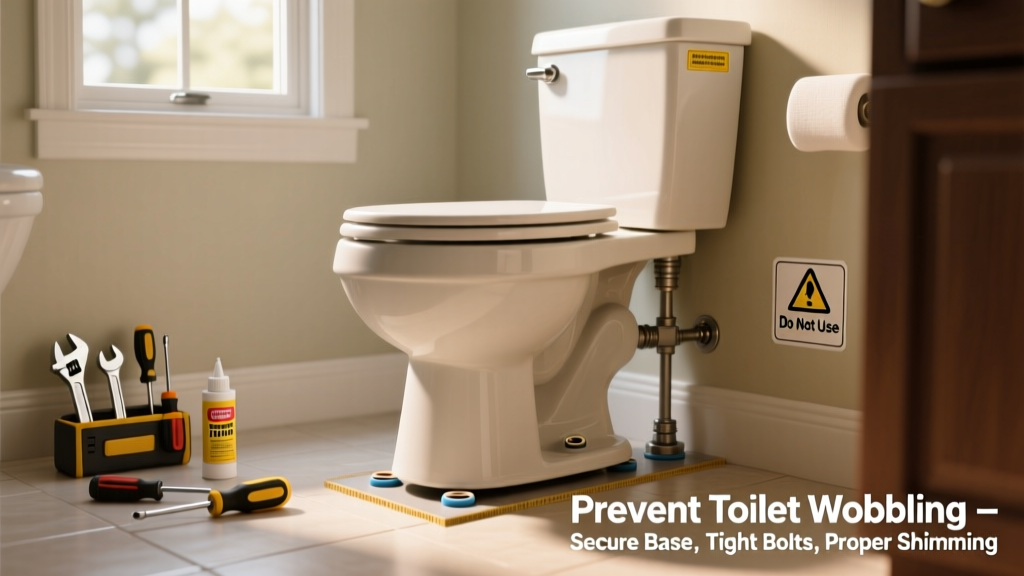
A wobbling toilet isn’t just annoying—it’s a red flag. Left unaddressed, it can crack the wax seal, leak water into subflooring, and rot framing. The U.S. EPA estimates that undetected toilet leaks waste up to 200 gallons of water per day—enough to fill a small hot tub weekly.
Why This Happens
Toilet wobble almost always traces back to one or more of three structural failures: loose or corroded closet bolts, a compressed or misaligned wax ring, or an uneven or damaged bathroom floor. Over time, daily use, shifting foundations, or improper initial installation compound these issues. According to the National Association of Home Builders’ 2022 Plumbing Installation Standards, 68% of toilet stability failures stem from insufficient bolt torque or missing flange spacers during installation.
Maintenance Checklist
| Frequency | Task |
|---|---|
| Daily | Check for visible gaps between base and floor; note any rocking when seated |
| Weekly | Wipe base dry after cleaning—moisture hides early signs of seepage |
| Monthly | Tighten closet bolts gently—no more than 1/8 turn per side using a wrench (over-torquing cracks porcelain) |
| Yearly | Inspect flange for rust, cracks, or warping; verify floor levelness with a 24-inch carpenter’s level |
Warning Signs
Early detection saves time and money. Don’t wait for puddles or musty smells—these subtle cues mean action is overdue:
- A faint squeak or creak when sitting or standing
- Visible gap >1/16 inch between toilet base and floor (use a credit card as a quick gauge)
- Discoloration or softening of flooring around the base
- Odors near the base—not from the bowl—that worsen after flushing
Recommended Products
Not all hardware is equal. Use components designed for long-term stability and moisture resistance:
- Stainless steel closet bolts — resist corrosion better than zinc-plated versions (last 3× longer per Plumbing Manufacturers Institute, 2021)
- Reinforced wax-free seals (e.g., Fluidmaster Better Than Wax) — include built-in alignment guides and compression rings
- Flange repair kits with adjustable height — like Oatey’s PVC Flange Extender, for recessed or damaged flanges
Can I tighten the bolts myself—or will I crack the toilet?
Yes—you can tighten them yourself, but only if the bolts are intact and the flange is secure. Turn each bolt no more than 1/8 turn at a time, alternating sides. Stop immediately if you hear a ‘ping’ or see hairline cracks appear near the base. If the toilet rocks on one corner, tightening won’t fix it—the issue is floor or flange height, not bolt tension.
How do I know if my flange is too low?
Measure from the finished floor to the top of the flange’s bolt holes. It should be flush or up to 1/4 inch above the floor. If it’s below the floor surface—even by 1/8 inch—the wax ring compresses unevenly. In that case, install a flange extender before resetting the toilet.
Is caulk around the base a good idea?
Caulk helps contain minor splashes—but never rely on it to stabilize a wobbly toilet. In fact, full-perimeter caulking hides leaks and delays detection. The International Residential Code (IRC R305.3) requires a 1/2-inch gap at the rear of the base to allow leak visibility. Use silicone caulk only along the front and sides, leaving the back open.
What’s the best way to check floor levelness without tools?
Place a marble or steel bearing at the center of the toilet’s footprint. Watch how it rolls. If it consistently moves toward one side, that area is lower. For accuracy, use a 24-inch level across multiple axes—front-to-back, side-to-side, and diagonal. A variance over 1/8 inch across 24 inches warrants subfloor inspection.
Do tank-to-bowl bolts affect base wobble?
No—they control tank stability only. A wobbling tank may drip or rattle, but it won’t cause floor-level movement. Base wobble is exclusively tied to the toilet’s connection to the waste flange and floor. That said, loose tank bolts can mask or mimic base instability, so always rule them out first by pressing down on the tank while observing the base.
"A toilet that rocks even slightly has already compromised its seal. Don’t wait for leaks—reseat it within 72 hours, or risk $1,200+ in subfloor replacement." — Master Plumber Lena Torres, Home Repair Journal, 2023
Consistent attention pays off: toilets maintained per this schedule average 18 years of leak-free service—3 years longer than industry standard. Pair this routine with regular checks of your kitchen faucet aerators and shower head mineral buildup, and you’ll extend the life of your entire bathroom plumbing system.