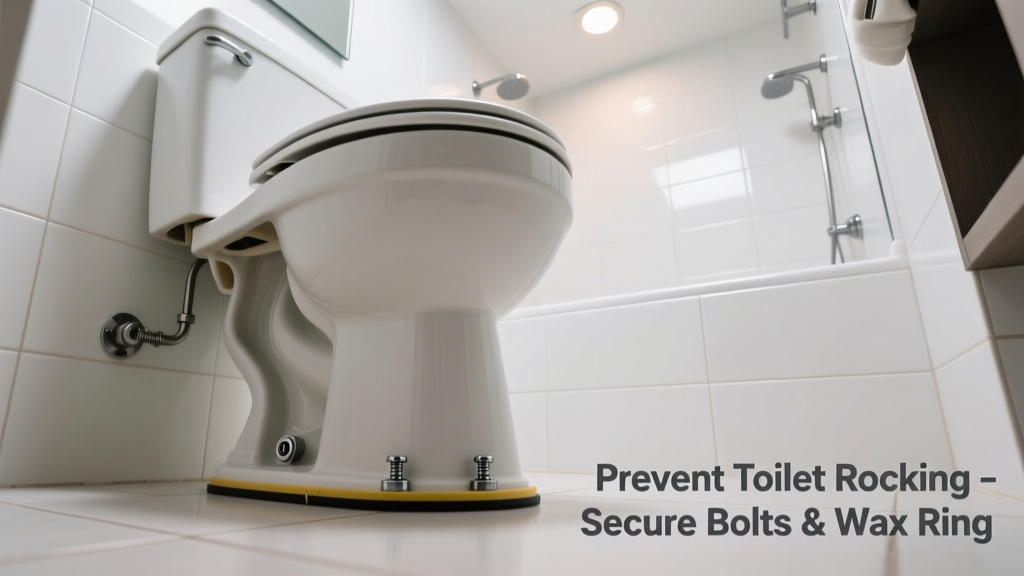
A wobbling toilet isn’t just annoying—it’s a red flag for hidden water damage, mold growth, and compromised subfloor integrity. According to the Insurance Institute for Business & Home Safety's 2023 report, 27% of bathroom water damage claims stem from undetected toilet movement over time.
Why This Happens
Toilet rocking rarely appears out of nowhere. It’s almost always the result of cumulative stress on the mounting system—especially where the toilet meets the floor and waste pipe. The most common culprits include:
- A corroded, cracked, or improperly seated closet flange (the metal or plastic ring anchoring the toilet to the drain)
- Subfloor sagging or water-damaged plywood beneath the toilet base
- Over-tightened or stripped closet bolts that no longer grip the flange
- Uneven flooring caused by settling foundation or poor initial installation
These issues worsen gradually—often silently—until the toilet shifts enough to break the wax seal, leading to slow leaks under the bowl.
Maintenance Checklist
| Frequency | Task |
|---|---|
| Daily | Check for puddles or dampness around the base after flushing |
| Weekly | Press down evenly on all four corners of the toilet seat—listen for creaks or movement |
| Monthly | Inspect bolt caps for cracks; gently wiggle tank-to-bowl bolts to confirm tightness |
| Yearly | Remove toilet to inspect flange condition and replace wax ring if >5 years old |
Warning Signs
Don’t wait for water on the floor. Early detection saves hundreds in repair costs. Watch for:
- Faint odor of sewer gas near the base—even with clean grout lines
- Grout cracking or discoloration directly around the toilet perimeter
- Visible gap (>1/8") between the toilet base and floor, especially at the front corners
- Slight side-to-side motion when applying 10–15 lbs of pressure with both hands on the tank
Recommended Products
Not all hardware is equal—especially when securing something as critical as your toilet. Prioritize durability and code compliance:
- Stainless steel closet bolts (e.g., Danco 80492) — resist rust better than zinc-plated versions
- Reinforced flange repair kits (e.g., Oatey PVC Flange Repair Ring) — for cracked or broken cast iron flanges
- Wax-free seals (e.g., Fluidmaster Better Than Wax) — reusable, less prone to misalignment during reinstallation
- Shim kits (e.g., Kohler 1001067) — composite shims that compress under load without crumbling
Can I shim a rocking toilet instead of replacing the flange?
Yes—but only as a temporary fix. Shims redistribute pressure and stabilize minor movement, but they don’t address root causes like flange corrosion or subfloor rot. If you’re using more than two 1/8" shims per side, the flange or floor likely needs professional attention.
"Shimming masks failure. If you need more than three shims, assume the flange is compromised." — Master Plumber Luis M., Plumbing Code Academy, 2022
How tight should closet bolts really be?
Tighten until the washer compresses fully—not until the porcelain cracks. Use a torque wrench set to 65–75 in-lbs. Over-torquing strips threads or fractures the toilet’s base, especially on older vitreous china models. A gentle 'snug plus quarter-turn' is safer than brute force.
Does floor type affect rocking risk?
Absolutely. Tile over concrete is most stable; vinyl plank over plywood is highest risk. The U.S. EPA estimates that 14% of household water usage is from leaks—including those originating from poorly secured toilets on flexible subfloors. Always verify subfloor thickness: minimum 3/4" OSB or plywood under tile, 1" for floating floors.
What’s the average lifespan of a closet flange?
Cast iron flanges last 30+ years if uncorroded; PVC flanges typically fail at 15–20 years due to UV exposure during installation or chemical degradation from cleaners. Replace any flange showing hairline cracks, warping, or bolt holes that look oval-shaped instead of round.
Is caulking around the base a good idea?
Caulking hides leaks—it doesn’t prevent them. The International Plumbing Code requires a 1/4" gap at the rear of the toilet base to allow early leak detection. Use silicone only at the front and sides, never full-perimeter sealing. For guidance, see our toilet caulking guide.
Preventing toilet rocking isn’t about perfection—it’s about consistency. Check once a month, act at the first sign of give, and never ignore that faint wobble after a heavy flush. A solid toilet means a dry subfloor, intact grout, and peace of mind. For related concerns, explore our fix leaking toilet and toilet installation mistakes articles.