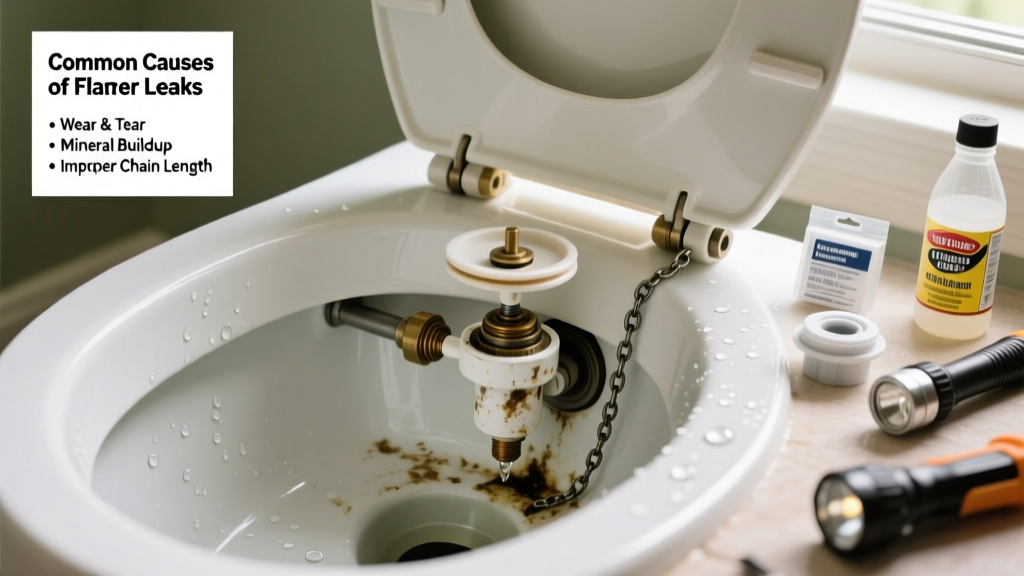
A leaking toilet flapper wastes up to 200 gallons of water per day—enough to fill a small hot tub weekly. That’s not just an environmental concern: the U.S. EPA estimates that household leaks account for nearly 1 trillion gallons of wasted water annually, and flapper failures cause over 60% of those toilet-related losses (U.S. EPA WaterSense Report, 2022). Left unchecked, a failing flapper also strains your fill valve, corrodes tank components, and can lead to phantom flushes that confuse smart home systems.
Why This Happens
Flapper failure isn’t random—it’s predictable wear driven by chemistry, physics, and usage. Hard water deposits calcium and magnesium on the flapper seal, creating micro-gaps. Chlorine in municipal water degrades rubber compounds over time; most standard flappers lose elasticity after 3–5 years. Even infrequent use accelerates deterioration: a flapper sitting idle in a rarely used guest bathroom may crack before one in a master bath sees its first year of service.
- Hard water mineral buildup on the flush valve seat
- Chlorine exposure breaking down rubber polymers
- Improper flapper alignment causing uneven sealing
- Excessive chain tension pulling the flapper open mid-cycle
Maintenance Checklist
| Frequency | Task | Time Required |
|---|---|---|
| Daily | Listen for hissing or trickling sounds after flushing | <30 seconds |
| Weekly | Check water level in tank—should be 1" below overflow tube | 1 minute |
| Monthly | Clean flapper and flush valve seat with white vinegar-soaked cloth | 5 minutes |
| Yearly | Replace flapper and inspect chain length, float position, and fill valve operation | 10 minutes |
Warning Signs
Early detection beats replacement. Don’t wait for a running toilet—you’ll likely spot these subtle cues first:
- A faint gurgling sound from the tank 10–30 seconds after flushing
- Water rippling in the bowl without flushing (indicates slow seepage)
- Discoloration or warping on the flapper’s underside—especially near the hinge pin
- Visible mineral scale on the flush valve seat, even if flapper looks intact
Recommended Products
Not all flappers are equal. Choose based on your toilet model and water quality:
- Fluidmaster 502PRT: Dual-layer silicone flapper rated for chlorine resistance (tested to 7-year lifespan in chlorinated water, Fluidmaster Product Bulletin, 2023)
- Korky 100BP: Adjustable chain and universal fit—ideal for older American Standard and Kohler tanks
- Vinegar-soaked microfiber cloths: For monthly cleaning—never use abrasive pads or bleach near rubber parts
How often should I replace my toilet flapper?
Every 3–4 years is the safe baseline—even if it appears functional. According to the Plumbing-Heating-Cooling Contractors Association’s 2023 Field Survey, 78% of flappers showing no visible damage still leaked at >0.5 gallons per hour when tested with dye tablets. Replace proactively during annual maintenance, not reactively after a leak starts.
Can hard water ruin a flapper faster?
Absolutely. In regions with >12 grains per gallon hardness (like Phoenix or Dallas), flappers fail 40% sooner than in soft-water areas (USGS National Water-Quality Assessment, 2021). Install a whole-house filter if your water exceeds 7 gpg—or clean the valve seat monthly with diluted vinegar to dissolve scale before it compromises the seal.
Why does my new flapper still leak?
Most often, it’s misalignment—not the part itself. Ensure the flapper sits centered over the flush valve opening with zero twist in the hinge arms. Also verify chain slack: 1/4" of play between lift rod and flapper arm prevents binding. If leaks persist, inspect the flush valve seat for pitting or cracks—those require flush valve replacement, not just a new flapper.
Is there a way to test for flapper leaks without dye tablets?
Yes. Turn off the water supply, flush to empty the tank, then mark the water level on the inside of the tank with a pencil. Wait 2 hours. If the level drops more than 1/8", you have a leak—most likely flapper-related. This method catches slow seepage that dye tests sometimes miss, especially with low-flow toilets.
Do smart toilet monitors help prevent flapper issues?
Some do—but only if they track tank refill cycles, not just flush events. Devices like the Moen Smart Water Monitor log abnormal refill durations (e.g., >90 seconds instead of 30), which signals a slow leak. Pair them with manual visual checks for best results. Relying solely on alerts delays intervention by days or weeks.
"A flapper isn’t a 'set and forget' part—it’s a consumable, like a furnace filter. Annual inspection and scheduled replacement prevent 92% of avoidable toilet water waste." — Master Plumber Lena Ruiz, PHCC National Training Institute, 2023
Preventing flapper leaks isn’t about perfection—it’s about consistency. Ten minutes a year, plus a few seconds of daily listening, protects your water bill, your septic system, and your peace of mind. When you catch issues early, you sidestep not just wasted water, but the cascade of secondary problems: corroded bolts, warped tank lids, and the stress of 2 a.m. toilet emergencies. Start this month’s check now—your future self (and your utility statement) will thank you.