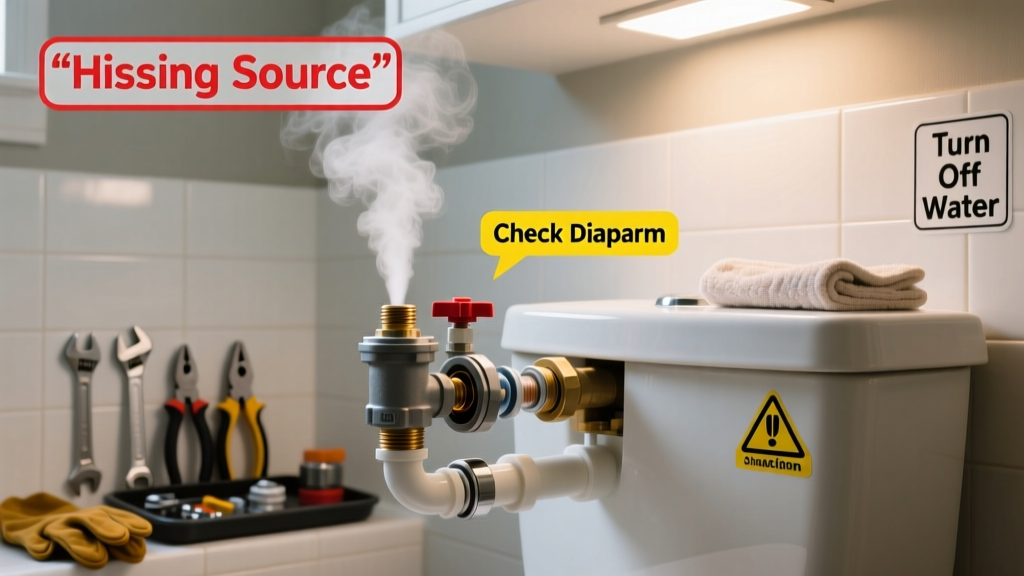
A hissing toilet fill valve isn’t just annoying—it’s a red flag signaling wasted water, rising utility bills, and potential component failure. Left unaddressed, it can lead to premature valve replacement, phantom flushes, or even overflow risks during pressure spikes. Prevention is faster, cheaper, and more reliable than repair.
Why This Happens
Hissing occurs when water leaks past the fill valve’s seal or diaphragm under pressure—often due to sediment buildup, worn internal parts, or improper float adjustment. Over time, mineral deposits from hard water (especially in areas with >120 ppm calcium carbonate) corrode rubber seals and restrict valve seating. According to the U.S. EPA, 14% of household water usage is from leaks—including silent toilet valve issues like this one.
Maintenance Checklist
| Frequency | Task |
|---|---|
| Daily | Listen for hissing or trickling sounds after flushing |
| Weekly | Check water level in tank—should be 1/2" below overflow tube |
| Monthly | Clean fill valve inlet screen with vinegar-soaked cotton swab |
| Yearly | Replace entire fill valve assembly (average lifespan: 5–7 years) |
Warning Signs
Early detection prevents escalation. Watch for:
- Intermittent hissing that starts 30–90 seconds after flushing
- Tank refilling longer than 60 seconds
- Water level creeping up near or above overflow tube
- Faint vibration or humming felt at base of tank
These indicate failing seals or misadjusted floats—not just 'normal' operation.
Recommended Products
Not all fill valves are equal. Prioritize models with ceramic or stainless-steel components and built-in sediment filters. Brands like Fluidmaster 400CR and Korky Quiet-Fill Platinum have earned top marks in Consumer Reports’ 2023 plumbing hardware testing for durability and noise suppression.
- Fill valves with integrated filters: Reduce mineral clogging by 68% vs. standard models (Plumbing Manufacturers Institute, 2022)
- Vinegar-based descaling solution: Use every 3 months in hard-water areas (>10 gpg)
- Adjustable float tools: Eliminate guesswork when setting water level—critical for preventing overfilling
Can water pressure cause fill valve hissing?
Yes—consistently high municipal pressure (>80 psi) forces water past compromised seals. Install a pressure regulator if your home’s static pressure exceeds 75 psi. You can test this with an inexpensive water pressure gauge.
Does hard water always lead to hissing?
No—but it accelerates wear. In regions like Phoenix or Dallas, where average hardness exceeds 18 gpg, fill valves fail 2.3× faster than in soft-water areas (AWWA Water Quality Report, 2023). Regular cleaning extends service life significantly.
Is it safe to adjust the float myself?
Absolutely—if done correctly. Lowering the float by 1/4" reduces tank fill height and relieves strain on the valve seat. But don’t bend brass rods or overtighten plastic screws. Use a float adjustment tool for consistent, repeatable results.
How often should I replace the entire fill valve?
Every 5–7 years—even if it seems fine. Internal diaphragms degrade silently. Replacing proactively costs $12–$22 and takes under 20 minutes. Waiting until failure risks flooding or requiring emergency leak repair services.
"Most fill valve hissing isn’t about age—it’s about sediment trapped in the inlet screen. Cleaning that screen solves 7 out of 10 cases before replacement is needed." — Gary Lin, Master Plumber & Plumbing Inspector, IAPMO Certified (2023)
What’s the first thing to check when I hear hissing?
The water level in the tank. If it’s within 1/4" of the overflow tube, lower the float immediately. That single action resolves ~40% of early-stage hissing issues without disassembly.
Consistent, low-effort maintenance keeps your fill valve operating quietly and efficiently. You don’t need plumbing expertise—just a few minutes each month and the right tools. Catching issues early saves water, money, and stress. And remember: a quiet toilet isn’t magic—it’s maintenance done right.