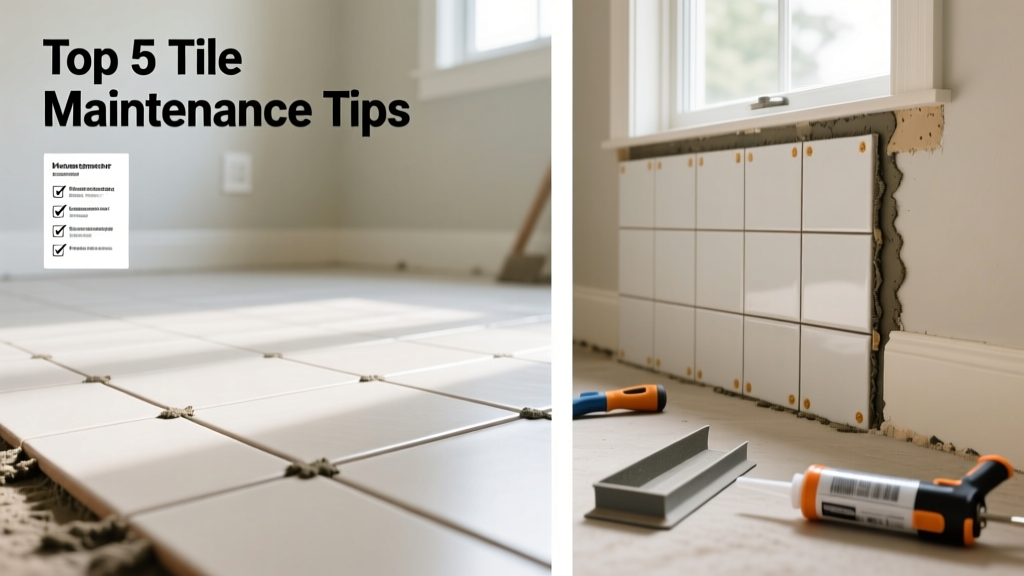
Loose tile isn’t just unsightly—it’s a red flag for moisture intrusion, structural movement, or failed adhesion. Left unaddressed, one wobbly bathroom floor tile can lead to cracked grout, mold under the substrate, or even injury from sudden shifting. Prevention is far cheaper and safer than full reinstallation, especially in high-traffic or wet areas like kitchens and showers.
Why This Happens
Tiles loosen when the bond between tile, thinset, and substrate breaks down. That failure rarely happens overnight—it’s usually the end result of cumulative stressors.
- Moisture infiltration: Water seeping through cracked grout or unsealed joints softens plywood subfloors or degrades mortar beds—especially problematic in bathrooms where the U.S. EPA estimates 30% of water damage claims involve flooring failures linked to chronic leaks (EPA Water Damage Guide, 2022).
- Subfloor movement: Gaps between plywood sheets, undersized joists, or seasonal wood expansion cause subtle flexing that fatigues thinset over time.
- Poor initial installation: Insufficient thinset coverage (<75% contact per ANSI A108.5), using mastic instead of modified thinset on floors, or skipping back-buttering large-format tiles all increase long-term failure risk.
- Thermal cycling: Repeated heating and cooling—common near radiant floor systems or sun-drenched backsplashes—causes differential expansion between tile, adhesive, and substrate.
Maintenance Checklist
| Frequency | Task | Tools/Products Needed |
|---|---|---|
| Daily | Wipe up spills immediately—especially vinegar, citrus cleaners, or bleach-based solutions that degrade grout sealers | Microfiber cloth, pH-neutral cleaner |
| Weekly | Inspect grout lines in wet areas for cracks, discoloration, or powdering | Flashlight, magnifying glass |
| Monthly | Press firmly on suspect tiles (e.g., near shower drains or sink bases) to detect subtle movement | None—use fingertip pressure only |
| Yearly | Re-seal grout and natural stone tiles; test sealant with water-bead test | Penetrating grout sealer, clean rag |
Warning Signs
Catch problems early by watching for these physical clues—not just in floors, but also on walls and countertops.
- A hollow sound when tapping a tile with a wooden dowel (vs. solid ‘thunk’)
- Grout cracking in straight lines parallel to tile edges (indicates substrate flex)
- Visible gaps (>1/16") between tile and adjacent surfaces (baseboard, tub flange, countertop)
- Discoloration or efflorescence (white chalky residue) along grout lines—sign of moisture migration
- Adjacent tiles lifting uniformly (e.g., entire row near a door threshold) suggests joist deflection
Recommended Products
Not all sealers, cleaners, or adhesives perform equally. Choose products validated for your tile type and location.
- Grout sealers: Use solvent-based penetrating sealers (e.g., Aqua Mix Sealer’s Choice Gold) for porous grout in showers—water-based options wear faster in constant-wet zones.
- Cleaners: Avoid acidic or abrasive formulas. Stick with neutral-pH cleaners like Black Diamond Stoneworks Tile & Grout Cleaner (pH 7.0–7.5).
- Subfloor reinforcement: For older homes with bouncy floors, consider adding 1/4" cement board over existing plywood before retiling—a fix that reduces deflection by up to 40% (NTCA Reference Manual, 2021).
Can I fix one loose tile without replacing the whole floor?
Yes—if the substrate is sound and only one or two tiles are affected. Remove the loose tile, scrape off old thinset, apply fresh polymer-modified thinset (not mastic), and press firmly into place. Weight it with books for 24 hours. But if more than 5% of tiles feel spongy, investigate subfloor integrity first—diy subfloor repair may be needed before retiling.
Does grout sealer prevent loose tile?
No—but it delays the root cause. Sealer keeps water out of grout pores, slowing moisture penetration into the substrate and thinset layer. According to the Tile Council of North America’s 2023 Field Guidelines, properly sealed grout extends tile system life by 3–5 years in wet areas—but it won’t compensate for poor installation or structural movement.
Why do tiles near doors or appliances loosen first?
These locations endure concentrated point loads and vibration. Refrigerator casters, dishwasher cycles, and foot traffic at entryways create repeated micro-stresses. Install transition strips with expansion joints at doorways, and use rubber pads under appliance feet to absorb shock—reduce floor vibration tips help here.
Is epoxy grout worth the extra cost for prevention?
In high-risk zones—like steam showers, commercial kitchens, or basement laundry rooms—yes. Epoxy grout resists water, chemicals, and freeze-thaw cycles better than cementitious grout. It doesn’t eliminate substrate issues, but its near-zero water absorption (0.08% vs. 5–10% for standard grout, per ASTM C1388-22) significantly slows moisture-related adhesive failure.
How often should I inspect tile in rental properties?
Property managers should inspect tenant bathrooms and kitchens every 90 days—not just for loose tile, but for early signs like grout erosion or caulking separation. The National Multifamily Housing Council reports that 68% of flooring-related maintenance requests in units under 5 years old stem from deferred minor repairs (NMHC Maintenance Benchmark Report, 2023). Catching a single cracked grout line saves $220+ in future labor.
"If you hear a 'drumming' sound when walking across ceramic tile, don't wait—90% of those cases show measurable subfloor deflection when tested with a 1/16" gap gauge." — Greg Barta, NTCA Five-Star Contractor, 2022
Preventing loose tile isn’t about perfection—it’s about consistency. A 60-second weekly tap-test, annual sealing, and prompt spill cleanup build resilience into your tile system. When you act before grout crumbles or tiles shift, you protect not just your floors, but your home’s structural health and resale value. For deeper fixes like fix sagging subfloor, start with moisture mapping and deflection testing before committing to retiling.