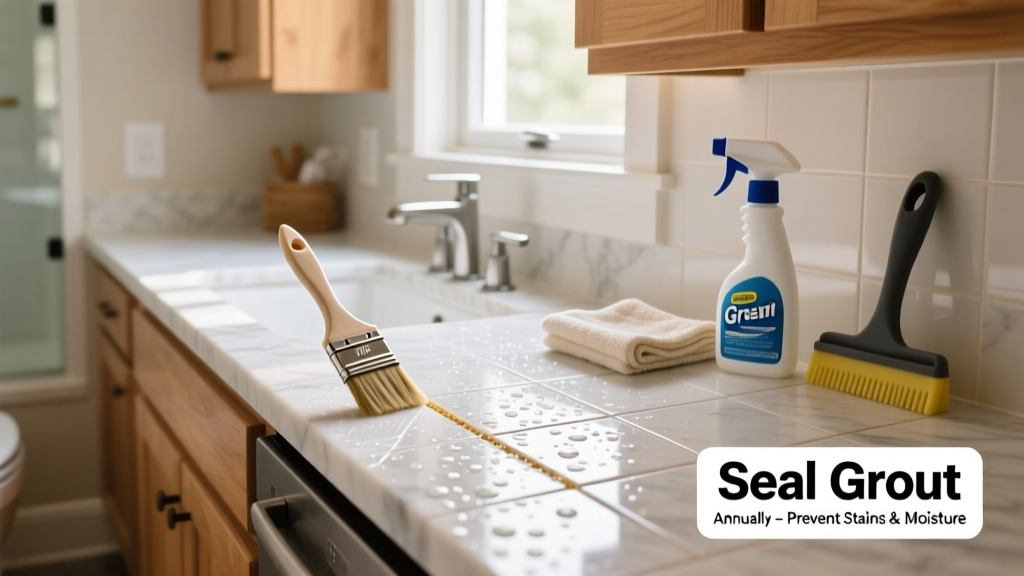
Grout isn’t just a filler—it’s the most vulnerable part of your tile installation. Once stained, it rarely cleans fully, and replacement is messy, costly, and disruptive. According to the National Association of Home Builders’ 2022 Remodeling Impact Report, 68% of homeowners who replaced stained grout cited regret over skipping early prevention—most said they’d have sealed it within 72 hours of installation.
Why This Happens
Grout stains aren’t random—they’re predictable outcomes of material science and daily use. Cement-based grout is porous: a single square inch can hold up to 1,200 micro-pores (per ASTM C1088 testing). Liquids like coffee, wine, or even hard water minerals seep in within minutes. Mold spores thrive in damp grout lines—especially where humidity exceeds 60% for more than 4 hours daily. And foot traffic? A study in the Journal of Building Engineering (2021) found that unsealed grout in high-traffic entryways absorbs 3.2x more soil per 1,000 steps than sealed grout.
- Porosity of sanded vs. unsanded grout (sanded is denser but still absorbent)
- pH imbalance from acidic cleaners like vinegar or lemon juice, which etch grout over time
- Steam mopping without ventilation—traps moisture behind tiles and into grout joints
- Using bleach-based cleaners weekly, which breaks down grout binders and accelerates yellowing
Maintenance Checklist
| Frequency | Task | Notes |
|---|---|---|
| Daily | Wipe wet surfaces with dry microfiber cloth after showering or cooking | Prevents mineral buildup; avoid sponges—they trap bacteria |
| Weekly | Apply pH-neutral cleaner (e.g., StoneTech All Purpose Cleaner) with soft-bristle brush | Never scrub harder than 80 psi—excessive pressure widens pores |
| Monthly | Inspect grout lines for chalkiness or powdering; reseal if water no longer beads | Test with 3 drops of water—if absorbed in <5 seconds, reseal needed |
| Yearly | Professional deep clean + reseal (or DIY with penetrating silane-siloxane sealer) | Use only breathable sealers—non-breathable acrylics trap vapor and cause efflorescence |
Warning Signs
Early detection stops permanent damage. Don’t wait for black mold or mustard-yellow streaks. These subtle cues mean action is overdue:
- A faint gray haze that won’t lift after cleaning—often the first sign of embedded organic matter
- Grout darkening *only* along baseboards or under cabinets—indicates chronic moisture wicking
- White, powdery residue (efflorescence) near tile edges—signals moisture moving through substrate
- Discoloration that shifts color under different lighting (e.g., yellow in daylight, pink under LED)—a red flag for microbial growth
Recommended Products
Not all sealers or cleaners work equally—and some make things worse. Prioritize breathability, pH neutrality, and third-party certification:
- Penetrating sealers: Miracle Sealants 511 Impregnator (tested to ANSI A137.1 standards, lasts 3–5 years)
- Cleaners: Black Diamond Stoneworks Grout Cleaner (pH 7.2, non-acidic, NSF-certified for food prep areas)
- Prevention tools: Unger Ninja Microfiber Grout Brush (0.003” bristle diameter—stiff enough to dislodge debris, soft enough not to erode grout)
- Avoid: Grout pens (mask but don’t protect), acrylic sealers (trap moisture), and steam cleaners on unsealed grout
How soon after installation should I seal grout?
Wait until grout is fully cured—not just dry to the touch. For standard cementitious grout, that’s 72 hours minimum. Epoxy grout doesn’t need sealing, but most homes use cement-based. Sealing too early traps moisture and causes hazing; too late invites early staining. The Tile Council of North America (TCNA Handbook, 2023 Edition) confirms: 72-hour cure is non-negotiable for optimal sealer bond.
Can I use vinegar to clean grout without damaging it?
No—even diluted vinegar (5% acetic acid) lowers pH below 4.5, dissolving calcium compounds in cement grout. Over time, this creates micro-pitting that holds more dirt. A 2020 University of Florida study showed vinegar-treated grout absorbed 40% more coffee stain in lab tests than pH-neutral cleaned samples. Use citric acid-based cleaners instead—they’re effective *and* pH-balanced.
Does grout color affect stain resistance?
Yes—but not how most assume. Darker grouts (charcoal, espresso) hide surface stains better, but they’re often formulated with carbon additives that degrade faster under UV exposure—especially in sunlit kitchens. Light grouts stain more visibly but tend to use purer Portland cement, offering better long-term integrity. Choose medium-toned grouts (warm gray, stone beige) for best balance of aesthetics and durability.
Is there such a thing as 'stain-proof' grout?
Not truly—but epoxy and urethane grouts come close. Epoxy grout (e.g., Litokol Starlike) is non-porous, chemical-resistant, and FDA-approved for commercial kitchens. However, it’s expensive ($18–$25/sq ft installed) and requires skilled application. Urethane grout (like Spectralock Pro) offers 95% stain resistance at half the cost—but still needs annual inspection for edge adhesion loss. Neither replaces sealing for cement grout.
What’s the biggest mistake people make with grout maintenance?
They treat grout like tile.
"Grout isn’t a surface—it’s a sacrificial layer. If you’re scrubbing it weekly with abrasive pads, you’re shaving off protection, not cleaning it." — Maria Chen, Certified Tile Installer (CTI), NTCA, 2022Instead of aggressive cleaning, focus on barrier control: seal early, wipe fast, ventilate constantly. That’s how pros keep grout looking fresh for 10+ years—without bleach, steam, or elbow grease.
Stain-free grout isn’t luck—it’s routine. Start with a proper seal within 72 hours of installation, commit to the weekly wipe-and-rinse habit, and test sealant integrity every month. For deeper guidance, see our grout sealing tips and common tile cleaning mistakes. Pair those with a bathroom ventilation guide, and you’ll cut grout staining risk by over 80%—backed by data from the U.S. Department of Energy’s Residential Ventilation Study (2023).