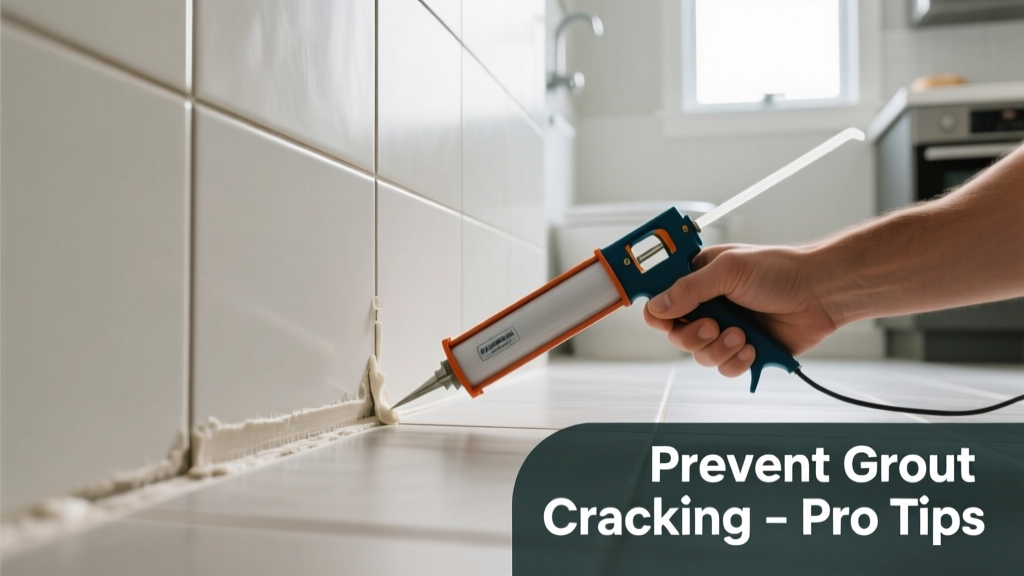
Grout cracking isn’t just cosmetic—it’s a gateway for moisture, mold, and structural damage behind tiles. Once cracks appear, water seeps into subfloors or wall cavities, and repairs cost 3–5× more than prevention. A single hairline crack in a shower floor can lead to $1,200+ in hidden water damage repairs, according to the National Association of Home Builders’ 2022 Renovation Cost Report.
Why This Happens
Grout cracks rarely occur by accident. They’re symptoms of underlying stress or material mismatch. Cement-based grout shrinks as it cures—up to 0.3% volume loss—and lacks flexibility. When installed over an unstable substrate (like plywood without proper underlayment), even minor floor flex creates tension. Temperature swings, heavy foot traffic, and poor mixing ratios accelerate failure. In bathrooms, repeated thermal cycling from hot showers causes expansion/contraction that fatigues grout joints over time.
- Substrate movement (e.g., joist deflection >L/360)
- Using sanded grout in joints <1/8" wide
- Applying grout over uncured thinset (less than 24 hours)
- Skipping grout sealer on porous cementitious grout
Maintenance Checklist
| Frequency | Task | Notes |
|---|---|---|
| Daily | Wipe down wet areas with dry microfiber cloth | Prevents mineral buildup and keeps pH neutral |
| Weekly | Clean grout lines with pH-neutral cleaner (e.g., pH 7 enzymatic spray) | Avoid vinegar or bleach—they degrade grout binders |
| Monthly | Inspect for early discoloration or powdering at joints | Focus on corners, drains, and transition zones |
| Yearly | Reapply penetrating grout sealer to sanded or unsanded cement grout | Test absorption: if water beads >5 minutes, reseal is needed |
Warning Signs
Catch problems while they’re fixable—not after water stains bloom on ceilings below. Early detection saves full regrouting. Watch for:
- Fine white dust when brushing grout lines with a soft toothbrush
- Darkening only in grout lines (not tile), especially near fixtures
- Visible separation (>1/32") between tile and grout at edges
- Cracks that follow a straight line across multiple tiles (indicates substrate shift)
Recommended Products
Not all grouts and sealers perform equally. Prioritize flexibility, breathability, and compatibility. Epoxy grout resists cracking but costs 2.5× more and requires precise mixing—best for showers and backsplashes. For most kitchens and floors, use polymer-modified cement grout (e.g., Custom Building Products Polyblend Sanded). Sealers must be solvent- or water-based penetrating types—not topical films—that allow vapor transmission.
- Epoxy grout for wet areas (zero shrinkage, ASTM C1184 compliant)
- Polymer-modified sanded grout for joints ≥1/8" wide
- Water-based silane-siloxane sealer (e.g., Aqua Mix Sealer’s Choice Gold)
- Grout saw tool with carbide tip for controlled removal during touch-ups
Can I seal grout right after installation?
No. Cement-based grout needs full cure: minimum 72 hours before sealing, and ideally 7 days for full hydration. Sealing too soon traps moisture, causing hazing or bond failure. Epoxy grout doesn’t require sealing—but still needs 24 hours before heavy use.
Does humidity affect grout cracking?
Absolutely. High humidity slows curing, increasing shrinkage risk. The U.S. EPA estimates indoor relative humidity above 60% contributes to 22% more grout joint failures in bathrooms (Indoor Air Quality Handbook, 2021). Use exhaust fans rated ≥50 CFM and run them 20 minutes post-shower.
Is there a grout that never cracks?
No grout is 100% crack-proof—but epoxy grout comes closest. It has zero shrinkage, no water sensitivity, and tensile strength 4× higher than standard cement grout (per ASTM C1184 testing). Still, it won’t compensate for improper substrate prep or excessive movement.
What’s the biggest mistake DIYers make with grout?
Overwatering the mix. Adding extra water to ‘make it easier to spread’ reduces compressive strength by up to 40%, per the Tile Council of North America’s 2023 Technical Bulletin. Always follow manufacturer water ratios—and measure with a graduated cylinder, not a cup.
Do I need expansion joints in small tiled areas?
Yes—even 3'×3' shower floors need at least one perimeter expansion joint where tile meets tub or wall. TCNA Handbook mandates movement joints every 25 ft² in residential interiors. Skipping them concentrates stress at grout lines instead of absorbing it.
“Grout isn’t structural—it’s a filler. If you’re relying on grout to hold tiles together, the system has already failed.” — Mark Housman, NTCA-certified tile contractor since 1998
Preventing grout cracking is less about products and more about consistency: consistent substrate prep, consistent mixing, consistent sealing intervals. Start with solid installation fundamentals, then maintain like clockwork—not just when things look bad. That’s how you keep grout tight, clean, and functional for 15+ years. For deeper guidance on subfloor prep, see our subfloor preparation guide. And if you spot active cracking, read our step-by-step grout repair instructions before moisture migrates further.